With tall windows, a Mini LED LCD TV is often a sensible starting point for comparison, as RTINGS’ general comparison suggests Mini LED is often better suited to bright rooms. An OLED TV may be a good fit if you also watch regularly in dimmer light, or if wide viewing angles and deep blacks are important to you, as the Consumers’ Association explains. Then compare the reflections and brightness of the specific model in your room. The panel type or stated peak brightness alone won’t tell you the whole story.
Who is this choice relevant to?
Daytime viewer facing tall windows
You watch documentaries while daylight may fall directly on the screen, and want to assess whether reflections will be distracting. RTINGS and the Consumers’ Association highlight reflections and visibility in incoming light as factors worth considering.
Viewer in changing daylight and evening light
You use the same TV in a bright room and later in the day, weighing daytime visibility against black levels and viewing angles. The Consumers’ Association describes these picture characteristics as differences to compare when choosing a TV.
Watching documentaries together
You watch from different seats and want a screen size that suits the viewing distance, with spoken explanations that are easy to hear. The Consumers’ Association highlights viewing distance and speech clarity as relevant factors when choosing.
What should you look for when choosing?
Mini LED LCD
A good fit for watching mainly during the day with the tall windows uncovered, when visibility in a bright room is the priority.
Bear in mind a Mini LED label doesn’t guarantee that a window directly opposite the screen will be invisible; reflections and local dimming vary by model.
OLED
A good fit for regular viewing in lower ambient light, if deep blacks or wide viewing angles are important to you.
Bear in mind brightness and reflection handling vary by model. RTINGS also notes a risk of burn-in with static images.
Compare TVs on the factors that matter most in your viewing setup: reflections, visibility in daylight, viewing distance and speech clarity.
| What to consider |
What should you check? |
Who is this important for? |
| Reflections from tall windows |
Compare tests of direct reflections and visibility in incoming light with the position of the windows in your room. |
If there’s a tall window directly opposite my TV, I want to avoid reflections obscuring details. Around 31% of consumers prioritise window reflections. |
| Bright scenes during the day |
Check model tests for brightness, uniformity and visibility in incoming light. |
I want to follow bright, detailed documentary footage easily during the day. Around 25% of consumers prioritise visibility in daylight. |
| Dark scenes and evening viewing |
Compare contrast or local dimming, and consider how much you watch while it’s still light outside. |
If I also watch in the evening, I want to see dark scenes clearly without losing sight of how the TV performs during the day. Around 19% of consumers prioritise contrast in changing light. |
| Screen size and viewing angle |
Measure your viewing distance and check how the specific model performs from different seats. The Consumers’ Association gives around 2.4 times the screen diagonal as a guideline based on its own research, not a hard-and-fast rule. |
When we watch from several seats, I want a suitable screen size and a clear picture from the side. Around 13% of consumers start by considering their seating arrangement. |
| Speech and video source |
Compare tested speech clarity and check which apps and video formats you use. |
When watching documentaries, I want to hear the spoken explanations clearly and take the source quality into account. Around 12% of consumers prioritise speech clarity and source playback. |
Buying pitfalls
-
Relying solely on a high stated peak brightness
A bright screen can still reflect a tall window. Manufacturer figures alone don’t tell you how the TV will handle incoming light and direct reflections.
Compare tests of both, and consider the position of the windows in your own room.
-
Assuming matt is always better than glossy
RTINGS describes different trade-offs between direct reflections and black levels, so the screen finish alone won’t tell you everything about the picture.
Compare tests of the specific model and see how it handles reflections.
-
Choosing a bigger or sharper screen without checking the viewing distance and source
The screen size needs to suit your viewing distance, and the extra detail of native 4K also depends on the source you’re watching.
Measure the distance between your seat and the screen, and check the resolution your documentaries are available in.
-
Confusing an extended warranty with your statutory rights
According to the Dutch government, the Netherlands has no fixed statutory warranty period. An extended warranty is separate from your rights to a product that meets reasonable expectations.
Compare any extra cover with your existing rights, and read the terms and conditions before paying for it.
Brands to compare
Sony
The BRAVIA 9 II is an RGB LED model to consider when comparing TVs for a bright room.
- RTINGS describes brightness and reflection handling as strengths of the tested model. Sony Netherlands lists 65, 75, 85 and 115-inch versions.
- The test findings apply to the model tested and don’t automatically apply to every version or other Sony TVs.
TCL
The C8K range is a QD Mini LED LCD option to compare for daytime viewing.
- TCL lists local dimming and a CrystGlow WHVA panel for this product range.
- The manufacturer’s claims aren’t independent measurements of a specific 65- or 75-inch version in your room.
LG
The OLED evo C6 range offers an OLED option for those who watch during the day as well as in lower light.
- LG lists Brightness Booster and self-lit pixels for the OLED65C68LA.
- These product features don’t prove that this model performs better than a specific Mini LED TV next to a tall, reflective window. Compare tests of the specific models.
Philips
The 65MLED910/12 is a QD Mini LED model to consider if Ambilight also suits the way you watch.
- Philips lists Ambilight and Dolby Vision for this model.
- Ambilight is no substitute for checking reflections on the screen itself. The manufacturer’s claims about the viewing experience aren’t independent test results.
Samsung
The QN990H is a Neo QLED option with a Glare Free finish, according to Samsung.
- The version listed in the Netherlands is an 85-inch 8K model.
- Glare Free is a product-specific claim by Samsung, not proof that it applies to the entire Neo QLED range. The Consumers’ Association points out that the visible benefit of 4K depends on the source and viewing conditions, so 8K isn’t automatically a useful extra for documentaries.
Joybuy TVs to compare
These Joybuy models are Mini LED LCD options to compare if you mainly watch during the day. As well as the panel technology, check reflections, window positions and which screen size suits your viewing distance.
 No image available
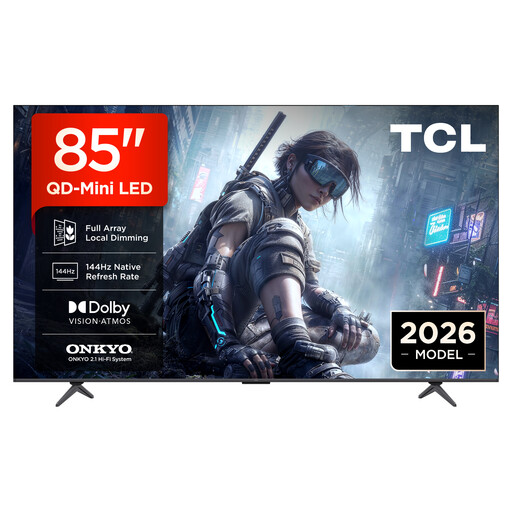
TCL T8D 85-inch 4K QD-Mini LED Smart TV
A model to compare if you’re looking for a QD Mini LED TV for daytime documentaries. The panel technology alone won’t tell you how a window will reflect on the screen.
85 inch, 4K, HDR, QD-Mini LED, 144 Hz, FreeSync Premium, VRR and Onkyo 2.1 audio.
View product
 No image available
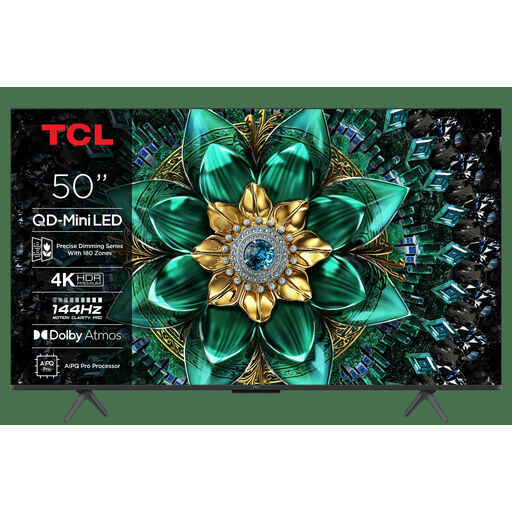
TCL 50Q6C QD-Mini LED 4K HDR TV
A QD Mini LED option to compare if you’re looking for a TV for daytime viewing. Check reflections on the specific model and consider the position of your windows.
50 inch, 4K HDR, 1000 Nits and energy rating E.
View product
 No image available
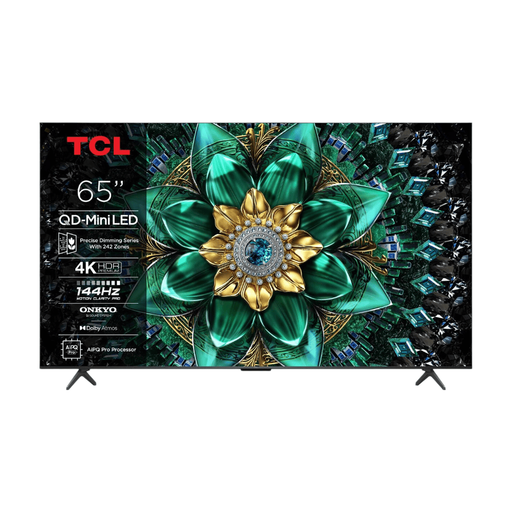
TCL 65Q6C QD-Mini LED 4K HDR TV
A 65-inch QD Mini LED model to compare if you’re considering a Mini LED TV for a bright room. Check that the screen size suits your viewing distance.
65 inch, 4K HDR, 1000 Nits and energy rating F.
View product
 No image available
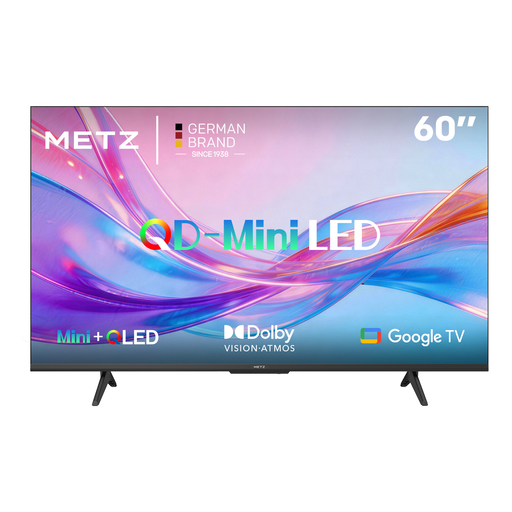
METZ 60MNH7000Z QD-Mini LED TV
A QD Mini LED model to include in a comparison for daytime viewing. Check separately how the screen handles window reflections.
Full Array Local Dimming, Dolby Vision, HDR10+, VRR, HDMI 2.1, 60 Hz and Google TV.
View product
 No image available
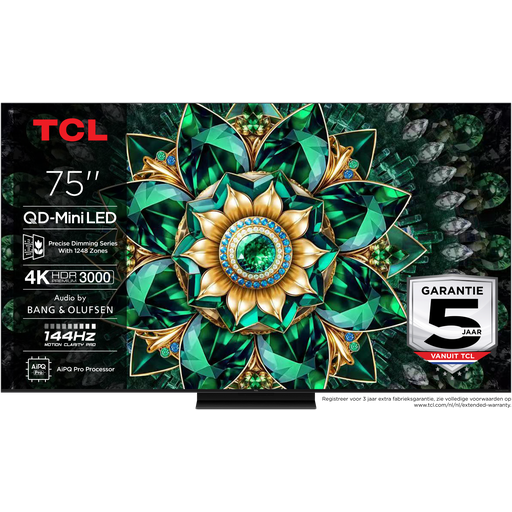
TCL 75Q7C 75-inch 4K Mini LED TV
A larger Mini LED model to compare if you watch from a suitable distance. First, measure the space between your seat and the screen.
75 inch, 4K Mini LED and 144 Hz.
View product
Frequently asked questions
Does a matt screen always help with reflections from a window?
No. RTINGS describes different trade-offs between matt and glossy screens when it comes to direct reflections and black levels. Compare the results for the specific model and take the position of your windows into account.
Where should you place your TV for the best daytime picture?
From your seat, check whether a tall window is directly visible in the screen. Window coverings or a different position may reduce reflections; then compare tests of reflection handling and brightness.
Does a science documentary need to be filmed in 4K to benefit from 4K?
To get the extra native detail described by the Consumers’ Association, the programme also needs to have been filmed and made available in 4K. So check what’s offered by the video source you use.
How do you compare TVs’ energy consumption?
Compare the EU energy labels of models in a size that suits your viewing distance. The European Commission provides separate information for HDR viewing and says that, in certain settings, HDR can use twice as much energy as other settings.
Are you automatically entitled to exactly two years’ statutory warranty on a TV in the Netherlands?
No. According to the Dutch government, the Netherlands has no fixed statutory warranty period. You’re entitled to a product that meets reasonable expectations, and the retailer is your point of contact if there’s a problem. A manufacturer’s or extended warranty is separate from these rights.


