
Vandaag of morgen in huis

Kwaliteit gegarandeerd

Welkomstaanbiedingen ontgrendelen: GRATIS bezorging | Tot 80% korting | Gratis 30 dagen JoyPlus-proefperiode
Download de app
A vegetable slicer can speed up a lot of kitchen prep. However, not every model is suited to the same ingredients or cooking methods. A compact vegetable slicer is handy for cucumber and carrots, while a multifunctional vegetable slicer with a collection container is a better choice if you want to grate, slice and cut julienne strips without loose parts cluttering your worktop.
Most disappointing purchases aren’t down to the price, but to having the wrong expectations. So pay attention to the construction, cleaning and the type of cutting you actually do.
A set with several blades may look appealing, but loose parts can be tricky to store. Check in advance whether the blades, attachments and collection container fit together or have a designated storage space. A set that ends up scattered around a kitchen cupboard after use is less likely to be used.
Marketing claims such as ‘sharp’ don’t tell you much without information about the material. Look for a stainless steel vegetable slicer or blades with clearly specified steel. Also check whether the cutting edge is suitable for hard ingredients such as carrots and cabbage. Don’t use damaged blades, and keep sharp parts out of children’s reach.
Small gaps around a grater or julienne cutter can trap food. A collection container helps keep things tidy, but it doesn’t automatically make a product easy to clean. Check whether the parts can be removed, whether they need to be washed by hand and whether the product information says they’re dishwasher-safe. Always follow the manufacturer’s care instructions.
For everyday use, stainless steel is a practical choice for the blade. It can withstand contact with moisture and food, but should be dried thoroughly after cleaning. A plastic body can help keep the weight down. Just make sure the construction is sturdy enough for preparing hard vegetables.
For example, the PURECOOK set is listed as being made from 304 stainless steel. Its straight and serrated edges are designed for different types of fruit and vegetables. This type of kitchen tool is therefore best suited to peeling and simple cutting tasks, rather than grating large quantities.
First, decide what you need to prepare:
A manual vegetable slicer works without electricity and is usually ready to use straight away. An electric vegetable slicer or chopper can be more convenient for larger quantities, but takes up extra space, needs a power socket and requires more cleaning.
A vegetable slicer with a collection container keeps cut ingredients together and helps prevent splashes on the worktop. Check the container’s capacity. According to the product information, the 5Five set has a collection capacity of 0.3 litres and measures 31.2 × 11.5 × 14 cm. That’s a manageable size for smaller portions, but may be limiting if you’re cooking for several people.
A non-slip base, hand guard or sturdy grip is more important than a large number of blades. With a mandoline or grater, you also need to be able to keep control of the vegetable. Never push it over a blade with your bare fingers.
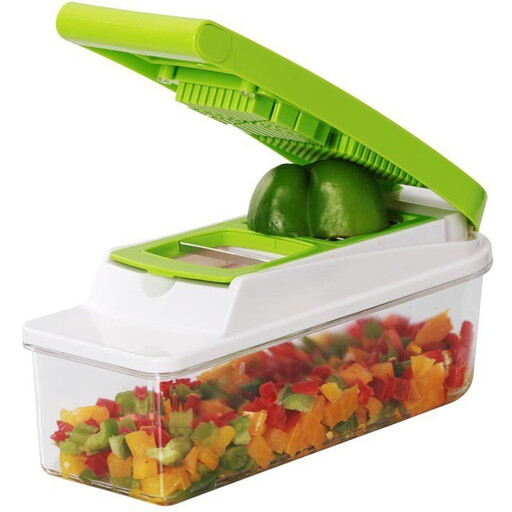
Why it suits this profile: The set combines five cutting techniques with a collection container. According to the product information, it’s designed for ingredients including cucumber, onion, carrot and cheese.
The collection container helps keep loose pieces of vegetables together. The product information also lists the number of parts and the dimensions, so you can work out how much storage space you’ll need in advance.
Five cutting techniques, stainless steel blades and a 0.3-litre collection container.
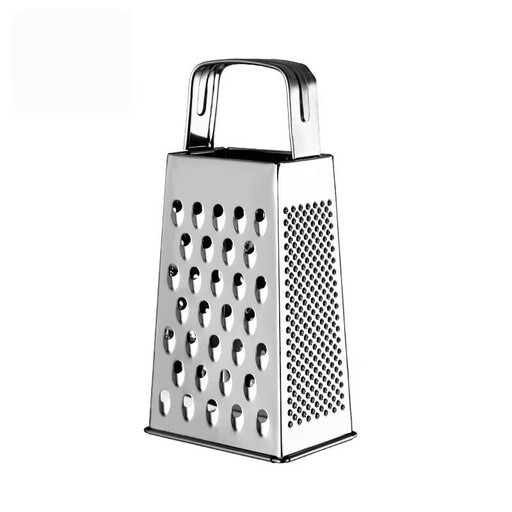
Why it suits this profile: A four-sided grater gives you several grating and cutting surfaces in one design. It’s a good fit for home cooks who regularly need different textures.
The metal box design makes the available grating surfaces easy to see. Before buying, check which sides are suited to the results you want.
Four sides for different grating and cutting tasks; stainless steel construction according to the product name.

Why it suits this profile: This electric model is designed for anyone who regularly wants to make even slices of ingredients such as bread, fruit and vegetables.
According to the product description, you can adjust the slice thickness from thin slices up to 20 mm. The carriage can be removed for cleaning; check the safety instructions before use.
Electric operation, a removable carriage and a stated cutting width of up to 20 mm.

Why it suits this profile: A manual spiraliser is a good fit if you want to make vegetable strands and are looking for a compact tool without a motor.
As it’s a manual model, you don’t need a power socket or motor maintenance. Bear in mind, though, that harder vegetables and larger portions will take more effort.
Compact manual operation, designed for making spiral-shaped vegetable strands.
We’ve put together a complete, up-to-date list of products that meet these strict selection criteria and the applicable European safety regulations.
Choose a model with a stable grip and a blade suited to both soft and firmer vegetables. A multifunctional vegetable slicer with slicing and grating options offers greater flexibility. For large carrots, a sturdy model matters more than the number of accessories included.
First, remove any loose blades or attachments from the body, then use a brush to clean small gaps. Check the product information to see whether the parts are dishwasher-safe. If this isn’t specified, washing them by hand with lukewarm water and mild washing-up liquid is the safest option. Dry metal parts straight away.
An electric vegetable slicer uses electricity, but consumption per use is generally low. The more significant costs are the purchase price, storage and maintenance. For small portions, a manual vegetable slicer is often more practical; if you regularly slice larger quantities, an electric model can save time. Check the power rating, safety features and whether the parts can be removed for cleaning.
