
Someone with a full shared fridge
Wants to store fruit salad covered and find out whether there’s a permanent space for it and whether the fridge is actually cold enough.


If you only need to store fruit salad, you may not need an extra fridge: if there’s room in the shared fridge and its temperature is actually 4 °C, you can keep the salad covered in there. If space is consistently limited, compare a compact fridge or an under-counter model by usable fridge space, external dimensions, annual energy consumption and noise level. A freezer compartment is mainly useful if you’ll use it too. The Voedingscentrum recommends keeping opened fresh fruit salad in the fridge for two days.
Wants to store fruit salad covered and find out whether there’s a permanent space for it and whether the fridge is actually cold enough.
Is looking for a dedicated place to keep food cold and needs to weigh up the available space against the usable fridge capacity of a compact appliance or under-counter model.
Needs room for several containers and other food, so will want to consider the layout, energy consumption and noise level.
Choose this if: there’s enough agreed space and a thermometer reads 4 °C.
Bear in mind: the layout and temperature depend on the shared appliance and the arrangements you have with your housemates.
Choose this if: you need a separate place to keep food cold on an ongoing basis and your containers will fit in the fridge compartment.
Bear in mind: there’s limited fridge space, and the appliance takes up extra room and uses more energy.
Choose this if: several people regularly store chilled food and there’s room for a freestanding model.
Bear in mind: it takes up more floor space than a small fridge; remember to check the ventilation clearance too.
Choose this if: you genuinely need freezer space as well as somewhere to keep food chilled.
Bear in mind: the freezer compartment takes up space that could otherwise be used for chilled food.
| What to consider | What to look for | Who is this important for? |
|---|---|---|
| Storage temperature | Set the fridge to 4 °C and, once it’s in place, use a fridge thermometer to check the actual temperature. | If I want to store fruit salad safely, I need to know how cold the fridge really is. Around 33% of consumers say storage temperature is their top priority when buying. |
| Room for containers | Measure the space and your largest container; compare the external dimensions and fridge capacity, and leave enough room for ventilation. | In a small shared kitchen, I want to fit in a covered container without the appliance dominating the space. Around 27% of consumers focus mainly on suitable fridge space and dimensions. |
| Energy consumption | First check whether the existing fridge is suitable; if buying, compare the energy label and the stated consumption in kWh per year. | If a second fridge is likely to be on most of the time, I want to take its annual energy consumption into account before bringing one in. Around 20% of consumers name energy consumption as their main concern when buying. |
| Layout | Check the shelf layout and the clearance for containers; agree on a designated space and keep the salad covered. | When several housemates use the fridge, I want to be able to find my containers easily. Around 13% of consumers prioritise a shared layout. |
| Noise | Compare the stated dB rating of models that already meet your requirements for dimensions and fridge space. | If the fridge is close to where I live or sleep, I’ll want to consider its noise level when making my final choice. Around 7% of consumers see noise as the main factor setting products apart. |
A shared fridge may be enough if there’s room and its temperature is actually 4 °C. Milieu Centraal recommends thinking carefully before buying a second fridge that will be left on permanently.
Check the temperature and discuss how much space is available with your housemates before choosing an extra appliance.
With a model that has a freezer compartment, not all of its capacity is available for chilled food. Inventum lists the KV550 as having 113 litres of total capacity, including 97 litres of fridge space.
Compare the fridge capacity separately and check that your largest covered container will fit in the layout you have in mind.
The setting alone doesn’t confirm that the fridge is actually at the temperature you want once it’s in place.
The Voedingscentrum recommends checking the temperature with a fridge thermometer. Keep the fruit salad well covered.
The KK550 and KV550 show the difference between an under-counter fridge without a freezer compartment and one with a freezer compartment.
The KTR15NWEB is an example of an under-counter fridge without a freezer compartment, for anyone mainly looking for fridge space.
The TS190340N is a relatively narrow freestanding under-counter model for spaces with limited room.
The KB 8877 is an example of a smaller refrigeration option for when an under-counter model won’t fit.
The Rc 1401 Pure is an under-counter model to compare if stated capacity and noise level are important to you.
This Joybuy selection includes compact fridges and under-counter models for a dedicated place to keep food cold, with options both with and without a freezer compartment.
 No image available
An under-counter fridge without a freezer compartment, for a dedicated chilled-food space in a shared kitchen.
88 litres of fridge space; energy label E; adjustable glass shelves, a salad drawer and three door compartments.
 No image available
An under-counter fridge for anyone who wants freezer space as well as somewhere to keep food chilled.
95 litres of fridge space and 14 litres of freezer space; 109 litres of total capacity; energy label C. The freezer compartment isn’t available for chilled food. The description lists two glass shelves, a salad drawer and three door compartments.
 No image available
An option for anyone who wants a separate place to keep food chilled and a dedicated freezer compartment.
107 litres of fridge space and a 13-litre freezer compartment; energy label C. The freezer compartment isn’t available for chilled food.
 No image available
An under-counter fridge for anyone looking for a dedicated chilled-food space with room for several items.
54 cm wide with a capacity of 129 litres; energy label E. The description lists two adjustable glass shelves, a salad drawer and a rotary temperature control.
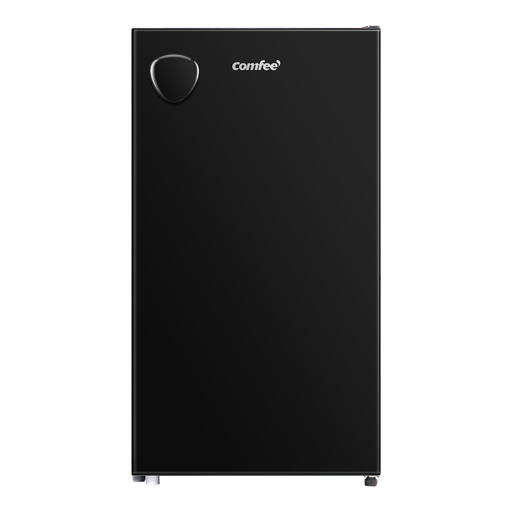 No image available
A compact fridge for a dedicated chilled-food space when room is limited.
88 litres of capacity; energy label E; adjustable thermostat, reversible door and removable glass shelves. According to the product description, the separate cooling zone is only for short-term chilling: don’t store products there for more than 2 hours.
The Voedingscentrum recommends a temperature of 4 °C. Place a fridge thermometer in the middle of the bottom shelf, leave it there for half a day or overnight, and adjust the fridge if the reading is higher.
For opened fresh fruit salad, the Voedingscentrum’s storage guide recommends two days in the fridge. Keep the salad well covered; if it has different ingredients or comes packaged, follow the relevant storage advice and label.
No, you don’t need a freezer compartment to keep fruit salad in the fridge. Choose a model with a freezer compartment only if you also want to freeze food, and check how much fridge space will remain.
According to ACM ConsuWijzer, you have a legal guarantee in addition to any retailer’s or manufacturer’s guarantee. For a standard online purchase, you’ll generally also have a 14-day cooling-off period after delivery, although there are exceptions.
Fridges within the scope of the regulations must meet European requirements for energy labels and product information. The current label includes the A–G class, consumption in kWh per year, capacity and noise level; compare the label for the specific model.