
Small kitchen, need a main fridge
You store homemade dressing alongside your everyday shopping and want a compact fridge with a practical layout.


Choose an under-counter fridge without a freezer compartment if you want to chill your everyday shopping as well as dressing, and have enough room for it. A mini fridge is mainly worth considering when an under-counter model won’t fit and its smaller capacity will do. Once installed, use a fridge thermometer to check that it actually reaches 4 °C: the thermostat setting and energy label don’t prove that it does.
You store homemade dressing alongside your everyday shopping and want a compact fridge with a practical layout.
The space you have available will determine your choice. You may be happy with a smaller capacity, provided you can check after installation that the fridge is cold enough for perishable dressing.
Your fridge is in a living space, so you want to compare its stated noise level and annual energy consumption as well as its dimensions.
Choose this if: you need your fridge to hold everyday shopping as well as jars of dressing.
The trade-off: you’ll need a wider, deeper space than you would for a mini fridge.
Choose this if: an under-counter fridge won’t fit and its limited capacity is enough for the food you want to chill.
The trade-off: the Joybuy listing we reviewed gives a capacity of 43 litres. If you use it as an extra fridge, it will use additional electricity. You’ll also need to check the temperature yourself.
Choose this if: you also genuinely need to store frozen food in the same space.
The trade-off: the freezer compartment takes up space that could otherwise be used for chilled food.
Measure the space and compare usable fridge capacity before choosing a more compact model or one with a freezer compartment. The Voedingscentrum recommends setting your fridge to 4 °C; use a thermometer to check the temperature inside the installed fridge.
| What to consider | What should you check? | Who should pay particular attention? |
|---|---|---|
| Temperature you can check | Set it to 4 °C and check with a fridge thermometer. The Voedingscentrum has separate storage guidance for food containing raw egg. | I want to be able to check whether the fridge is cold enough for perishable dressing. Around 33% of consumers would put storage temperature at the top of their list when buying. |
| Space and positioning | Measure the height, width and depth. Also check the door swing and the installation instructions for your chosen model. | If my kitchen has limited space, the fridge needs to fit and remain easy to access. Around 33% of consumers would prioritise the available installation space. |
| Fridge capacity and layout | Compare the stated fridge capacity, shelves and door storage with the dimensions of your sealed jars and other shopping. | I want to store dressing alongside everyday shopping without having to awkwardly position the jars. Around 20% of consumers would give greatest weight to usable fridge space and layout. |
| Noise and energy use | Compare the stated annual energy consumption in kWh and the dB(A) rating of models that fit your space and capacity requirements. | In an open-plan kitchen, I want to take the noise and energy use of an appliance that runs constantly into account. Around 14% of consumers would prioritise these practical considerations. |
The setting you choose doesn’t tell you what temperature the area where you keep your dressing will actually reach. The Voedingscentrum recommends 4 °C and advises checking the temperature with a fridge thermometer.
Once the fridge is installed, check it with a fridge thermometer and adjust the setting to 4 °C if needed. The Voedingscentrum recommends leaving the thermometer in the middle of the bottom shelf for half a day or overnight.
Advice for opened mayonnaise doesn’t automatically apply to homemade dressing. The Voedingscentrum advises keeping dishes containing raw egg chilled for no more than 24 hours.
Check the ingredients and follow the Voedingscentrum’s separate advice if your dressing contains raw egg. The Voedingscentrum advises, among others, pregnant women, young children, older people and those with weakened immune systems to avoid dishes in which the egg remains raw.
A small fridge can still use extra electricity. Milieu Centraal points out that two refrigeration appliances use more energy together than one larger appliance.
Compare the stated annual energy consumption in kWh of models that meet your capacity needs and fit your space. Also consider whether one suitable main fridge could replace two appliances.
A second fridge that runs constantly will use electricity all the time.
The height, depth and space needed to open the door also determine whether the model will work in its intended position.
Measure all the external dimensions and check the door swing and installation instructions for the specific model.
According to Inventum, the KK550 is an under-counter fridge with 131 litres of fridge space, adjustable shelves and a width of 55 cm.
The Rd 1400 Pure is an under-counter fridge with a capacity of 125 litres. Liebherr lists a width of 55 cm and a depth of 60.7 cm.
According to ETNA, the KKV956WIT is a freestanding under-counter fridge, 56 cm wide, with 133 litres of fridge space.
Bosch provides model documentation and service information for the KTR15NWEB, an under-counter fridge without a freezer compartment.
The range includes compact under-counter models and fridges with a freezer compartment. Beko lists the TSE1285N with 101 litres of fridge space and a width of 54 cm.
These Joybuy picks offer compact refrigeration for a small kitchen. Compare their external dimensions, practical layout and temperature control with what you need for dressing and other shopping.
 No image available
An option if you want to store sealed jars of dressing alongside other chilled food.
Stated capacity: 88 litres; three adjustable shelves; dimensions: 85 × 48 × 45 cm.
Manual defrosting is part of the upkeep. Once installed, use a thermometer to check that the storage area reaches 4 °C.
 No image available
The stated capacity could suit you if you want to keep dressing and everyday shopping in the same fridge.
The title gives a width of 54 cm. The product information lists a capacity of 129 litres, two glass shelves, a salad drawer, two door shelves, 39 dB and a reversible door.
According to the product information, the plug must remain accessible after installation. Check the positioning and the temperature where you store your food.
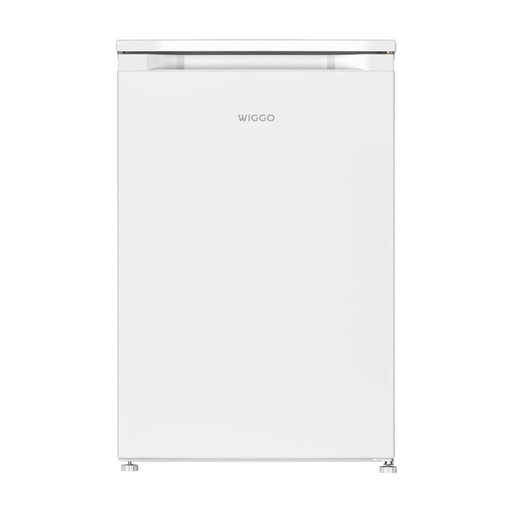 No image available
An under-counter model to compare if you’re looking for a compact fridge with space for jars and other chilled food.
Stated capacity: 107 litres. Dimensions: 54,9 × 54,9 × 84,5 cm. The description lists mechanical temperature control, a glass shelf, a salad drawer and door shelves.
Once installed, use a thermometer to check that your dressing is at the right temperature.
 No image available
Its stated width could be useful if you’re short on space, but check the full installation area.
Stated capacity: 90 litres; dimensions: 449 × 485 × 842 mm. The product information lists three adjustable glass shelves, a fridge compartment with a temperature range of 0–10 °C and a separate chiller compartment.
The stated temperature range goes up to 10 °C. Use a thermometer to check that the storage area reaches 4 °C for perishable dressing.
 No image available
A compact size to consider when the available width is a key constraint.
Stated capacity: 92 litres; dimensions: 831 × 474 × 447 mm. The product information lists seven temperature settings, a reversible door, a chill drawer, glass shelves, door shelves and a salad drawer.
Use a thermometer to check the temperature the storage area actually reaches.
Set the fridge to 4 °C and check the temperature with a fridge thermometer. The Voedingscentrum recommends leaving the thermometer in the middle of the bottom shelf for half a day or overnight. Adjust the fridge if the reading is above 4 °C.
No. Don’t automatically apply the storage time for an opened shop-bought product to homemade dressing. The Voedingscentrum advises keeping dishes containing raw egg in the fridge for no more than 24 hours. It also advises, among others, pregnant women, young children, older people and those with weakened immune systems to avoid dishes in which the egg remains raw.
Measure the full space and check the installation and ventilation requirements in the manual for your chosen model. The external dimensions alone don’t prove that it can be installed in an enclosed space.
Compare the stated annual energy consumption in kWh for models that fit your space and capacity requirements. An energy rating on its own won’t tell you what your electricity bill will be; you’ll also need to know your own electricity tariff.