
Vandaag of morgen in huis

Kwaliteit gegarandeerd

Welkomstaanbiedingen ontgrendelen: GRATIS bezorging | Tot 80% korting | Gratis 30 dagen JoyPlus-proefperiode
Download de app
A mini fridge is useful in a student room, studio flat, office, bedroom or holiday home. However, a small size does not automatically make it suitable for every situation. An appliance may look compact but still offer too little usable space, make a lot of noise or fail to fit because of the door’s opening direction.
So don’t just look at the price or appearance. Above all, check the dimensions, capacity, energy specifications and type of cooling.
A compact fridge may have a relatively large exterior because of thick walls, a compressor or an awkward layout. So check the net capacity in litres and see whether the shelves are adjustable or removable. For a few drinks, a 4 to 15-litre minibar fridge is sufficient. For everyday groceries, at least 40 litres is often more practical.
Some models have a small compartment described as a freezer compartment. This does not automatically mean that you can store frozen food in it for extended periods. For example, the Salora CFB4300WH states that its freezer compartment is intended for temporarily storing frozen products, not for freezing them independently.
Do you actually want to freeze food? Then check the star rating and freezing capacity. According to the product information, a model such as the Comfee RCD115DK2 has a four-star freezer compartment, a stated range of -18 °C to -8 °C and a freezing capacity of up to 2 kg per 24 hours.
A fridge in a bedroom or office is often positioned close to your bed or desk. A difference between 39 and 41 dB can be noticeable in a quiet room. Check the stated noise level in dB(A) and bear in mind that the compressor may occasionally switch on.
A portable mini fridge also works differently from a household model. Thermoelectric appliances often cool relative to the ambient temperature. A compressor fridge can generally cool more effectively, but it is heavier and less suitable for constant moving.
Don’t just measure the alcove. Also allow for the space needed to open the door and dissipate heat. Pay attention to:
An integrated under-counter fridge must also fit the available alcove properly. A freestanding tabletop model offers more flexibility, but should not be installed in a cramped space.
A 43-litre mini fridge is suitable for basic supplies, drinks and snacks. Models of around 82 to 93 litres offer more space for vegetables, dairy products and opened packaging. An adjustable glass shelf, salad drawer and door compartments make the capacity more practical than one large, empty cooling space.
For a fridge for a student room or bedroom, a compact model with mechanical temperature control is often sufficient. If you cook every day, a tabletop fridge with separate drawers and door compartments will be more useful.
The EU energy label for fridges ranges from A to G. Always compare the annual consumption in kWh per year, rather than just the letter on the label. For example, an appliance with an E rating may use fewer kWh than a larger appliance in the same class.
The actual cost depends on your electricity tariff and conditions of use. Don’t place a fridge next to a radiator, and make sure the ventilation openings remain clear. A slightly larger fridge with a more efficient layout may be more suitable in practice than several very small appliances.
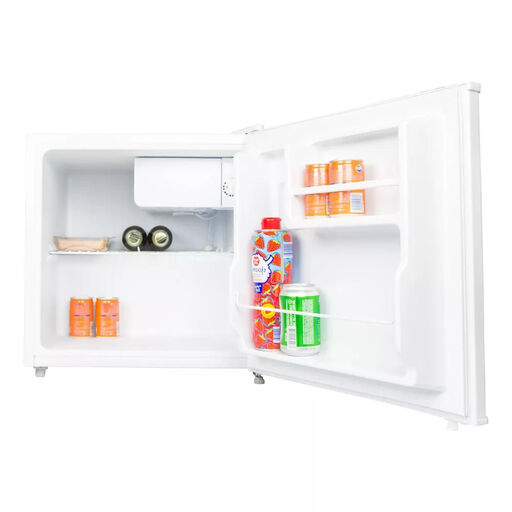
Why it suits this profile: This freestanding mini fridge offers 43 litres of capacity in a format measuring 49.2 × 47.2 × 45 cm. It’s a good fit if you mainly want to chill drinks, snacks and a limited supply of food.
The net capacity and dimensions are clearly stated. According to the product information, the small freezer compartment should not be used as a full-sized freezer.
43 litres of capacity, a reversible door, dial control and a stated noise level of 41 dB. F energy rating and 107 kWh per year.

Why it suits this profile: This model is designed for anyone looking for more cooling space in the kitchen, office or studio flat, while also valuing an organised layout.
The product specification states 92 litres of cooling space and no freezer compartment. This makes it clear what the appliance is and is not designed for.
E energy rating, 85 kWh per year, seven temperature settings, adjustable glass shelves and a reversible door. Stated noise level: 39 dB.
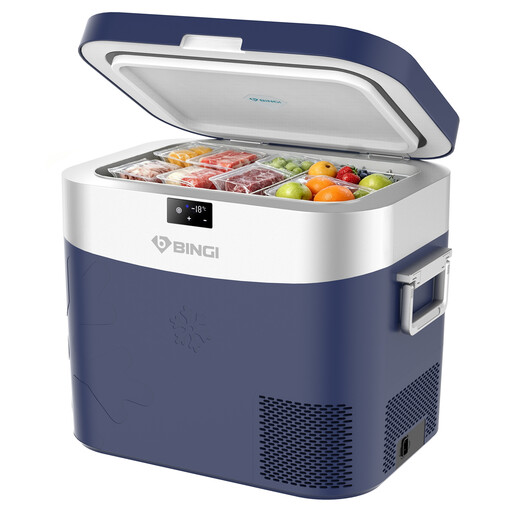
Why it suits this profile: For use in a car, motorhome, lorry, at the campsite or on a picnic, a portable compressor fridge makes more sense than a heavy tabletop model designed for 220–240 V.
The product is described as a compressor fridge for 12/24 V direct current. Before buying, check the included cables, dimensions and connection options.
22 litres of capacity and a 12/24 V DC connection for mobile use. The product information positions this model for vehicles and travel.
We’ve put together a complete, up-to-date list of products that fully meet these strict selection criteria and the applicable European safety regulations.
Yes, provided the model is suitable for indoor use and has sufficient ventilation space around it. Check the noise level and place the appliance securely on a flat surface. Also allow for heat dissipation, and don’t position the fridge directly next to a radiator.
It varies by model. The product specifications may state figures such as 85, 90, 107 or 110 kWh per year. Multiply the annual consumption by your own electricity tariff to estimate the cost. Actual consumption may vary depending on the ambient temperature, how full the fridge is and the settings used.
Its lifespan depends on use, ventilation, maintenance and transport. After transporting a fridge, leave it to stand as instructed in the manual before switching it on. Clean the inside regularly and remove any ice build-up when manual defrosting is required. Also check the warranty terms and keep your proof of purchase and model details.
