
Vandaag of morgen in huis

Kwaliteit gegarandeerd

Welkomstaanbiedingen ontgrendelen: GRATIS bezorging | Tot 80% korting | Gratis 30 dagen JoyPlus-proefperiode
Download de app
A mini fridge seems straightforward: plug it in, then add your drinks and groceries. But small differences in capacity, noise level and layout can determine how well it works in a student room, office or studio flat. For example, a fridge that looks compact on paper may not have enough space around it for ventilation, or may barely fit any bottles.
These tips will help you avoid a disappointing purchase.
The stated capacity doesn’t tell you everything. In practice, a small fridge with one large compartment may be less convenient than a model with adjustable shelves, door balconies and a salad drawer. So check not just the capacity but also the internal layout.
A minibar fridge with a capacity of around 40 to 45 litres is suitable for a few drinks, snacks and small groceries. For everyday use by one person, a small fridge of 80 to 120 litres is often more practical.
Some models have a small compartment for short-term storage of frozen food or making ice. That doesn’t automatically mean the appliance is suitable as a full-size freezer. Check the stated freezer capacity, temperature and usage instructions.
A fridge with a freezer compartment is handy for basic needs, but if you regularly store frozen meals, you’ll need more capacity and a suitable freezer section.
In a bedroom or home office, a compressor that runs continuously is more noticeable. So check the stated noise level in dB. A difference of a few decibels can be noticeable in a quiet room.
Also, don’t place a tabletop fridge right up against the wall. Keep the ventilation openings clear and follow the clearance recommendations in the manual. Poor air circulation can affect performance and energy consumption.
Measure the available space before ordering. Check the height, width and depth, as well as which way the door opens and how much room you’ll need to open it.
Choose the capacity to suit how you’ll use the fridge:
Adjustable glass shelves are handy for tall bottles and larger packs. A salad drawer and door balconies make a compact fridge easier to organise.
Since the EU revised its energy labels, ratings run from A to G. So compare not just the letter, but also the annual energy consumption in kWh. An appliance with a better rating may be more appealing for everyday use, but actual consumption also depends on the ambient temperature, settings, how full it is and ventilation.
Also check that the product information matches the energy label on the product page. The supplied specifications for the Salora models state energy label F; check the current product listing before buying.
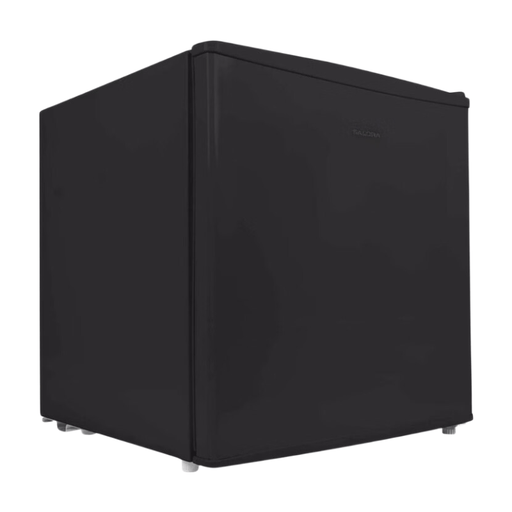
Why it suits this buyer: This compact black mini fridge is designed for anyone who mainly wants to chill drinks, snacks and a small amount of food.
The specifications list a 43-litre capacity, a metal shelf and separate fridge and freezer compartments. Be sure to check the current energy label information on the product page.
43-litre capacity, 41 dB noise level, rotary dial and a 1.5-metre cable.

Why it suits this buyer: Its larger capacity, freezer compartment and low stated noise level make it a good fit for everyday use at home or in a home office.
With 107 litres of fridge space and 13 litres of freezer space, it offers more practical storage than a minibar fridge. The stated total capacity is 120 litres.
Energy label C, 87 kWh per year according to the product details, 37 dB and a stated 5-year warranty.

Why it suits this buyer: This model offers a spacious layout for an office, student room or as extra fridge space in a small home.
The three glass shelves, adjustable feet and XL door balcony help you make efficient use of the available space.
90-litre capacity, energy label E, 40 dB and a stated cooling range of 0 to 10 °C.
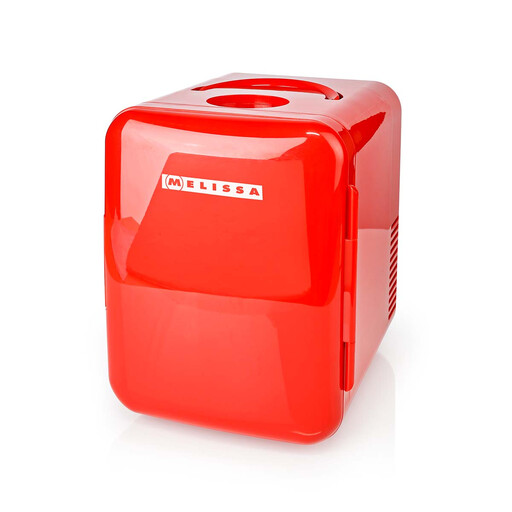
Why it suits this buyer: With 100-240V and 12V connections, this model is suitable for use at home, in the office, in the car or on a camping trip.
Its small capacity makes its limitations clear: this isn’t a replacement for a household fridge, but a portable cooler for temporary use.
4-litre capacity, carry handle, cooling and heating functions, and mains or 12V connection.
We’ve put together a complete, up-to-date list of products that meet these strict selection criteria and current European safety regulations.
For drinks and snacks alone, 4 to 45 litres may be enough. For everyday use in a student room or office, 80 to 120 litres is more practical. If you also want to store frozen food, check the capacity and temperature of the freezer compartment.
The compact models in this overview have stated noise levels of around 37 to 41 dB. That’s relatively low, but how noticeable the sound is depends on the room, the surface the fridge is standing on and when the compressor switches on. Make sure the fridge is stable and has enough ventilation.
That depends on its annual consumption in kWh and your energy tariff. Use the figure on the energy label to compare models. Your actual costs may be higher or lower depending on the ambient temperature, temperature setting, ventilation and how often you open the door.
