
Vandaag of morgen in huis

Kwaliteit gegarandeerd

Welkomstaanbiedingen ontgrendelen: GRATIS bezorging | Tot 80% korting | Gratis 30 dagen JoyPlus-proefperiode
Download de app
A mini fridge may seem straightforward: choose a compact model, plug it in and you’re all set. In practice, its size, cooling technology and surroundings all affect how well it works for you. A small fridge for a student room has different requirements from a drinks fridge for an office, a wine cooler or a portable mini fridge for the car.
Most disappointing purchases come down to three common pitfalls:
Don’t just look at the number of litres. Check the dimensions of the shelves and door compartments, and see whether there’s a freezer compartment. Measure the space available and leave room around the ventilation openings. Also check that the door opens in the right direction and that there’s enough space to open it fully.
For a tabletop fridge in a student room or office, 40 to 50 litres may be suitable for drinks, snacks and a few food items. If you want to store more, look for a compact fridge with a capacity of 80 to 115 litres. A fridge with a glass door is particularly handy when you want to see what’s inside at a glance, but don’t place it directly opposite a heat source or in direct sunlight.
Check what the product description means by a freezer compartment, too. Some models are designed for temporarily storing food that’s already frozen, rather than as a full-size freezer. The product page and manual are the best sources of information.
A compressor fridge is generally designed to keep food and drinks cool at a stable temperature. A thermoelectric model is lighter and often suitable for the car, camping, a desk or short trips. However, the stated temperature won’t necessarily be achievable in every situation.
A 12V fridge for a car or campervan needs to be compatible with the available power socket and its power consumption. Check whether a 220–240V adapter is included if you also want to use it at home. For compressor cool boxes, features such as battery protection, 12/24V support and an adjustable temperature range are handy when travelling.
For wine, cooling isn’t the only thing that matters. Check the number of temperature zones, the temperature range, bottle capacity, vibration reduction and shelf layout. A wine cooler with a glass door can look great on display, but a UV-protective door and a suitable location matter more than appearance alone.
Compare the stated noise level in dB. A model rated at around 38–40 dB may be suitable for an office or living room. A model rated at around 41 dB may still be practical, but could be better suited to a kitchen, bar or another room with background noise.
Check the annual energy consumption in kWh, not just the energy label. Actual consumption depends on factors including room temperature, ventilation, the temperature setting and how often the door is opened. When checking energy claims, always refer to the product specifications and the energy label on the product page. Brand claims such as “cools faster” or “very quiet” should be understood as information from the manufacturer, not a universal guarantee.
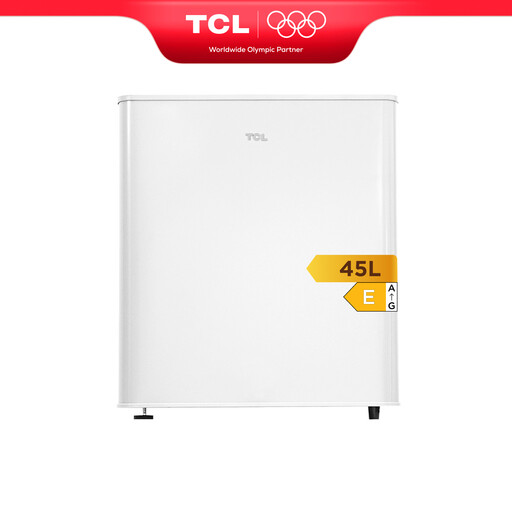
Why it suits this need: This tabletop fridge offers a 45-litre capacity, mechanical controls and a size that works well in a bedroom, office or student room.
The specifications list 42 litres of fridge space and a separate 3-litre freezer compartment, making the layout clearer than a rounded total capacity alone.
45 litres total capacity, one glass shelf, adjustable feet, an E energy rating and a stated noise level of 40 dB.
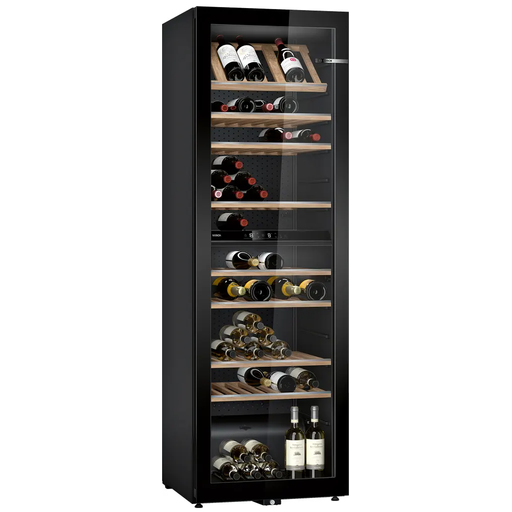
Why it suits this need: This freestanding wine cooler is designed for a larger collection and offers two temperature zones for different types of wine.
The description gives the dimensions as 186 × 60 × 61 cm, making it clear in advance that this isn’t a tabletop model for a small alcove.
Capacity of up to 199 bottles according to the product specifications, two zones, pull-out wooden shelves, LED lighting and a stated noise level of 38 dB.
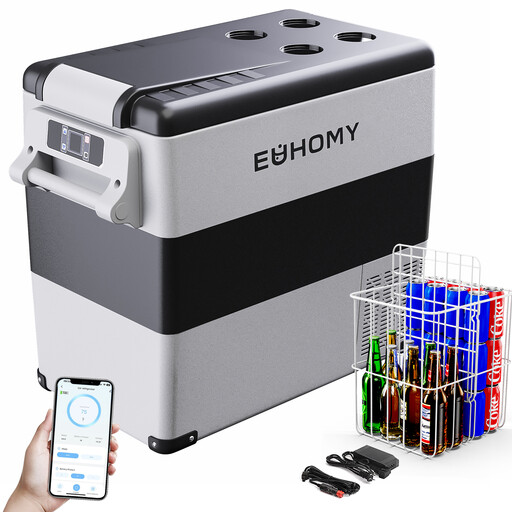
Why it suits this need: For a campervan, boat, campsite or long car journey, a portable compressor cool box with several power options is more practical than a fixed minibar fridge.
The product specifications list 12/24V DC, 110/240V AC and three battery protection levels. Before use, check that the connection and settings are right for your vehicle.
49.4 litres capacity, two compartments, an adjustable range of -20 to 20 °C, compressor cooling and a stated noise level of 40 dB.
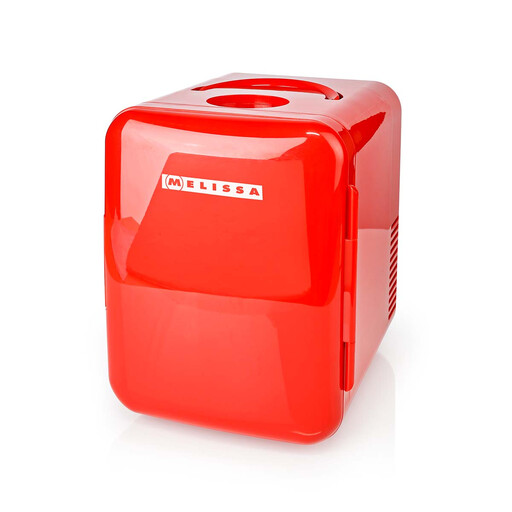
Why it suits this need: This compact model is designed for a few cans, snacks or cosmetics in the car, at the office, in a bedroom or on a short trip.
The capacity is listed as 4 litres, enough for up to six 33 cl cans, so the limited storage space is clear from the outset.
Runs on 100–240V AC and 12V DC, has a carry handle and supports cooling from 8–18 °C and heating from 50–65 °C according to the product specifications.
We’ve put together a complete, up-to-date list of products that meet these strict selection criteria and the applicable European safety regulations.
It can be, but check the noise level, ventilation space and energy consumption. A model rated at around 38–40 dB may be more suitable for a quiet room than a noisier one. Place the fridge on a stable surface to reduce vibration.
Consumption varies from model to model. Check the stated annual consumption in kWh and multiply it by your current electricity tariff for a rough estimate of the cost. Actual costs may be higher or lower depending on room temperature, ventilation, settings and how often you use it.
Only if the model is designed for it. A portable mini fridge with a 12V connection is made for this purpose. Check whether the cable is included, whether your car’s socket supplies enough power and whether the fridge has a battery protection function. To use it at home, you’ll need an AC adapter supplied with the fridge or one that’s suitable.
