
Vandaag of morgen in huis

Kwaliteit gegarandeerd

Welkomstaanbiedingen ontgrendelen: GRATIS bezorging | Tot 80% korting | Gratis 30 dagen JoyPlus-proefperiode
Download de app
A mini fridge seems simple: choose a size, plug it in and you’re ready to go. In practice, models vary considerably in their cooling technology, power supply, noise level and usable capacity. A minibar fridge for a student room, for example, needs different features from a 12V fridge for a campervan.
Look out for these three common pitfalls:
For a fridge for a student room or office, dimensions, noise and mains power are usually the main things to consider. A tabletop fridge of around 40 to 45 litres has room for drinks, lunch and a few fresh items without taking up too much space.
Check in advance:
A mechanical temperature control is easy to use, but it generally offers less precise control than a digital panel.
A camping fridge, portable fridge or car fridge needs to be compatible with your vehicle’s power supply. Check whether the model works with 12V, 24V, 100-240V or a combination of these.
A compressor cool box is a particularly good option if you want to chill or freeze items while you’re on the move. According to the product descriptions from the brands concerned, some models can reach below-zero temperatures. Treat this as a manufacturer’s specification, and always check the manual, ventilation requirements and battery protection features.
Pay particular attention to:
A 4-litre mini fridge is suitable for a few cans or personal care products. For a student room, office or minibar, 40 to 45 litres is more practical. A 22-litre model can be a good middle-ground option for travel and camping.
Measure not only the space where the fridge will stand, but also:
A mains-powered model with static cooling works differently from a portable compressor fridge. A thermoelectric model is often compact and lightweight, but its stated cooling temperature may depend on the ambient temperature. A compressor model generally has a wider adjustment range, but may be heavier and make a noise when the compressor switches on.
For a mini fridge with a freezer compartment, check carefully what the compartment is designed for. For example, the Salora CFB4300 models list a separate freezer compartment; the white version also states that it is intended for temporarily storing frozen products. This is not the same as a full-size freezer.
An energy label is useful, but also compare the annual consumption in kWh. The stated consumption depends on test conditions and may be higher in a warm room. An appliance rated at 40 or 41 dB may be suitable for many situations, but placement still matters in a quiet bedroom.
Always follow the safety instructions:
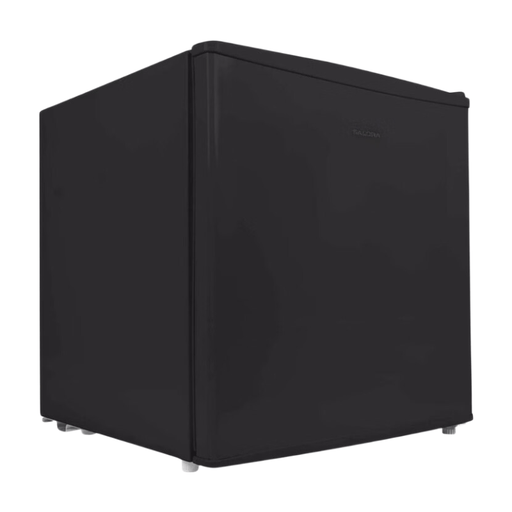
Why it suits this type of user: This freestanding model has a 43-litre capacity and is designed for use in places such as a minibar, student room or office. Its stated dimensions are 49,2 × 47,2 × 45 cm.
The product information lists both the net capacity and annual consumption of 107 kWh. This makes it easier to estimate the available space and running costs before you buy.
43-litre capacity, metal shelf, separate fridge and freezer compartments, and a noise level of 41 dB according to the product details.
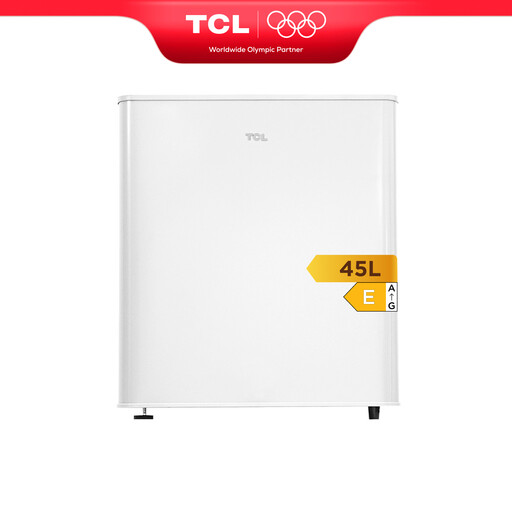
Why it suits this type of user: This tabletop model combines a total capacity of 45 litres with a glass shelf, adjustable feet and a bottle rack, making it suitable for regular use at home or in the office.
The specifications list the fridge and freezer compartment capacities separately: 42 litres for the fridge and 3 litres for the freezer compartment. This gives you a clearer idea of the available space.
E energy rating, 40 dB noise level, mechanical controls and a temperature range of 0 to 10 °C for the fridge compartment, according to the product listing.
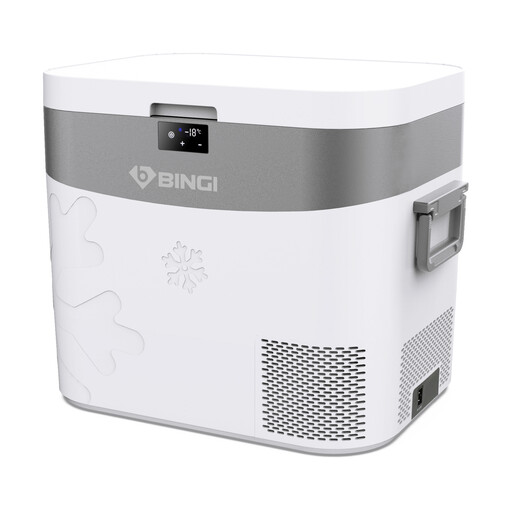
Why it suits this type of user: This portable model is designed for travel, camping, campervans, lorries and boats. According to the product specifications, it runs on 12V/24V DC and 100-240V AC.
The listing gives an adjustable range of -18 °C to 15 °C and three-stage battery protection. Check these features against the supplied manual.
22-litre capacity, compressor cooling, AC/DC connection and adjustable temperature, according to the product description.
We’ve put together a full, up-to-date list of products that meet these strict selection criteria and the applicable European safety regulations.
A 4-litre model may be enough for a few drinks and snacks. For everyday groceries, a model of around 40 to 45 litres is more practical. Check the internal dimensions too, as shelves and a freezer compartment reduce the usable space.
Yes, as long as the ventilation openings remain clear and the noise level suits your needs. A stated rating of 40 or 41 dB gives you an indication, but the actual noise can vary when the compressor starts up or if the appliance isn’t level.
That depends on the model, ambient temperature and how long you use it for. Use the stated annual consumption in kWh as a guide and compare it with your electricity tariff. A portable fridge running on 12V also draws power from your vehicle’s battery, so battery protection is an important specification.
