
Vandaag of morgen in huis

Kwaliteit gegarandeerd

Welkomstaanbiedingen ontgrendelen: GRATIS bezorging | Tot 80% korting | Gratis 30 dagen JoyPlus-proefperiode
Download de app
A mini fridge is handy in a studio flat, student room, home office, bedroom or car. But compact models can vary considerably in capacity, cooling technology, power supply and noise level. A small fridge designed mainly for cans works differently from an under-counter fridge for everyday groceries.
So look beyond its appearance and stated capacity. Three common pitfalls are particularly likely to lead to a disappointing purchase.
A stated capacity of, for example, 43 litres doesn’t tell you exactly how many bottles, tubs and packets will fit inside. A freezer compartment, protruding thermostat or fixed shelf can take up space. Check the layout, number of shelves and dimensions of the interior.
A minibar fridge or thermoelectric portable fridge may be suitable for drinks and snacks. That doesn’t automatically mean it can store frozen food for a long time. If you’re considering a mini fridge with a freezer compartment, check what the product information says the compartment is designed for.
A fridge in a bedroom or office is often close to where you work or sleep. A difference between around 40 and 41 dB may seem small, but the compressor type and where you position the fridge can affect how noisy it seems. Annual energy use matters too: multiply the stated kWh by your current electricity tariff for a realistic estimate.
Measure the space where the fridge will go, and also allow for:
An under-counter fridge of around 43 to 45 litres will often fit under or beside a desk, but a model with a capacity of 88 to 93 litres needs considerably more floor space.
A capacity of 4 to 10 litres may be enough for one person who mainly wants to store drinks, yoghurt and a few snacks. Around 40 to 50 litres is more practical for everyday groceries. If you’re looking for a drinks fridge for several people, consider a model with a capacity of 80 litres or more.
Look at the combination of:
A compressor fridge is generally designed to provide consistent cooling and, in some models, can also freeze. A thermoelectric compact fridge is lighter and often suitable for short trips, but its performance is more affected by the ambient temperature.
For home use, check that the appliance runs on 220–240 V. For a camping fridge or car fridge, 12 V DC is important. Models with both AC and DC connections are more versatile, but check whether the right adapter is included. For an energy rating such as E or F, the label applies to the official product category; also check the annual energy use in kWh.
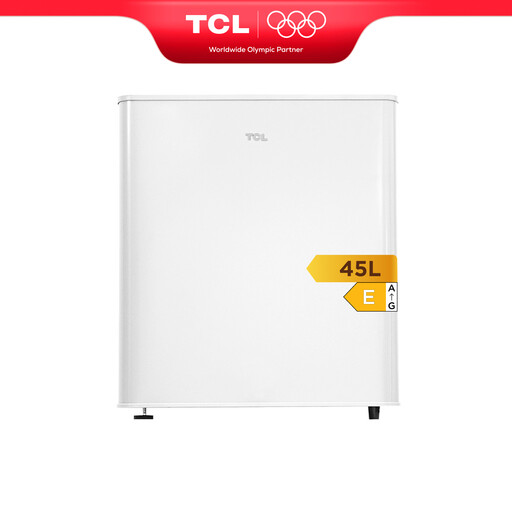
Why it suits this profile: This model offers a practical mid-sized option for a student room, studio flat or home office. Its 45-litre capacity is suitable for drinks, snacks and a limited amount of everyday groceries.
The product information lists 42 litres of fridge space and 3 litres of freezer space separately. This gives you a clearer idea of the available room than a total capacity alone.
45-litre total capacity, E energy rating, manual temperature control, glass shelf and a stated noise level of 40 dB.
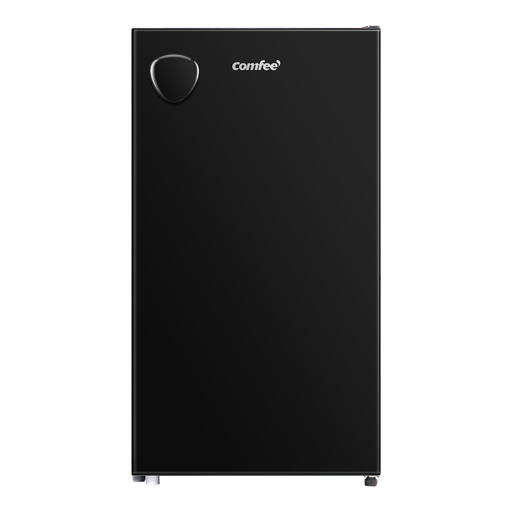
Why it suits this profile: This under-counter model is designed for people who value extra organisation and everyday practicality in an office, bedroom or studio flat.
The reversible door, adjustable feet and removable glass shelves make it easier to position the fridge and adapt its layout.
88-litre capacity, salad drawer, interior light, adjustable glass shelves and E energy rating.
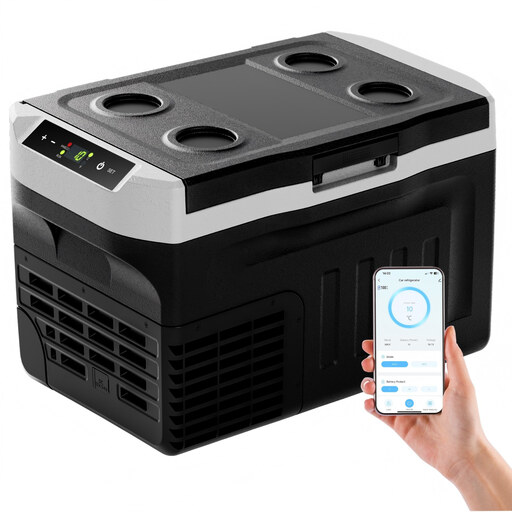
Why it suits this profile: Designed for campers, drivers and travellers, this portable fridge can run on 12/24 V in a car or 220–240 V at home.
According to the product description, this model uses a compressor and can be set to cool or freeze. Its stated battery protection helps manage power use in a vehicle.
21-litre capacity, temperature range of -20 °C to 20 °C according to the product information, app control, LED lighting, and 12/24 V and AC connections.
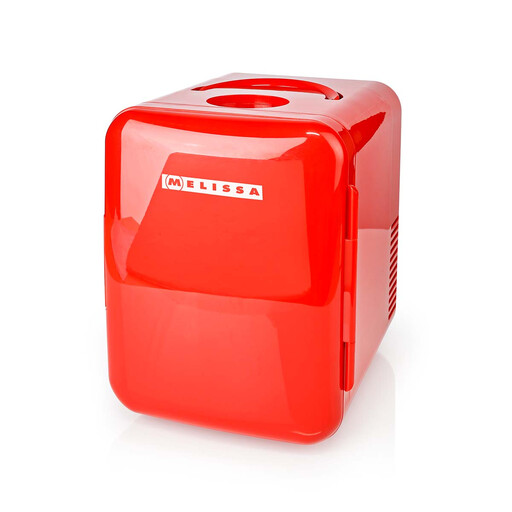
Why it suits this profile: Its small capacity and carry handle make it handy for a car, workplace, camping table or short trip when you want to take a few cans and snacks with you.
The product information clearly states a capacity of 4 litres and space for up to six 33 cl cans. This makes it easy to judge how much it can hold.
4-litre capacity, 100–240 V AC and 12 V DC, cooling and warming functions, removable shelf and carry handle.
We’ve put together a complete, up-to-date list of products that meet these strict selection criteria and current European safety regulations.
Yes, as long as the appliance has enough ventilation space and stands on a stable surface. Check its stated noise level, and avoid placing the fridge right next to your bed if you’re sensitive to the compressor switching on. A model rated at around 40 dB may be acceptable for some people, but perceptions of noise vary.
Check the annual energy use in kWh on the energy label or product page. Multiply this by your electricity price per kWh. A portable fridge rated at 48 W doesn’t necessarily use 48 W continuously; actual consumption depends on the cooling cycle, ambient temperature and how long it’s used.
Its lifespan depends on the cooling technology, how it’s used, ventilation and maintenance. Keep the ventilation openings clear, clean the door seals and transport a compressor fridge according to the instructions. If the manual recommends it, leave the appliance to stand for a while after transporting it on its side before plugging it in. Also check the warranty and availability of servicing before buying a mini fridge.
