
Vandaag of morgen in huis

Kwaliteit gegarandeerd

Welkomstaanbiedingen ontgrendelen: GRATIS bezorging | Tot 80% korting | Gratis 30 dagen JoyPlus-proefperiode
Download de app
A mini fridge may seem simple to choose: decide on the size, check the price and put it in the room. In practice, problems often only become apparent after purchase. The fridge may have too little space, make more noise than expected or not fit properly next to a wall.
For students, single-person households, small flats, offices and hotel rooms, it is therefore important to compare models carefully. Don’t just look at the number of litres, but also consider the layout, ventilation space, energy class and noise level.
A marketing claim such as “80 litres” does not always indicate how much space is available for food. A freezer compartment, door shelves and technical recesses take up some of the internal space. So check the net capacity and look at the split between the fridge and freezer compartments.
A compact 43-litre fridge is suitable for drinks, snacks and a few everyday groceries. For independent living, a small fridge of around 80 to 130 litres is usually more practical.
Not every freezer compartment is designed to freeze fresh products for long periods. In some models, the compartment is mainly intended for temporarily storing products that are already frozen. So check whether a star rating, freezing capacity in kilograms per 24 hours and a separate freezer capacity are specified.
A fridge with a freezer compartment therefore does not automatically offer the same capabilities as a full-size freezer.
Don’t just measure the recess. A fridge needs space around it to release heat. Take the door opening, socket, skirting boards and sufficient air circulation at the back and sides into account. With a tabletop fridge, it is also important to check whether the furniture can support its weight.
A reversible door can help when space is limited. However, check whether changing the door opening direction is possible according to the manual and whether the hinges required are included.
Choose the capacity based on how you plan to use it:
Look for adjustable shelves, door shelves, a salad drawer and the option to remove a shelf. Glass shelves are generally easy to wipe clean, but always check the stated product specifications.
European energy labels for fridges range from A to G. The energy class is useful for comparison, but also look at the stated annual consumption in kWh. This figure makes it easier to compare models with different capacities.
You can calculate the estimated electricity costs easily:
annual consumption in kWh × your electricity tariff per kWh = estimated annual cost
Actual consumption depends, among other things, on the ambient temperature, ventilation, temperature setting and how often the door is opened. An energy-efficient fridge with a lower annual kWh figure may therefore be more cost-effective in the long term, even if the purchase price is higher.
A quiet fridge is important for an office, studio flat or bedroom. A difference between 37 and 41 dB may seem small, but it can be noticeable in a quiet room. Also check the airborne acoustical noise emissions class, if stated.
Place the appliance on a level surface and do not block any ventilation openings. A fridge whose product details state that it is suitable for a minimum ambient temperature of, for example, 16 °C should not simply be placed in a cold storage room.
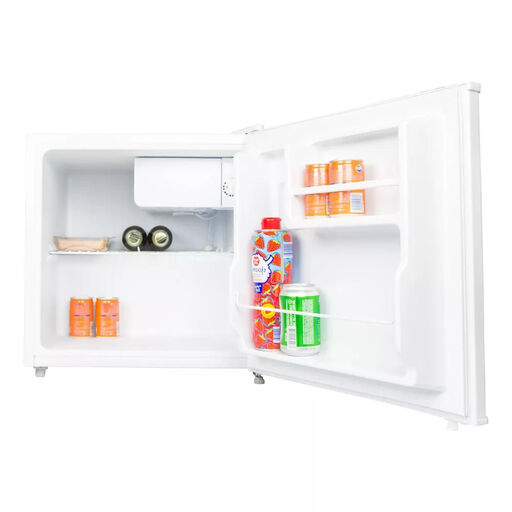
Why it suits this profile: This model is designed for anyone who mainly wants to keep drinks, snacks and a limited supply of food chilled in a student room, home office or minibar.
The 43-litre net capacity and dimensions of 49.2 × 47.2 × 45 cm make the available space clear in advance. According to the product information, the small freezer compartment is not intended for long-term freezing.
43-litre capacity, reversible door, mechanical dial and a stated noise level of 41 dB.
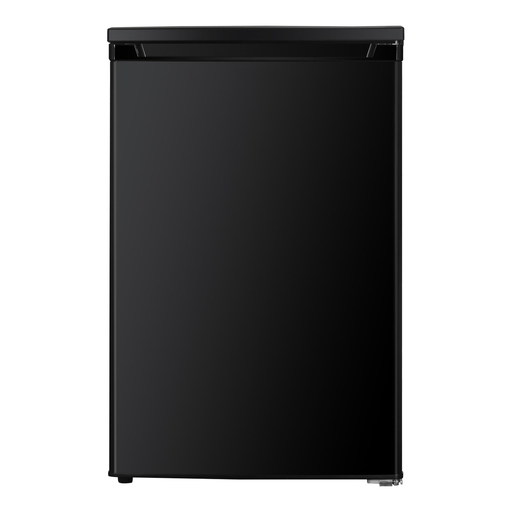
Why it suits this profile: The capacity and layout are suited to a small household that wants more space than a classic mini fridge without moving up to a large fridge-freezer.
The stated 126 litres are put to practical use with three glass shelves and a salad and fruit drawer. There is no freezer compartment, so the fridge capacity is not overstated.
Energy class D, stated annual consumption of 72 kWh, reversible door and a noise level of 39 dB.

Why it suits this profile: This tabletop model combines everyday fridge space with a separate freezer compartment, making it suitable for small households, offices and additional fridge space for regular use.
The product specifications list 95 litres of fridge space and 14 litres of freezer space separately. This makes it clear how much room is available for fresh and frozen products.
Energy class C, 89 kWh per year according to the product specifications, 37 dB, reversible door and LED lighting.
After transport, leave a fridge standing upright as instructed by the manufacturer before switching it on. Place it on a stable, level surface and keep the ventilation openings clear. Do not put hot dishes straight into the appliance and avoid leaving the door open for too long.
A tabletop fridge does not automatically belong on a worktop. Check the weight, load-bearing capacity and dimensions of the furniture. For an office, a compact fridge with adjustable shelves and a large door shelf is often more practical than a minibar-style model.
We’ve put together a complete, up-to-date list of products that fully meet these strict selection criteria and the applicable European safety regulations.
That depends on how much food you keep in stock. A 43-litre model is suitable for drinks, snacks and a few small groceries. If you live independently and also want to store vegetables, dairy products and ready meals, it is better to look at around 80 to 130 litres. Also check the noise level and permitted ambient temperature.
Use the stated annual consumption on the energy label. Multiply this figure by your current electricity tariff. A model using 90 kWh per year consumes less electricity on paper than a model using 140 kWh per year, but actual costs vary depending on placement, temperature setting and usage.
Its lifespan depends on usage, ventilation, maintenance and transport. Clean the inside regularly, remove any ice build-up when manual defrosting is required and keep the back free of dust. Also check the warranty terms and the availability of servicing or spare parts before you buy.
