
Vandaag of morgen in huis

Kwaliteit gegarandeerd

Welkomstaanbiedingen ontgrendelen: GRATIS bezorging | Tot 80% korting | Gratis 30 dagen JoyPlus-proefperiode
Download de app
A mini fridge might seem easy to choose: decide on the size, pick a colour and place your order. But problems often only become apparent after a few weeks. A door that doesn’t fit properly, insufficient ventilation space or a compartment that isn’t a proper freezer can make your purchase less useful than expected.
So look beyond the capacity in litres. The dimensions, noise level, energy consumption and type of cooling all help determine whether a compact fridge is right for you.
A 45-litre mini fridge or 43-litre mini fridge has room for drinks, snacks and personal food, but the layout also matters. For example, a large door shelf might be more useful than a few extra litres. Check whether the fridge has an adjustable shelf, too, and how much space the fridge or freezer compartment takes up.
A small freezer compartment isn’t necessarily suitable for freezing food for long periods, either. Some models are designed for the temporary storage of products that are already frozen. So read the product information and manual before storing frozen food in one.
Noise levels can be an important consideration in a bedroom, student accommodation or home office. A rating of 40 or 41 dB can be checked on the specifications sheet, but how loud the fridge seems also depends on the floor surface, ventilation and when the compressor switches on.
An uneven floor can make vibrations worse. Adjustable feet help keep the fridge stable, but leave enough space around it for ventilation, too.
Since the EU energy label was revised, ratings have run from A to G. When comparing a model with an E or F rating, look at its stated annual consumption in kWh, not just the letter. The actual cost depends on your electricity tariff, room temperature, settings and how you use the fridge.
A fridge that’s switched on all the time will use energy differently from one that’s only used occasionally. So check both the energy rating and the stated annual consumption.
Measure not only the space where the fridge will stand, but also the route to get it there. Check:
A table-top fridge with a capacity of around 43 to 45 litres will often fit under or next to a worktop, but always check the exact product dimensions. The TCL RF60DWE0, for example, measures 449 × 485 × 512 mm. The Salora CFB4300 models measure 49.2 × 47.2 × 45 cm.
A capacity of 43 to 45 litres can be practical for cans, bottles and small meals. Look for an adjustable shelf, a door shelf for larger bottles and a separate fridge compartment. A mini bar fridge with one shelf is best suited to storing the same types of product regularly.
For cosmetics, a few cans or taking with you on the go, a much smaller model makes more sense. A portable mini fridge with a capacity of 4 litres is easier to carry, but doesn’t offer the same storage space as a table-top model.
A standard compact fridge for home use usually runs on mains electricity. A portable model may also have a 12V car connection. Check whether the required cable is included.
A fridge with cooling and heating functions is a different type of appliance from a traditional compressor or table-top fridge. According to its product specifications, the Melissa Portable Mini Fridge has a cooling range of 8 to 18 °C and a heating range of 50 to 65 °C. The product description says it’s designed for drinks, snacks, cosmetics, travel and camping. Don’t use it as a replacement for a fridge for storing perishable food over long periods.
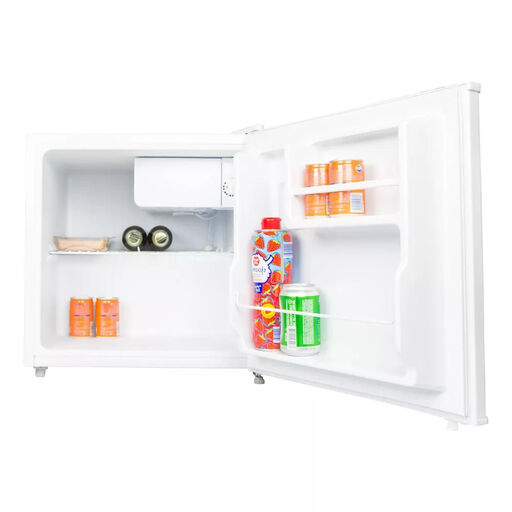
Why it suits this type of user: This white table-top model is designed for simple use in student accommodation, a bedroom, an office or as a minibar. Its 43-litre capacity gives you room for everyday snacks and drinks.
The product specifications list a 43-litre capacity, a metal shelf, a dial control and a noise level of 41 dB. According to the product description, the freezer compartment isn’t designed for freezing food for long periods.
43-litre capacity, 1.5-metre cable, reversible door according to the product name and a stated annual consumption of 107 kWh.
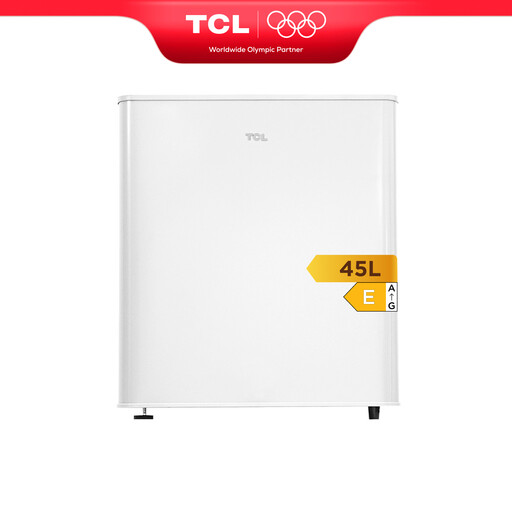
Why it suits this type of user: A good choice if you’re looking for a well-organised fridge for home or the office, with an adjustable glass shelf and a roomy door shelf.
The adjustable feet help keep the fridge stable. The manufacturer also highlights an easy-to-clean door seal and a glass shelf. The stated noise level is 40 dB.
45-litre total capacity, including 42 litres of fridge space and 3 litres of freezer space, E energy rating and an adjustable glass shelf.
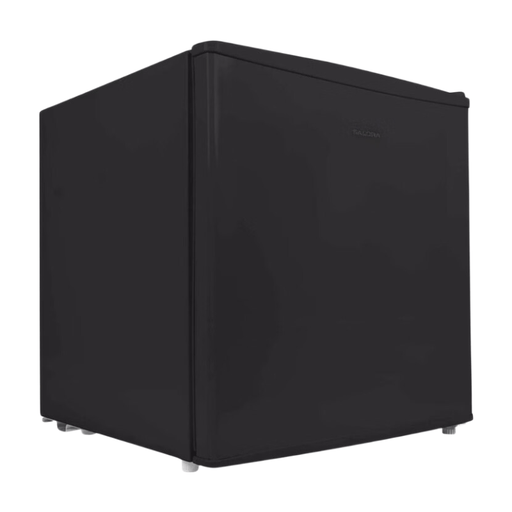
Why it suits this type of user: A practical choice for a minibar, office or student accommodation where you want a black finish and a dedicated place to store drinks.
The product details list the capacity, dimensions, noise level of 41 dB and annual consumption of 107 kWh. The specifications make clear that the freezer compartment is limited.
Black finish, 43-litre capacity, temperature control dial and a metal shelf.
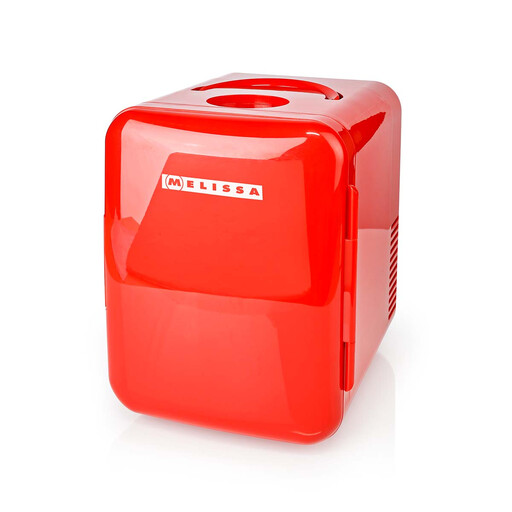
Why it suits this type of user: This model is designed for anyone looking for a portable mini fridge for the car, camping, travel, the office or cosmetics. The handle makes it easier to move around.
Its capacity is clearly limited to 4 litres or a maximum of six 33 cl cans. So it’s clear from the outset that this isn’t a full-size fridge for a household.
According to the specifications, it runs on 100–240 V AC and 12 V DC, has cooling and heating functions, and comes with a removable shelf.
We’ve put together a full, up-to-date list of products that meet these strict selection criteria and the applicable European safety regulations.
It varies by model. Keep the ventilation openings clear and follow the instructions in the manual. Don’t place a fridge right up against a wall or in an enclosed cupboard unless the manufacturer says it’s safe to do so. A flat, stable surface also helps reduce vibrations.
To work this out, take the stated annual consumption in kWh and multiply it by your current electricity tariff. The result is still an estimate: room temperature, temperature settings, how often you open the door and how full the fridge is all affect energy consumption.
Its lifespan depends on the cooling system, maintenance, ventilation and how it’s used. Clean the door seals and interior regularly, avoid overloading it, and after moving the fridge, leave it to stand as instructed in the manual before switching it on. Check the warranty terms and available service information in advance, too.
