
Vandaag of morgen in huis

Kwaliteit gegarandeerd

Welkomstaanbiedingen ontgrendelen: GRATIS bezorging | Tot 80% korting | Gratis 30 dagen JoyPlus-proefperiode
Download de app
A mini fridge may seem easy to choose: decide on the size, compare prices and you’re done. In practice, problems often only emerge after you’ve bought one. The fridge turns out to be too noisy for a bedroom, doesn’t fit under your desk or can’t keep things cool enough on a hot day at the campsite.
As Joybuy Product Recommendation Officer, I’ve picked out the most important specifications and common buying pitfalls. That way, you can compare compact fridges based on practical features rather than marketing claims alone.
A 43-litre fridge won’t necessarily have room for lots of bottles. The layout, door shelves and presence of a freezer compartment all affect how much usable space there is inside. So, as well as checking the capacity, look at the height, width, depth and shelf layout.
Also measure the space where you plan to put the fridge. Leave enough room around it for ventilation. In a small student room or office, even a few extra centimetres can make the difference between being able to open the door fully and not.
A minibar fridge for a bedroom or office may look compact on paper, but its compressor or fan can still be audible. Check the stated noise level in dB. Models rated at around 38 to 41 dB are generally in a similar category, but the actual noise also depends on the surface it’s on and whether the fridge is level.
A portable fridge with thermoelectric cooling works differently from a compressor fridge. This type is easy to carry, but its cooling performance depends more on the ambient temperature.
A small fridge for drinks doesn’t always have the same features as a fridge for fresh food. A mini fridge with a freezer compartment can be handy, but check what the compartment is designed for. On some models, it’s mainly suitable for temporarily storing food that’s already frozen.
Also check the temperature controls. A fridge with a dial offers less precise control than one with digital settings or a compressor cool box with a display.
Choose a capacity based on what you actually need:
A wine fridge isn’t the same as a general-purpose drinks fridge. A wine cooler is designed to maintain a stable temperature range, with suitable shelves and sometimes multiple temperature zones. For beer, soft drinks and water, adjustable shelves and a glass door are often more important.
A 12V and 220V fridge is versatile for use at home, in a campervan and in a car. However, check that both cables are actually included. Some models run on 12V as standard and require a separate adapter for home use.
If you’re using it in a car, keep the battery in mind. A compressor cool box with battery protection can help reduce the risk of overloading it, but always follow the manufacturer’s instructions. Don’t leave a portable fridge running for long periods unnecessarily when the engine is off.
Compare the stated annual consumption in kWh per year, not just the energy label. Since the EU energy label rescaling, ratings for many cooling appliances run from A to G. Lower energy consumption could matter more in the long run than a small difference in price.
Also check the product page for conflicting information. The Salora CFB4300BL product name states energy label E, while the technical description lists label F. The stated annual consumption is also more useful than a general claim about “low running costs”. Check the latest product specifications before ordering.
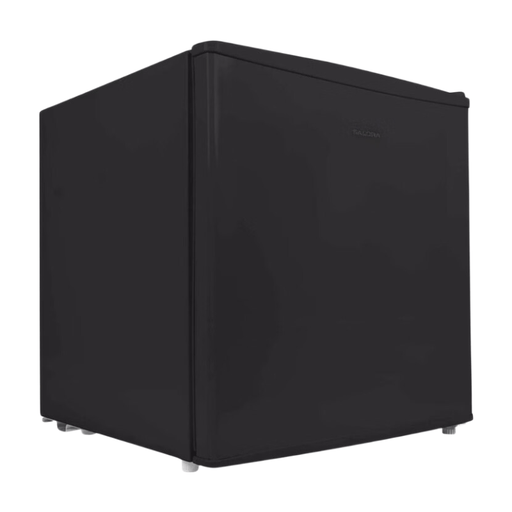
Why it suits this profile: A straightforward choice for a student room, home office or simple minibar. The fridge has a 43-litre capacity, a metal shelf and separate fridge and freezer compartments.
The dimensions are clearly stated: 49,2 × 47,2 × 45 cm. However, check the energy label, as the product listing isn’t entirely consistent about this.
43-litre capacity, mechanical temperature control, stated noise level of 41 dB and a 2-year manufacturer’s warranty, according to the product information.
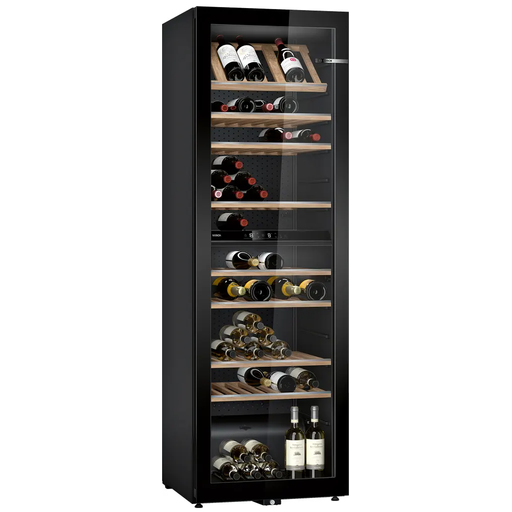
Why it suits this profile: For wine lovers who want to store red and white wines separately. This is a large wine cooler, not a general-purpose mini fridge.
The two temperature zones mean you don’t need to use the same setting for every type of wine. Check beforehand that it will fit in your space, as it’s 186 cm tall.
Capacity for up to 199 bottles, two zones ranging from 5 to 20 °C, pull-out wooden shelves and a stated noise level of 38 dB.
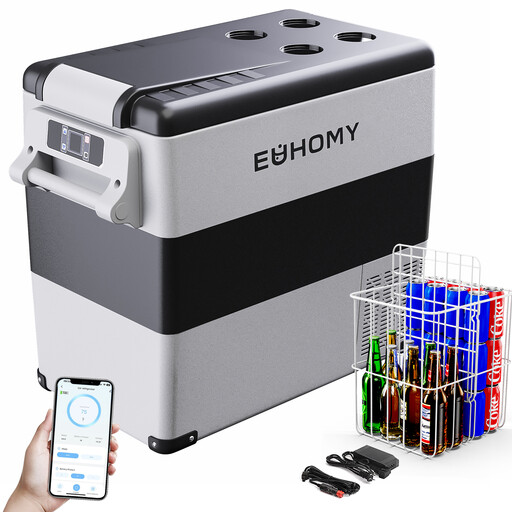
Why it suits this profile: A practical portable fridge for a campervan, camping, a boat, a lorry or longer car journeys. This model can both cool and freeze.
The specifications list 12/24V DC and 240V AC, so it can be used in a vehicle or accommodation. Check the connection and allow space for ventilation before installing it.
Two storage zones, adjustable from -20 to 20 °C according to the product information, battery protection and a stated average consumption of 45 W.
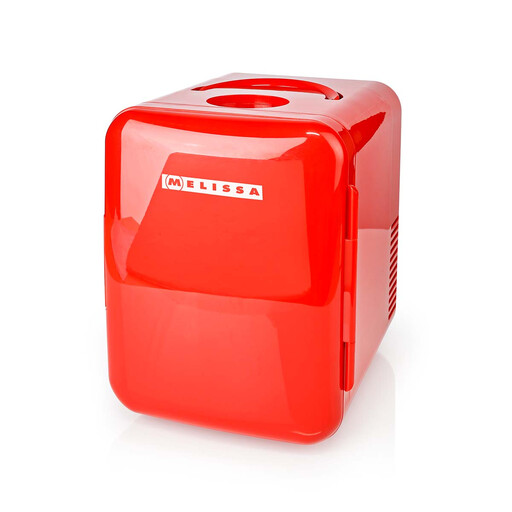
Why it suits this profile: For a few cans, snacks or cosmetics at home, in the office, in the car or on a short trip. The carry handle makes it easy to move around.
Its 4-litre capacity makes it clear that this isn’t a fridge for storing supplies. The product information lists both 100–240V and 12V, including a cable for home use.
Room for up to six 33 cl cans, cooling and warming functions, and a stated power rating of 48 W.
We’ve put together a complete, up-to-date list of products that meet these strict selection criteria and the applicable European safety regulations.
It can be, but pay particular attention to the stated noise level, ventilation space and where you place it. Make sure the appliance is level on a stable surface, and check whether the noise from the compressor or fan is acceptable to you.
It varies by model, capacity, ambient temperature and usage. Check the annual consumption in kWh and compare it with other models. A portable thermoelectric fridge may have a different consumption pattern from a compressor fridge.
Only if the model is suitable for this and has the right connection. Look for an explicit mention of 12V DC, a car cable included in the box and, where relevant, battery protection. Don’t connect a standard 220–240V fridge directly to your car without a suitable inverter.
