
Vandaag of morgen in huis

Kwaliteit gegarandeerd

Welkomstaanbiedingen ontgrendelen: GRATIS bezorging | Tot 80% korting | Gratis 30 dagen JoyPlus-proefperiode
Download de app
A mini fridge may seem easy to choose: compact size, low energy consumption and job done. Yet problems often only become apparent after purchase. A door that cannot open properly, too little usable space or a freezer compartment that is barely suitable for frozen food can make a compact fridge less practical than expected.
This buying guide helps students, home workers, office users and studio residents compare models objectively.
The stated capacity does not tell the whole story. A 43-litre fridge with an awkward layout may be less useful than a model with adjustable shelves and door compartments. Therefore, check:
Pay close attention to the description of a mini fridge with freezer compartment. A small freezer compartment is not always designed to freeze food for long-term storage. In some models, it is mainly intended for temporarily storing products that are already frozen.
A fridge makes periodic noise from the compressor or fan. This can be particularly noticeable in a student room, bedroom or home office. Therefore, check the stated noise level in dB. According to the product specifications, models around 37 to 41 dB are relatively suitable for living and working spaces, although the perceived noise level can vary from room to room.
The European energy label ranges from A to G. A higher rating does not automatically mean that every model will be cheaper to run: the annual consumption in kWh is the practical figure to compare. Multiply this figure by your own electricity tariff to estimate the annual running costs.
For example, a Salora CFB4300 model states 107 kWh per year and energy label F. A Bella BKV555-040CW states 89 kWh per year and label C. Always compare these figures alongside the capacity and features.
Do not just measure the space where the fridge will stand; also measure the area around the appliance. A freestanding fridge needs ventilation to dissipate heat. Take the following into account:
A tabletop fridge around 85 cm high will often stand on the floor rather than on an ordinary table. Check the product name and dimensions carefully. A reversible door is useful when the layout of a studio, office or kitchenette leaves little room for manoeuvre.
For a few cans and snacks, a small fridge of 4 to 15 litres may be sufficient. These portable models are often suitable for a car, campsite, caravan or desk. They generally do not have a freezer compartment and are not intended to serve as a full-sized fridge for everyday groceries.
For everyday use, models from 43 to around 109 litres are more practical. A 43-litre mini bar fridge is suitable for a student room or as additional cooling space for drinks. A model of approximately 88 to 109 litres offers more room for meals, vegetables and bottles.
A compressor fridge is generally designed for continuous household use. A thermoelectric portable mini fridge is lightweight and flexible, but according to the product specifications, it often cools to a certain number of degrees below the ambient temperature. At high room temperatures, the result may therefore differ from that of a compressor model.
Also check the stated climate class. For example, a Salora BCT935B specifies climate class SN-ST and an operating environment of 10 to 38 °C. Do not place a fridge next to a radiator, in direct sunlight or in a damp area.
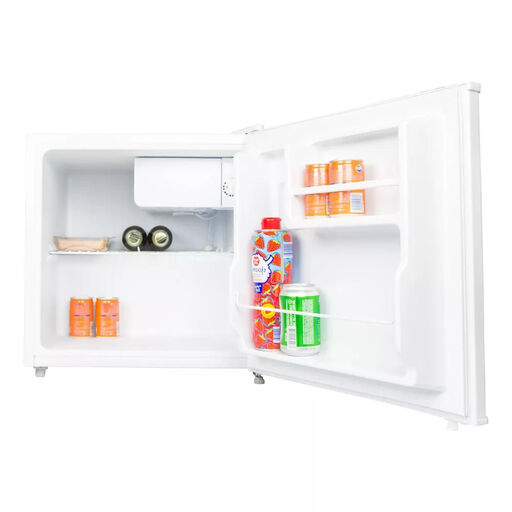
Why it suits this profile: This freestanding mini fridge is compact enough for a student room, home office or minibar and has a net capacity of 43 litres.
The product specifications list a metal shelf, a freezer compartment and a 1.5-metre cable. According to the product information, the freezer compartment is not intended for long-term freezing.
43-litre capacity, reversible door, 41 dB and a stated annual consumption of 107 kWh.
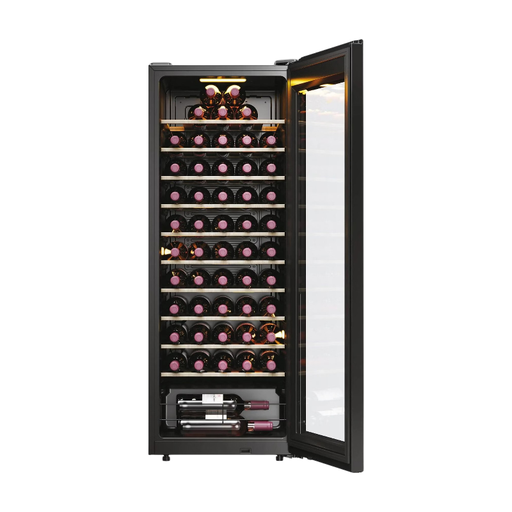
Why it suits this profile: This model is designed for wine storage, with space for up to 58 bottles, wooden shelves and one adjustable temperature zone.
The layout is designed for bottles rather than general groceries. The UV-resistant glass door, lock and adjustable shelves are specifically listed features.
Temperature setting from 5 to 20 °C, Wi-Fi support according to the product information and a capacity of 150 litres.
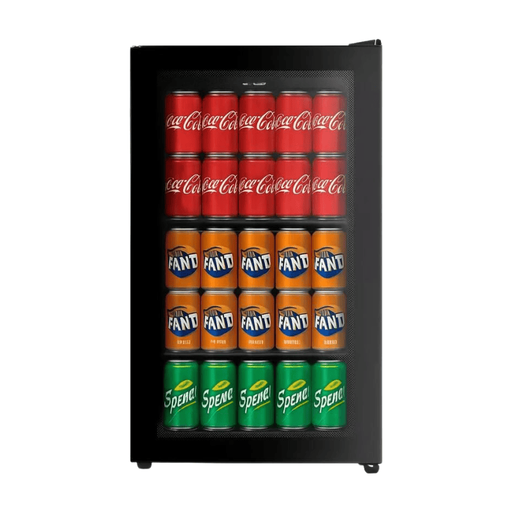
Why it suits this profile: A practical choice for an office, man cave, bar or household that mainly wants to keep chilled drinks organised and easy to access.
The three adjustable shelves make the layout flexible. Check the space needed to open the door beforehand: the product information states approximately 91 cm with the door open.
93 litres of drink storage, glass door, LED lighting, reversible door, 40 dB and annual consumption of 81 kWh according to the product specifications.
We have put together a complete, up-to-date list of products that fully meet these strict selection criteria and the applicable European safety regulations.
Place a freestanding fridge on a level surface and ensure adequate ventilation. After transport, allow the appliance to stand for the period specified in the manual before plugging it in. Also check that the socket is earthed and avoid using extension leads if the manufacturer does not permit them.
A compressor mini bar fridge is not the same as a portable model for use on the go. A 12V model, such as a small cool box with a car connection, is useful when travelling but often has a more limited cooling capacity. Therefore, do not use one of these appliances as a replacement for a household fridge when you want to store fresh food for a longer period.
This varies according to the model, capacity, energy label, ambient temperature and usage. Check the stated annual consumption in kWh. Despite its size, a model with more litres may have different energy consumption from a smaller fridge with less insulation.
You can, provided the model is suitable for the environment and has sufficient ventilation space. Pay particular attention to the noise level, such as 37, 39 or 41 dB, and do not place the appliance directly against a wall. Also bear in mind that the compressor will switch on periodically.
Its lifespan depends on build quality, use, ventilation and maintenance. Clean the condenser and ventilation openings according to the manual, keep the appliance level and do not force the door. A good warranty and clear service information are also useful criteria when buying.
