
Vandaag of morgen in huis

Kwaliteit gegarandeerd

Welkomstaanbiedingen ontgrendelen: GRATIS bezorging | Tot 80% korting | Gratis 30 dagen JoyPlus-proefperiode
Download de app
A mini fridge may seem simple to choose, but the difference between a handy compact fridge and a poor purchase often comes down to the details. Will the door open properly in the space available? Is the noise level acceptable for a bedroom? And does a small size automatically mean lower energy consumption?
For students, small flats, offices and bedrooms, these are the main pitfalls to watch out for:
Don’t just look at the total capacity in litres; check how the space is divided up too. A table-top fridge of around 40 to 50 litres is well suited to drinks, snacks and cosmetics. For a student room or as an extra fridge, around 80 to 110 litres is often more practical.
Also check:
A fridge with a freezer compartment offers extra flexibility, but the freezer section takes up space that would otherwise be available for refrigeration.
Measure the space at three points: height, width and depth. Allow for skirting boards, plug sockets and the direction in which the door opens. A reversible door is useful if the fridge will be close to a wall or in a small kitchen.
A freestanding model shouldn’t be placed right up against a wall or piece of furniture. Always follow the clearance instructions in the manual. Place the appliance on a flat, stable surface and check whether its feet are adjustable.
A freestanding fridge is generally easier to position than a built-in model. A compact fridge may fit under or next to a desk in an office or student room, as long as the ventilation isn’t blocked.
The stated noise level is worth checking if you’re planning to use the fridge in a bedroom, home office or open-plan kitchen. The models in this selection are rated at around 37 to 41 dB. This is a product specification, not a guarantee that every appliance will be inaudible to every user.
When comparing energy consumption, check the annual kWh figure on the energy label. A lower kWh figure generally indicates lower consumption under standardised conditions, but actual costs depend on factors such as room temperature, settings and usage. In the European Union, energy labels range from A to G.
Also look out for conflicting product information. Some models may have different energy labels listed in the title, description and technical specifications. So before you buy, check the current energy label and product specifications on the product page.
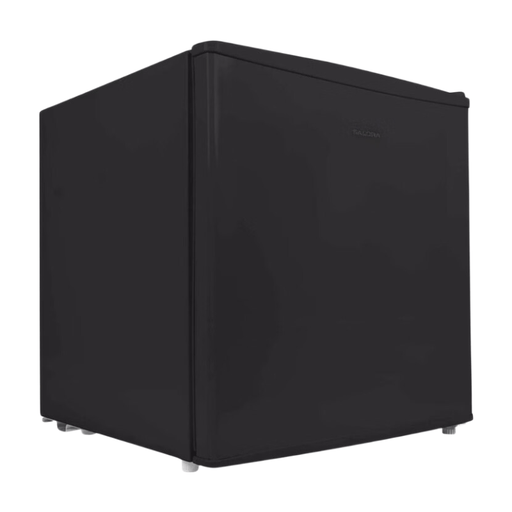
Why it suits this user: With a capacity of 43 litres, it’s a manageable size for a student room, minibar or office where you mainly need to keep drinks and snacks chilled.
The specifications state a net capacity of 43 litres, a noise level of 41 dB and a freezer compartment. This makes it clear from the outset that this model is intended mainly for limited storage.
43-litre capacity, mechanical temperature control, a metal shelf and a 1.5-metre cable.

Why it suits this user: This model combines 95 litres of fridge space with a 14-litre freezer compartment, making it a good fit for households that want to store everyday shopping and frozen food.
The product sheet lists a noise level of 37 dB, a reversible door and LED interior lighting. Glass shelves, door shelves and a salad drawer make it easy to check how the available space is laid out.
109 litres of net capacity, energy rating C, 89 kWh per year according to the product specifications, and a separate freezer compartment.
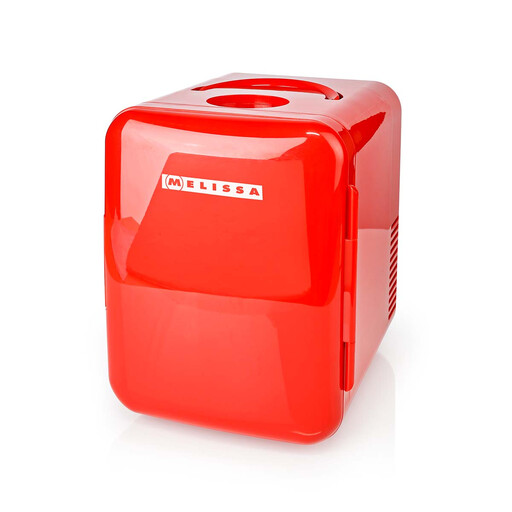
Why it suits this user: This portable mini fridge is designed for travel, camping, the car, cosmetics or a small home office where portability matters more than storage capacity.
The capacity is clearly stated as 4 litres, or up to six 33 cl cans. This makes its limited storage space clear from the outset. The appliance isn’t designed for long-term storage of perishable groceries.
Cools and warms, runs on 100–240 V or 12 V power, and has an integrated handle for easy carrying.

Why it suits this user: At 47.4 cm wide with a capacity of 92 litres, this model is a good fit for an office, hotel room, small kitchen or extra storage.
The product specifications list the external dimensions, a noise level of 39 dB, energy rating E and annual consumption of 85 kWh. The model also has a reversible door and seven temperature settings.
Space-saving width, adjustable glass shelves, a salad drawer and a separate chill drawer.
We’ve put together a complete, up-to-date list of products that meet these strict selection criteria and the applicable European safety regulations.
For cans, snacks or cosmetics alone, 4 to 45 litres may be enough. For everyday use by one person, around 80 to 110 litres is more practical. First decide what you actually want to store and how much space the fridge can take up.
Yes, as long as the model is suitable for continuous indoor use and has enough ventilation space around it. Pay particular attention to the stated noise level. A 37 to 39 dB model may be more suitable for a quiet room than a 41 dB model, but people’s sensitivity to noise varies.
Use the annual consumption figure on the energy label as a point of comparison. Multiply the number of kWh by your current electricity tariff. The actual cost may vary depending on room temperature, how often you open the door, how full the fridge is and the temperature setting. Don’t place the fridge next to a radiator or put warm items inside.
