
Vandaag of morgen in huis

Kwaliteit gegarandeerd

Welkomstaanbiedingen ontgrendelen: GRATIS bezorging | Tot 80% korting | Gratis 30 dagen JoyPlus-proefperiode
Download de app
A mini fridge may seem simple to choose: decide on the size, pick a colour and place your order. In practice, problems often only become apparent after delivery. A door that cannot open properly, too little usable space or higher-than-expected energy consumption can make a budget purchase less appealing.
These points deserve extra attention:
A small fridge for a student room has different requirements from a drinks fridge for a games room. Start by considering your situation:
The net capacity is the space you can actually use. Also check how that space is divided. A vegetable drawer, door compartments and adjustable glass shelves are practical for regular groceries. If you only need to store cans, a drinks fridge with fixed or adjustable shelves may be more convenient.
According to the product information, the Wiggo WFR-TT82D(B) has a net capacity of 107 litres, including a 13-litre freezer compartment. Its stated dimensions are 84.5 × 54.9 × 54.9 cm. This is a size more suited to a spacious tabletop fridge than to a fridge intended solely for a few drinks.
The energy label ranges from A to G. Alongside the letter, always check the stated annual energy consumption in kWh. This allows you to compare models more objectively. The final cost depends on your energy tariff and usage conditions.
A compact fridge with low energy consumption may be more practical in the long term than a cheaper model with higher consumption. Also check that the stated figures apply to the specific model. For example, the product information lists 81 kWh per year and energy label E for the Salora BCT935B, while the Bella BKK090.1BE is listed with 90 kWh per year and energy label E.
For a bedroom, studio or office, the noise level in dB is relevant. Several models in this selection state figures of around 39 to 41 dB. This is a product specification; the noise you actually hear can vary depending on the surface, the distance from a wall and when the compressor switches on.
Place a freestanding fridge on a level surface and leave sufficient ventilation space around the appliance. Do not position it directly next to a heat source. Also check:

Why it suits this profile: This compact fridge offers 88 litres of net capacity and is designed for straightforward storage in a student room, office or small home.
The product specifications list three adjustable glass shelves, a vegetable drawer and three door compartments. There is no freezer compartment, so its purpose is clearly defined.
88-litre capacity, 39 dB, reversible door and stated consumption of 90 kWh per year.
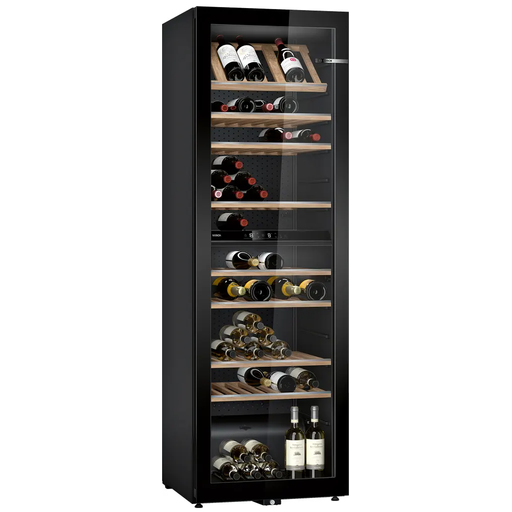
Why it suits this profile: For wine enthusiasts who want to store different types of wine separately, the product information lists two temperature zones and space for up to 199 bottles.
The capacity is intended for wine bottles rather than general groceries. The two zones and stated temperatures of 5 to 20 °C make its intended use clear.
Two temperature zones, pull-out wooden shelves, LED lighting, door lock and a stated noise level of 38 dB.
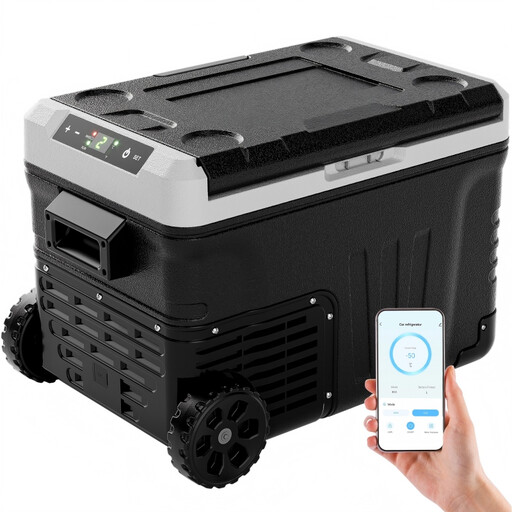
Why it suits this profile: This portable mini fridge is designed for travel, camping and use in a car, motorhome or boat. Its 35-litre capacity is suitable for longer trips.
The product specifications list 12/24V and 220–240V connections, battery protection and wheels. This means the model is not limited to use with a standard mains socket.
Compressor cooling with a range of -20 to 20 °C, two storage zones, app control and ECO and MAX modes according to the product information.
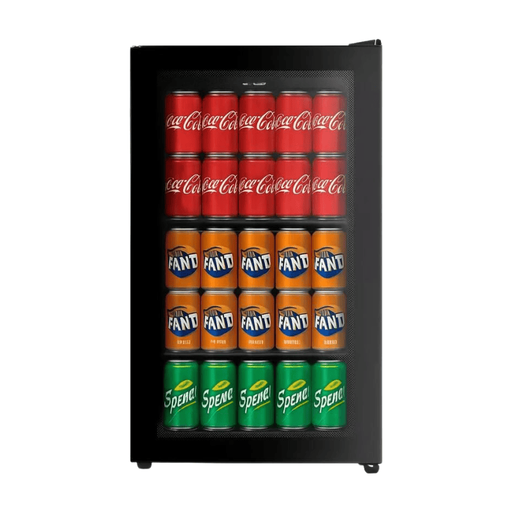
Why it suits this profile: The layout and glass door are practical for chilled drinks in an office, kitchen, bar or games room.
The stated 93-litre capacity, three adjustable shelves and reversible door provide greater clarity in advance about capacity and positioning. This model is not a freezer.
93 litres, glass door, LED interior lighting, approximately 40 dB and stated annual consumption of 81 kWh.
We have put together a complete, up-to-date list of products that fully meet these strict selection criteria and the applicable European safety regulations.
For a few drinks, snacks and lunch items, 40 to 50 litres may be sufficient. If you also want to store meals, vegetables and bottles, 80 to 110 litres is usually more suitable. Measure the available space before choosing a tabletop fridge.
It can if the model has a 12V connection, but always check the cable supplied and the type of vehicle. A thermoelectric car fridge generally cools to a certain extent below the ambient temperature. A compressor cool box is designed for a more precisely adjustable temperature range, but is often heavier and larger.
Multiply the stated annual consumption in kWh by your electricity tariff. For example, a model using 90 kWh per year consumes less electricity than one using 170 kWh per year, but actual consumption may vary depending on room temperature, ventilation, settings and how often the door is opened.
