
Vandaag of morgen in huis

Kwaliteit gegarandeerd

Welkomstaanbiedingen ontgrendelen: GRATIS bezorging | Tot 80% korting | Gratis 30 dagen JoyPlus-proefperiode
Download de app
A mini fridge might seem easy to choose: decide on the size, compare prices and put it in your room. But problems often only come to light after you’ve bought it. The fridge may not have enough room for bottles, could be noisier than expected or might not fit properly under a desk.
For students, people living alone, home workers and offices, the choice isn’t just about finding a low price. Pay particular attention to capacity, dimensions, ventilation, noise level and energy consumption. Read on to find out what to look for and which models suit different needs.
A compact fridge might be advertised as holding 45 litres, even though some of the interior space is taken up by a freezer compartment, door shelf and technical components. Check whether the stated capacity refers to the net fridge volume. For a few cans and snacks, 40 to 50 litres may be enough. If you want to store several days’ worth of food, you’ll probably need 80 to 110 litres.
With a small fridge with freezer compartment, the freezer section is often limited. It may be suitable for short-term storage or a few small frozen items, but it won’t necessarily keep food frozen for long periods. For example, Salora CFB4300 models list a freezer compartment, although according to the product information, the CFB4300WH model is not intended for actually freezing food.
In the EU, the energy label ranges from A to G. Also check the stated annual consumption in kWh. A larger model may offer more practical storage per litre than a very small fridge with little usable capacity. Check that the product page and energy label show the same rating, too. Some versions of the Salora CFB4300 are listed as both class E and F in different product information, so check the latest specifications before buying.
Measure not just the alcove, shelf or table, but also the space needed for the door and power cable. A tabletop fridge needs room around it for ventilation and to release heat. Don’t place a fridge right up against a wall or inside an enclosed cupboard unless the manual says this is allowed.
Check these measurements:
A quiet fridge is important in an office, bedroom or studio flat. A difference between 37 and 41 dB may be noticeable in a quiet room, although perceived loudness also depends on the placement and surface. Models with adjustable feet may stand more steadily, which can reduce vibrations.
Look for adjustable shelves, door shelves and a salad drawer. A small fridge with one fixed shelf may be less versatile than a slightly larger tabletop model with several adjustable glass shelves.
For a fridge for a student room, 40 to 60 litres is often suitable for drinks, sandwich fillings and a few meals. For an office or small kitchen, 88 to 120 litres is more practical. If you’re specifically looking for a wine fridge, check the number of bottles it holds, the shelf layout and the number of temperature zones. A wine cooler is designed for bottles, not for general food storage.
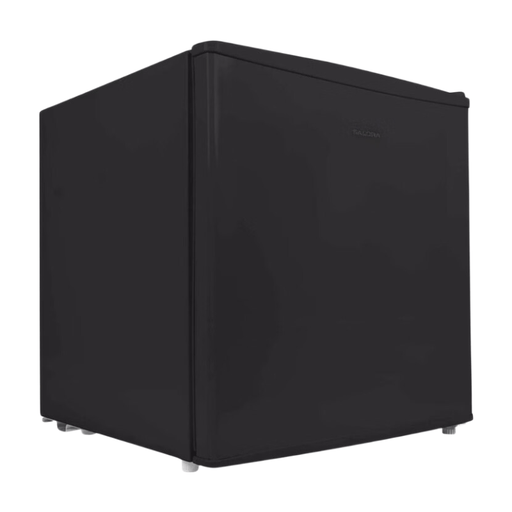
Why it suits this need: This model takes up relatively little space and is suitable for drinks, snacks and occasional use in a student room, bedroom or office.
The product information lists a net capacity of 43 litres, a metal shelf and a separate freezer compartment. However, check the latest energy rating, as the available specifications don’t all show the same information.
43-litre capacity, dimensions of 49,2 × 47,2 × 45 cm and a stated noise level of 41 dB.

Why it suits this need: With 107 litres of fridge space and 13 litres of freezer space, this model is a good fit for a small kitchen, studio flat, holiday home or office where you need extra storage.
The fridge and freezer capacities are listed separately. This makes it clearer how much space is available than with models that only state the total capacity.
Energy class C, annual consumption of 87 kWh, a noise level of 37 dB and a stated storage time of 8 hours in the event of a power cut.
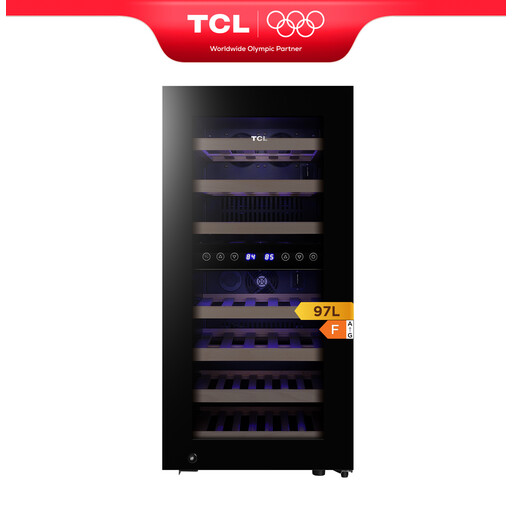
Why it suits this need: This model is designed for people looking for a dedicated wine fridge for a collection of up to 33 bottles, rather than general-purpose storage for groceries.
The product type and capacity are clearly described as a wine cooler for 33 bottles. Check the available temperature settings and the space needed before buying.
97-litre capacity, glass door and space for up to 33 bottles according to the product name.
After transporting a new fridge, leave it to stand for the period specified in the manual before plugging it in. Make sure the appliance is level on a stable surface and don’t block any ventilation openings. Don’t put hot food straight into the fridge, and try to keep the door open for as little time as possible.
A portable 4-litre mini fridge is a different type of product from a tabletop fridge. These appliances are mainly designed for a few cans, travel, camping or use in a car. They aren’t necessarily suitable for storing fresh groceries for long periods. Always check the temperature range, power connection and stated capacity.
We’ve put together a complete, up-to-date list of products that meet these strict selection criteria and the applicable European safety regulations.
For drinks and a few snacks, 40 to 50 litres may be enough. For a student room with everyday groceries, around 80 to 120 litres is more practical. If there’s a freezer compartment, subtract its capacity from the available fridge space.
Compact fridges for living and working spaces often have a stated noise level of around 37 to 41 dB. Compressor vibrations may still be audible in a bedroom. Make sure the appliance stands steadily, leave enough room for ventilation and check the product specifications before ordering.
That depends on its annual consumption in kWh and your electricity tariff. Multiply the stated annual consumption by your current price per kWh. In the long run, an energy-efficient fridge with enough capacity may therefore work out cheaper than a smaller model with higher consumption.
