
Vandaag of morgen in huis

Kwaliteit gegarandeerd

Welkomstaanbiedingen ontgrendelen: GRATIS bezorging | Tot 80% korting | Gratis 30 dagen JoyPlus-proefperiode
Download de app
A mini fridge might seem simple to choose: decide on the size, pick a colour and place your order. In practice, compact fridges vary considerably in cooling technology, power supply and usable capacity. A model for a student room isn’t automatically suitable as a car fridge or a fridge for a campervan.
Look out for these three common pitfalls:
First, decide where you’ll put the appliance. For a bedroom, office or student room, a freestanding mini fridge running on 220–240V is usually practical. For travel, camping or use in a campervan, you’re more likely to need a portable fridge with 12V/24V DC. A model with both DC and AC is more versatile, as you can use it in the car and at home.
A compact model with a capacity of 4 to 15 litres is often enough for drinks, snacks and cosmetics. If you want to store meals, meat or frozen food, consider a compressor cool box instead. According to the stated product specifications, compressor cool boxes can often be set to below 0 °C. This makes them more suitable than thermoelectric models as a temporary mini freezer.
There are two main systems:
Pay attention to the wording in the product information. “Cools to 15 °C below ambient temperature” means something different from an adjustable range of, for example, -20 °C to 20 °C. Brands may state performance under specific conditions, so treat these figures as product specifications under the stated conditions, not as guaranteed results in every situation.
Measure the space where you plan to put the fridge, allowing for the door, cable and ventilation openings. For example, a 43-litre Salora model is approximately 49.2 cm high, 47.2 cm wide and 45 cm deep. The layout matters as well as the external dimensions: a freezer compartment, metal shelf or door shelf can affect the usable space.
For a compressor cool box, it’s sensible to leave at least around 10 cm of clearance around the ventilation openings if the manual recommends this. This allows warm air to escape. Place the appliance on a level surface and, after transport, check whether the model needs to stand upright for a while before you switch it on.
A 12V cool box is designed to connect to a 12V socket in a car. 24V support may be important for a lorry, campervan or boat. A 12V/230V cool box offers more flexibility at home, at the campsite or when connected to a mains power supply.
Also check:
An energy label and kWh consumption can help you compare models. The information supplied for the Salora CFB4300BL lists both energy rating E and F. It also states 107 kWh per year. So check the current product specifications on the product page before buying, especially if energy use is important to you.
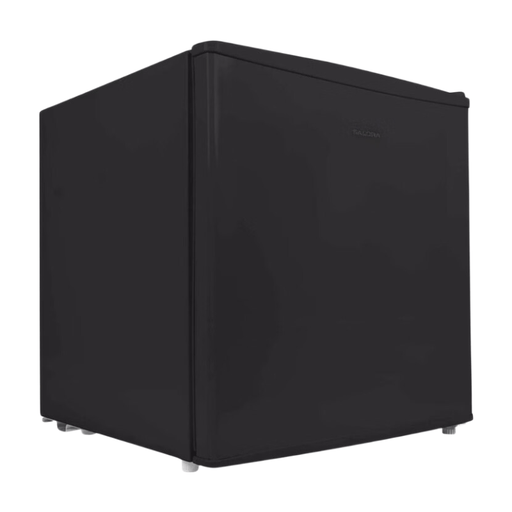
Why it suits this type of buyer: This freestanding model is suitable for a student room, office or minibar where you want to keep plenty of drinks and food in one place. It has a capacity of 43 litres and runs on 220–240V.
The external dimensions and net capacity are clearly stated. Do check the energy rating, as the information supplied lists both E and F.
43-litre capacity, a shelf, a freezer compartment and a 1.5-metre cable. The stated noise level is 41 dB.
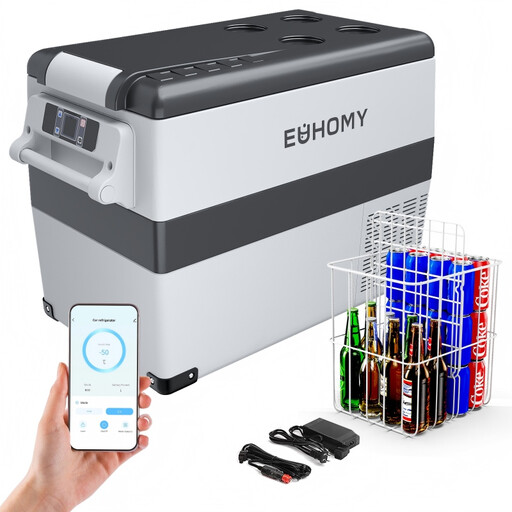
Why it suits this type of buyer: A spacious option for travellers, campervan owners and families who want a portable compressor fridge for both cooling and freezing.
The compressor technology means you’re not relying solely on the ambient temperature. Adjustable battery protection is available for use in the car.
40-litre capacity, a temperature range of -20 °C to 20 °C, 12/24V DC and 100–240V AC. The product description states that ECO and MAX modes are available.
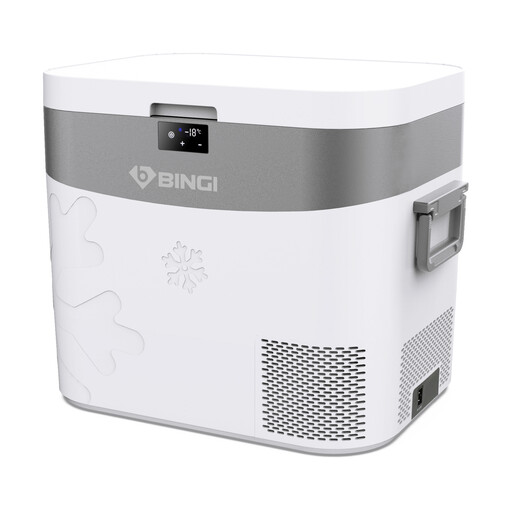
Why it suits this type of buyer: This model is a good fit for campers, campervan owners and motorists looking for a compact car fridge with both 12/24V DC and 100–240V AC.
The dual power supply means you’re not limited to a car socket. The stated 3-stage battery protection helps reduce the risk of deep discharge.
22-litre capacity, compressor cooling and an adjustable temperature range of -18 °C to 15 °C. It still needs clear space around the vents.
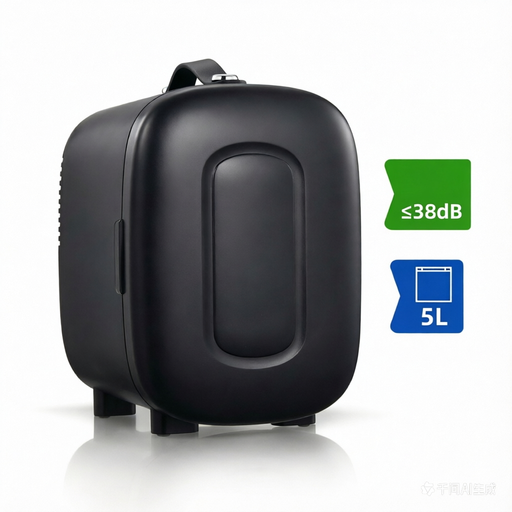
Why it suits this type of buyer: Thanks to its compact size, this skincare fridge fits on a desk, dressing table, office shelf or bedside table. It’s suitable for small amounts of drinks, snacks and cosmetics.
The 5-litre capacity makes the limited storage space clear from the outset. The manufacturer states that the warming mode retains existing heat and doesn’t actively heat the contents.
AC and DC connections, a removable shelf, door basket and condensation tray. The stated external dimensions are 28,58 × 19,60 × 26,25 cm.
We’ve put together a full, up-to-date list of products that meet these strict selection criteria and the applicable European safety regulations.
No. Check whether the model has a 12V or 24V connection. A household mini fridge running on 220–240V will only work in the car if you use a suitable inverter. A portable model with a DC connection is an easier option.
It depends on the system, size, ambient temperature and how long you use it for. Compare the stated wattage, annual energy use and any ECO mode. Battery protection is important when using it in the car, but don’t leave a fridge running for a long time if the battery isn’t being charged sufficiently.
Its lifespan depends, among other things, on ventilation, transport, cleaning and how it’s used. Don’t tilt a compressor cool box unnecessarily, keep the ventilation openings clear and unplug the appliance before cleaning it. Check the warranty terms and the manual supplied with the product before making your choice.
