
Vandaag of morgen in huis

Kwaliteit gegarandeerd

Welkomstaanbiedingen ontgrendelen: GRATIS bezorging | Tot 80% korting | Gratis 30 dagen JoyPlus-proefperiode
Download de app
A mini fridge may seem easy to choose: measure the available space, compare the price and place your order. Yet many disappointing purchases come down to small details. A model may claim to offer enough litres, but have little usable space because of a large freezer compartment or awkward shelves. Noise, energy consumption and ventilation space can also become more noticeable than expected in a student room or bedroom.
In this buying guide, you’ll learn what to look for in a small fridge, mini bar fridge or tabletop fridge. We’ll then look at some popular choices for different uses.
Capacity doesn’t tell you everything about practical storage. Also check:
A 43-litre fridge is suitable for drinks, snacks and a few everyday groceries. For fresh meals, vegetables and several bottles, an 88-litre model is more practical. Think about your usual shopping routine in advance. If you don’t cook at home often, a compact mini bar fridge will often be enough. If you share a studio flat or shop less frequently, a small fridge with a flexible layout will be more useful.
With compact fridges, a small freezer compartment is sometimes treated as a full-size freezer. That isn’t always correct. For example, the Salora CFB4300 models have a compartment which, according to the product information, is not intended for freezing products over a long period. It is mainly designed for temporarily storing products that are already frozen.
If you want to store pizza, frozen vegetables or ready meals, look for a model with a clearly stated freezing capacity and star rating. A separate compact freezer, such as a 31-litre model, is better suited to this purpose than a fridge designed for everyday chilling.
A mini fridge is often switched on all year round. This makes annual consumption more relevant than the purchase price alone. Check the energy label based on the European A-to-G scale and the stated annual consumption in kWh.
A model with an energy rating of E or F is not automatically unsuitable, but do compare its consumption with its capacity and features. The Salora CFB4300WH and CFB4300BL have an energy rating of F and stated consumption of 107 kWh per year. Estimated costs depend on your energy tariff, so any figure shown on a product page is an indication rather than a fixed amount for every household.
Don’t just measure the recess, table or shelf. Also leave space around the fridge for ventilation and for the door to open. Pay attention to:
A freestanding fridge should not be built tightly into a unit unless the instructions specifically allow this. Place the appliance indoors, on a stable surface and level.
For a fridge for a student room, bedroom or office, the noise level is important. Compact models with a rating of 40 to 42 dB are available, but the noise you hear can vary depending on the surface, ventilation and the compressor switching on.
The Salora CFB4300 series lists 41 dB. The COMFEE’ RCT87WH2EUY(E) lists 40 dB. These are verifiable product specifications, but they do not guarantee that every user will experience the noise in the same way.
An energy-efficient fridge is not the only priority. A reversible door may be more important in a small kitchen. Removable glass shelves are useful for tall packaging and make cleaning easier. An interior light helps when the fridge is positioned under a worktop or in a dark room.
Also check the minimum ambient temperature. According to the product information, the Salora CFB4300WH should be placed in a room with a minimum temperature of 10 °C. This does not automatically make it suitable for a cold shed or unheated storage room.
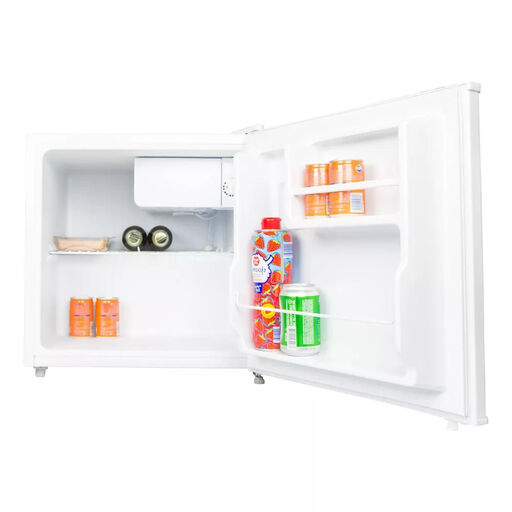
Why it suits this profile: This white tabletop model is suitable for a student room, home office or mini bar where the main requirement is chilling drinks and a few small groceries.
The capacity, dimensions, 41 dB noise level and annual consumption of 107 kWh are clearly stated. However, the small freezer compartment should be regarded as temporary storage.
43-litre capacity, reversible door, metal shelf, dial control and 1.5-metre mains cable.
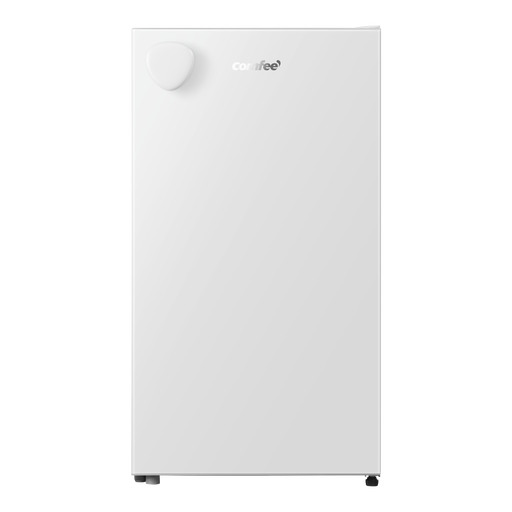
Why it suits this profile: This larger compact fridge offers more organised storage for a studio flat, office or small household that stores fresh products every day.
The 88-litre capacity is combined with removable glass shelves, a vegetable drawer and interior lighting. According to the product information, the separate cooler zone is intended for short-term chilling, not long-term frozen storage.
88 litres, energy rating E, reversible door, adjustable feet, removable handle and interior lighting.
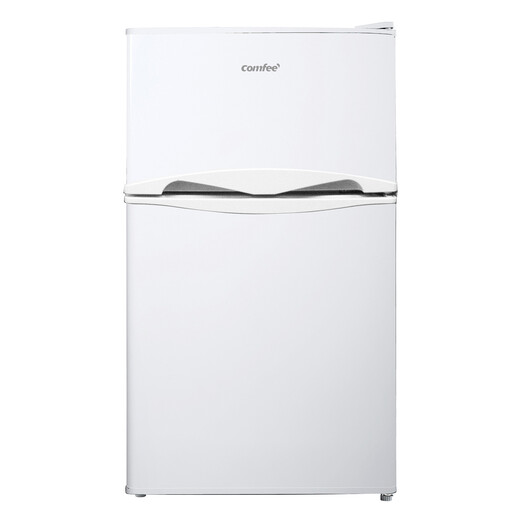
Why it suits this profile: This model is suitable for users looking for a compact fridge with a flexible layout for a workspace, bedroom or small kitchen.
The removable shelves make the interior adaptable for tall or irregularly shaped products. However, check the exact dimensions and available ventilation space before buying.
Stated noise level of 40 dB, two removable glass shelves, 2-litre bottle rack, interior lighting and reversible door.
We’ve put together a complete, up-to-date list of products that fully meet these strict selection criteria and the applicable European safety regulations.
Yes, provided the appliance is standing securely and has sufficient ventilation space. Pay particular attention to the stated noise level, and don’t place the fridge directly next to a bed if you are sensitive to the compressor switching on. Use an earthed socket and avoid loose or unsuitable extension leads.
Its lifespan depends on how it is used, where it is placed, how well it is maintained and the quality of its components. Keep the ventilation openings clear, place the fridge level and clean the interior regularly. Check the warranty terms before buying. The Salora models mentioned come with a stated two-year manufacturer’s warranty, with exceptions including damage caused by falls, impacts and water.
This depends on its annual consumption in kWh and your electricity tariff. Use the formula: annual consumption × price per kWh. So a fridge with stated consumption of 107 kWh per year uses approximately 107 kWh under the specified test conditions. Actual costs may vary depending on the ambient temperature, settings, ventilation and how often the door is opened.
