
Vandaag of morgen in huis

Kwaliteit gegarandeerd

Welkomstaanbiedingen ontgrendelen: GRATIS bezorging | Tot 80% korting | Gratis 30 dagen JoyPlus-proefperiode
Download de app
A mini fridge seems like a simple purchase. It's ideal for a dorm room, office, or as an extra beverage fridge. However, there are a few pitfalls that can turn a seemingly good deal into a disappointment. Many models are noisier than expected, consume unnecessary power, or have an impractical interior layout.
As a Joybuy Product Recommendation Officer, I'll help you see past the marketing jargon. We'll focus on the specifications that truly matter, so you can choose a compact fridge that fits your needs, without any hidden downsides.
Before you pick a model, it's wise to be aware of common problems. This will prevent you from wasting money on an appliance that doesn't meet your expectations.
To avoid the pitfalls above, focus on a few objective specifications. These provide an honest picture of the appliance's performance and usability.
This is arguably the most important factor for a fridge in a dorm room or office. Sound is measured in decibels (dB).
The energy label indicates how efficient a fridge is on a scale from A (most efficient) to G (least efficient). Don't just look at the label; also check the annual energy consumption in kWh. A smaller model with an F label might sometimes use less power than a larger model with an E label. Multiply the kWh by your electricity rate to estimate the annual costs. A model with an energy label of D or E is often a sensible choice for a tabletop fridge.
Look beyond the total number of litres. Check the internal dimensions and the layout.
Based on these criteria, we have selected a number of models that suit different user profiles.
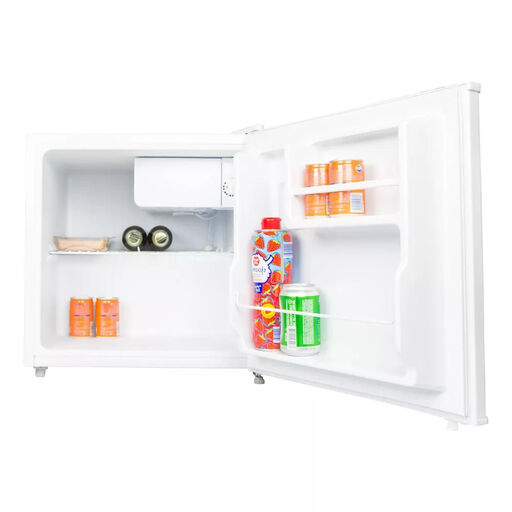
Why This Fits Their Persona: Perfect for a dorm room or first apartment. This model is compact, affordable, and with 43 litres, offers enough space for drinks and basic groceries. The reversible door makes placement in small spaces easy.
Although it has an F energy label, its absolute annual consumption (107 kWh) is low, which keeps electricity costs down. The 41 dB noise level is acceptable for most situations, sidestepping the pitfalls of unexpected noise and high costs.
Compact size (49.2 x 47.2 cm) and a small freezer compartment for ice cubes or a frozen pizza. The value for money is excellent for starters.
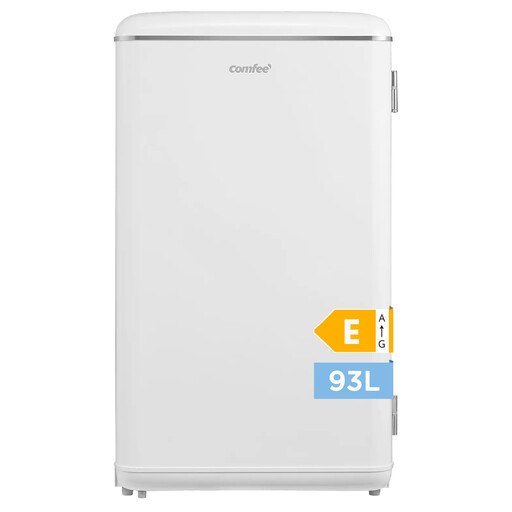
Why This Fits Their Persona: For those who want a functional appliance that is also a style statement. This retro fridge, with its classic design and handle, is an eye-catcher in an office, B&B, or living room.
This model combines style with functionality. It avoids the 'unusable space' pitfall by offering a generous 93-litre capacity with removable shelves for a flexible layout. The 41 dB noise level is reasonable for a design model.
Large capacity (93L) in a compact footprint. The adjustable thermostat and removable shelves make it practical to use. An E energy label is reasonable for this size.
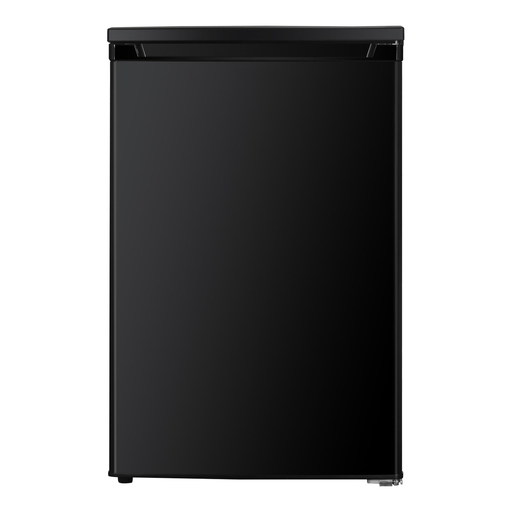
Why This Fits Their Persona: Ideal for small households or as serious extra cooling space. This tabletop fridge offers a very spacious 126-litre capacity, comparable to older, larger refrigerators, but in a compact form factor.
This model tackles all three pitfalls. It's a quiet mini fridge at 39 dB, has a favourable D energy label (72 kWh/year) which keeps power costs low, and the spacious, well-designed interior with a vegetable drawer and three shelves prevents 'wasted space'.
Very energy-efficient for its capacity. The combination of a large volume (126L), low noise level (39 dB), and a sleek black mini fridge appearance makes this an excellent all-rounder.
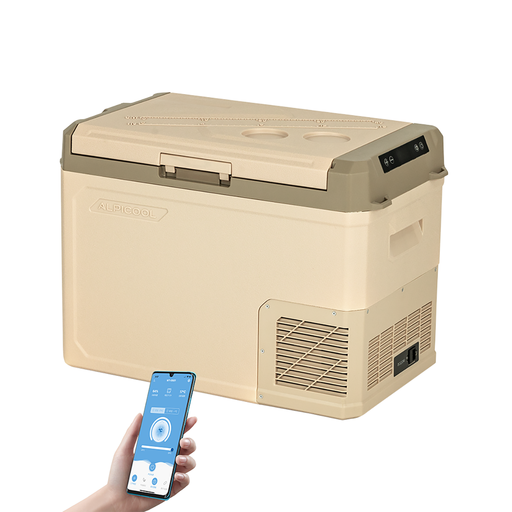
Why This Fits Their Persona: Specifically designed for life on the go. This camping fridge is not a simple cooler, but a true compressor fridge for your car, camper, or boat. It runs on 12V and 24V DC.
Many 'car fridges' are thermoelectric and only offer limited cooling. This model uses compressor technology, allowing it to cool quickly and powerfully, even down to 0°C. According to Alpicool, this happens within 15 minutes. It also has battery protection to prevent draining your car's battery.
Powerful and fast cooling, independent of the ambient temperature. Its robust construction and ability to function on an incline of up to 40° make it reliable for travel and camping.
We have compiled a complete, up-to-date list of products that meet these selection criteria and comply with UK safety regulations.
For a bedroom, study, or a quiet office, a noise level of below 40 decibels (dB) is recommended. Models around 38-39 dB are considered very quiet and will be barely noticeable. Always check the specifications, as the term 'quiet' is interpreted freely by manufacturers.
The cost depends on the annual energy consumption (kWh) and your electricity rate. An efficient model like the Exquisit KS16-V-E-040DB (label D) consumes 72 kWh per year. At an electricity price of €0.30 per kWh, that amounts to about €21.60 per year. A less efficient model with an F label (e.g., 107 kWh) would cost €32.10 per year at the same rate. It pays to invest in a more efficient model.
Not just any model. Most refrigerators are designed to operate within a specific ambient temperature range, indicated by the climate class. The most common class is 'N' (Normal), which works between 16°C and 32°C. If the ambient temperature drops below 16°C, the fridge may perform poorly or stop working altogether. Check the fridge's specifications for the correct climate class (e.g., N, ST, T) before placing it in an unheated space.
