
Vandaag of morgen in huis

Kwaliteit gegarandeerd

Welkomstaanbiedingen ontgrendelen: GRATIS bezorging | Tot 80% korting | Gratis 30 dagen JoyPlus-proefperiode
Download de app
A mini fridge seems like a simple purchase, but the reality is more complex. Whether you're looking for a compact solution for your dorm room, office, or garage, the market is flooded with models that overpromise and underdeliver. Many buyers fall into the same traps, ending up with a noisy, impractical, or energy-guzzling fridge.
As a Joybuy Product Recommendation Officer, I'll help you cut through the marketing jargon. We'll focus on the facts so you can choose a model that truly fits your situation. Let's take a closer look at the three most common purchasing mistakes and how to avoid them.
To avoid a bad purchase, it's important to look beyond the sales pitches. Focus on the following three specifications to make a well-informed decision.
The noise level of a fridge is expressed in decibels (dB). For a living or sleeping area, this is a crucial number. A difference of a few decibels may seem small, but the sound scale is logarithmic, meaning every 3 dB increase represents a doubling of the perceived sound.
Since 2021, refrigerators have a new energy label, ranging from A (very efficient) to G (least efficient). However, don't just fixate on the letter grade. The annual energy consumption in kWh is a more concrete figure. An energy-efficient fridge saves you money on your energy bill in the long run. Compare the kWh consumption of models with similar capacities to find the most efficient option.
The right size and layout depend entirely on your use case.
Based on objective specifications, we have selected a number of models that suit specific needs and avoid the pitfalls mentioned earlier.
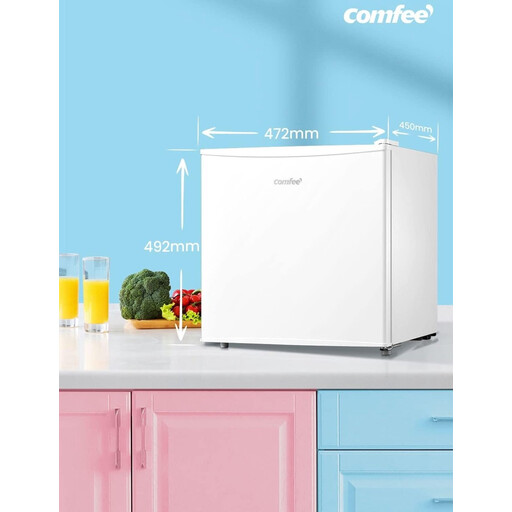
Why This Fits Their Persona: Compact, affordable, and at 43 litres, just the right size for drinks, meals, and snacks in a typical dorm room fridge. It has a small footprint.
The 43-litre capacity has a practical layout for drinks and basic groceries. The noise level of 41 dB is acceptable for a living space, and the chiller compartment is clearly intended for short-term storage, not freezing.
The reversible door and adjustable feet offer maximum flexibility for placement in a tight space. You're not tied to a single corner.
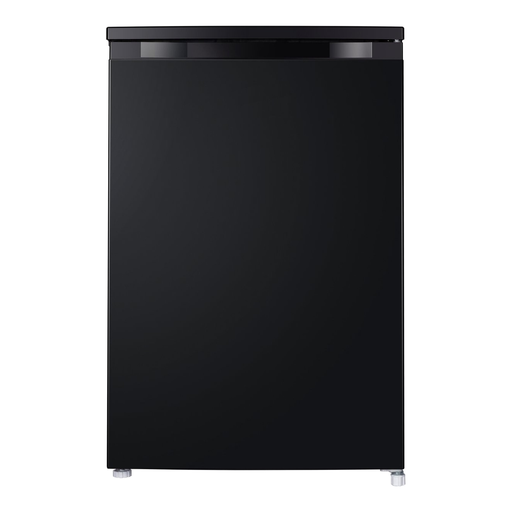
Why This Fits Their Persona: For those seeking a silent, energy-efficient, and stylish solution for the office, mancave, or as a secondary fridge. The black finish and generous capacity make it a functional and visually appealing choice.
At 37 dB, this is a truly silent mini fridge that won't disturb your concentration. The Energy Label C and the separate 13-litre freezer compartment are functional, not just empty marketing promises.
Very low noise level (37 dB) and an efficient Energy Label C (87 kWh/year), resulting in low operational costs and a quiet environment. The separate freezer compartment is a major plus.
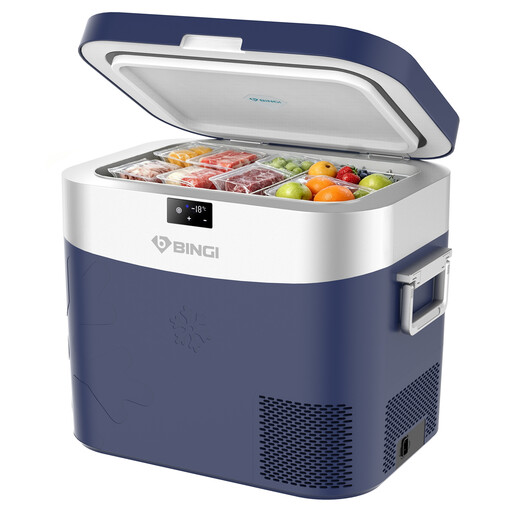
Why This Fits Their Persona: Specifically designed for use in a car, camper, or truck thanks to its 12/24V DC connection. Robust and built for reliable cooling on the go.
This is a camping fridge with a real compressor, which actively cools (and can even freeze) regardless of the outside temperature. This is a huge difference from cheaper thermoelectric coolers that often struggle in the summer.
Powerful and reliable cooling performance due to the compressor and the ability to run on a 12V vehicle battery. Essential for travellers who want to be self-sufficient.
We've compiled a complete, up-to-date list of products that meet these strict selection criteria.
A good benchmark for a silent mini fridge is a noise level below 40 decibels (dB). Models around 37 dB are barely audible and ideal for bedrooms or studies. A 41 dB model is comparable to a soft whisper and acceptable for most people in a living space.
The terms are often used interchangeably, but there is a practical difference. A minibar fridge is typically very compact (under 50 litres) and primarily intended for drinks and small snacks. A tabletop fridge is larger (up to approx. 150 litres), fits under a countertop, and often has a more spacious layout with a vegetable drawer and sometimes a small, functional freezer compartment.
This can be read directly from the energy label under "kWh/annum" (annual energy consumption). An energy-efficient model with a C label, like the Exquisit KS16-4-051CB, consumes approximately 87 kWh per year. A less efficient model with an E or F label, like the Salora CFB4300WH, consumes around 107 kWh per year. While the difference may seem small, this adds up over the lifespan of the appliance.
