
Vandaag of morgen in huis

Kwaliteit gegarandeerd

Welkomstaanbiedingen ontgrendelen: GRATIS bezorging | Tot 80% korting | Gratis 30 dagen JoyPlus-proefperiode
Download de app
A mini food chopper can significantly reduce the work involved in chopping vegetables, herbs, nuts, meat, dips and sauces. However, a purchase can sometimes be disappointing. The bowl may turn out to be smaller than expected, the blades may be difficult to clean or the motor may need to cool down after short intervals. If you only look at wattage or a low price, you may miss important differences.
This buying guide from the Joybuy Product Recommendation Officer helps you compare models based on verifiable specifications. That way, you can choose a compact food chopper that suits your portions, ingredients and cleaning routine.
A 500 ml bowl does not always mean that you can process 500 ml of ingredients at once. Manufacturers sometimes state the total capacity, while the recommended filling quantity is lower. The Kenwood Easy Chop CHP61 has a bowl capacity of 500 ml, but the stated filling capacity is 225 grams.
So pay attention to three details:
For a single-person sauce or some herbs, 500 ml is often practical. Families preparing a large quantity of pesto, mince or vegetables are more likely to need a food chopper with a larger capacity.
Higher wattage does not automatically produce a finer or more even result. The number of blades, the shape of the bowl, the controls and the permitted operating time also make a difference. An electric food chopper rated at 200 watts may be suitable for small quantities of soft vegetables, while a 400 to 500-watt model offers more scope for hard ingredients.
Also check the operating instructions. Several models in this range recommend using the motor for no more than around 30 seconds at a time, followed by a cooling period. This is particularly important if you want to prepare several batches one after another.
Sharp blades, lid edges and hard-to-reach corners can make cleaning a chore. A dishwasher-safe food chopper is therefore useful, but check exactly which parts can go in the dishwasher. The motor base is not one of them.
A food chopper with a glass bowl generally does not absorb odours or colourants in the way some plastics can, but glass is heavier and may break if dropped or exposed to sudden changes in temperature. A BPA-free plastic bowl is lighter and often easier to handle. Consider what matters most to you: weight, visibility of the contents, resistance to odours and stains, or everyday convenience.
A food chopper with stainless steel blades is suitable for many everyday preparations. Do not just consider the material; also look at the number of blades and how they are positioned. Four blades can reach ingredients at different heights in the bowl. A single universal blade is more compact, but you may need to stir the ingredients more often during processing.
For a food chopper for vegetables and meat, check the product description and instructions. Not every model is designed for raw meat, hard pieces or frozen ingredients. For nuts and herbs, short pulses are useful for keeping a closer eye on the texture. A food chopper with two speeds or a pulse function gives you more control than a model with just one fixed setting.
Use this guide:
A large bowl does not automatically make an appliance compact. Measure the available space in a kitchen cupboard or on the worktop. A 2.7-litre model may be practical for large preparations, but it requires more storage space than a compact 500 ml food chopper.
A one-button control is quick to understand. Two speeds and a pulse setting give you more control over the texture. Also check that the bowl and lid lock securely into place. An interlock safety system prevents certain models from starting the motor when the parts have not been positioned correctly.
Also look for:
Always follow the supplied instructions. Unplug the appliance before removing the blades or cleaning any parts. Do not process hot liquids unless the manufacturer expressly permits this.
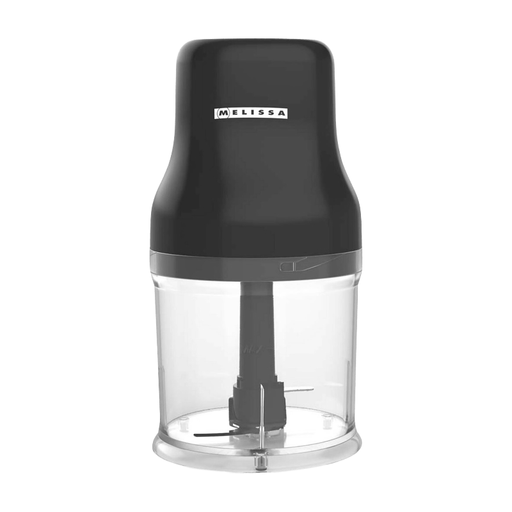
Why it suits this profile: This model is designed for small to medium quantities and has a 500 ml bowl. Its one-button control is straightforward for everyday chopping.
The product specifications state the bowl capacity, maximum operating time of 30 seconds and cooling breaks. This makes the operating limits clear in advance.
200 watts, two stainless steel blades, dishwasher-safe bowl and blades, non-slip feet and BPA-free parts.
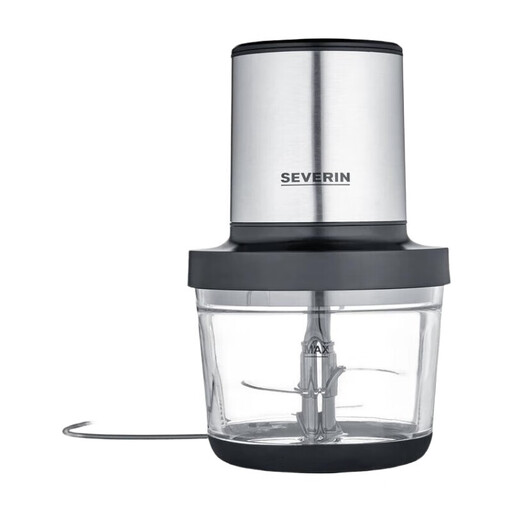
Why it suits this profile: The 1-litre glass bowl provides room for larger portions without having to move straight up to a large food processor.
The product specifications separately state the 400-watt power rating, 1,000 ml capacity and stainless steel blades. You therefore do not have to infer these features from general marketing language.
Glass bowl, 400 watts, pulse function and, according to the product description, suitable for vegetables, herbs, nuts, meat and ice.
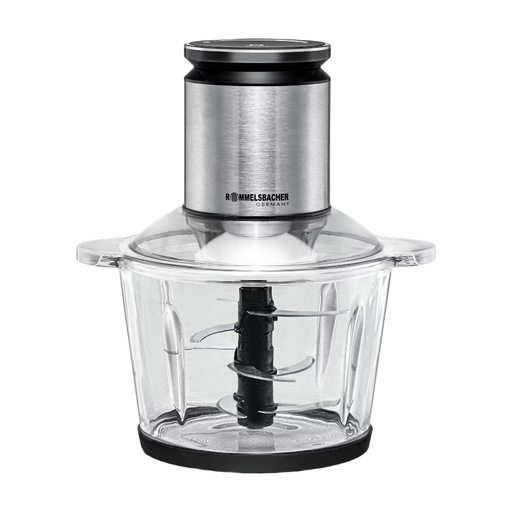
Why it suits this profile: The 2.7-litre capacity and 22 speed settings are well suited to meal prepping, family portions and different textures.
The large capacity is stated clearly, and the removable parts are dishwasher-safe according to the product description. The motor base must still be wiped clean by hand.
800 watts, 2.7-litre glass bowl, nine-blade stainless steel blade and 22 adjustable speeds.

Why it suits this profile: Two glass bowls of 0.6 and 2 litres make it possible to prepare smaller and larger quantities separately.
The different bowl sizes mean you do not have to use a bowl that is too large or too small for each preparation. The product information also mentions a concealed safety lock.
Two glass bowls, two blade sets, two speeds, 300 watts and dishwasher-safe bowls according to the product description.
We have put together a complete, up-to-date list of products that fully meet these strict selection criteria and the applicable European safety regulations.
A manual food chopper may be sufficient if you do not want to use a socket and only prepare small quantities. An electric food chopper is more convenient for regular chopping, processing meat or preparing larger portions. As well as the price, compare the warranty, availability of replacement parts and cleaning options.
This varies by model. Check whether the product description mentions meat, nuts or hard ingredients, and follow the maximum quantities. Cut meat and larger pieces into smaller portions beforehand. Use short pulses to reduce the length of time the motor runs continuously.
For herbs, soft vegetables and small portions, 200 watts may be enough. For nuts, meat, harder vegetables or ice, a model of around 400 to 500 watts is a more sensible choice. However, wattage is only one factor: blade shape, bowl capacity and operating time also matter.
Dishwasher-safe parts save cleaning time, but check for each model whether this applies only to the bowl and blades. The motor base should be cleaned with a damp cloth. Correctly assembling the appliance each time, avoiding overfilling and following the prescribed cooling breaks will help minimise unnecessary wear.
