
Vandaag of morgen in huis

Kwaliteit gegarandeerd

Welkomstaanbiedingen ontgrendelen: GRATIS bezorging | Tot 80% korting | Gratis 30 dagen JoyPlus-proefperiode
Download de app
A mini food chopper can take care of much of the chopping in your kitchen. Vegetables, herbs, nuts, dips and cooked ingredients can be processed quickly. However, not every compact food chopper is suitable for every task. A small bowl can be inconvenient for a family, while a powerful model with a large bowl may take up too much space for everyday use.
When comparing models, therefore, do not focus only on wattage or the number of functions. The practical capacity, blade design, materials and cleaning requirements have at least as much impact on how convenient an electric food chopper remains to use.
A 1-litre bowl does not automatically mean that you can process 1 litre of ingredients at once. Manufacturers sometimes state the total capacity, while the recommended filling quantity is lower. For example, the Philips HR1393/00 is listed with a bowl capacity of 0.7 litres, with a usable volume of 0.5 litres.
Before buying a food chopper, therefore, check:
Overfilling the bowl often leads to uneven results and can put additional strain on the motor.
An 800-watt motor sounds powerful, but the result also depends on the blade design, bowl shape, portion size and recommended operating time. Some appliances are designed for short pulses and need to cool down afterwards. The Kenwood CHP61.000WH, for example, has 500 watts, but according to the product information it may run for a maximum of 30 seconds at a time, followed by a cooling period.
Always consult the instructions for use. An electric food chopper is not designed for prolonged continuous blending unless the manufacturer explicitly states otherwise.
As well as chopping, a multifunctional food chopper may also purée, mix, grind or crush ice. However, these functions are not implemented in the same way on every model. A food chopper for nuts and herbs, for example, may be suitable for dry ingredients, while another model may be intended mainly for vegetables and soft ingredients.
Pay attention to which accessories and blade configurations are actually included. The Kenwood Duo Prep CHP80 has separate chopping and grinding attachments. This is a tangible difference compared with a basic kitchen chopper with a single blade.
For onions, herbs, soft vegetables and cooked ingredients, a compact model with around 200 to 500 watts is often practical. If you also want to process meat, hard nuts or ice, consider a model with a more powerful motor and a suitable blade design.
Wattage does not guarantee a particular result. Use short pulses, cut large pieces into smaller pieces beforehand and do not exceed the maximum operating time. This helps prevent unnecessary heat build-up in the motor.
A food chopper with stainless steel blades is generally practical for ingredients that regularly come into contact with moisture. Check whether the blades are removable and how they may be cleaned. Four blades can distribute ingredients differently from one or two blades; the number alone does not indicate how fine or even the result will be.
For a food chopper for vegetables and meat, it is particularly important that the blade is securely attached and that the instructions allow the ingredients in question. Never use your fingers or cutlery to push ingredients down while the appliance is plugged in.
A food chopper with a glass bowl is often a good choice if you want to minimise stains and odours. Glass is heavier than plastic and can break if subjected to a hard impact. Plastic is lighter, but check whether the bowl is BPA-free and dishwasher-safe.
Also look for:
The recommendations below are based on verifiable product specifications such as power, capacity, materials, functions and cleaning options. Descriptions of performance are taken from the brands’ product information and are not presented as guaranteed results.
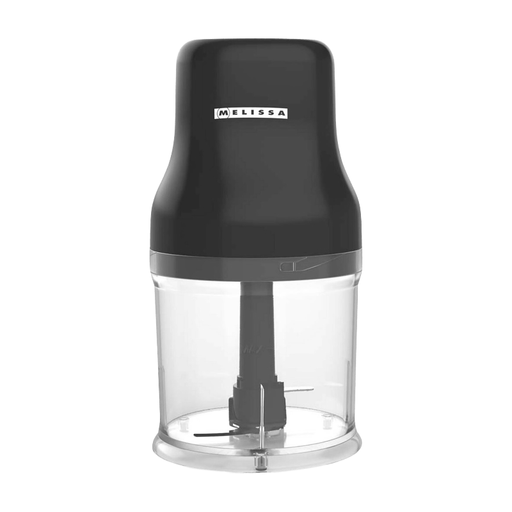
Why it suits this profile: The 500 ml capacity and compact size are well suited to small portions, student kitchens and everyday chopping of vegetables, fruit or nuts.
The specifications clearly state 200 watts, one speed and a 500 ml bowl. This keeps expectations clear rather than suggesting excessive multifunctionality.
Stainless steel blades, dishwasher-safe bowl and blades, non-slip feet and BPA-free construction.
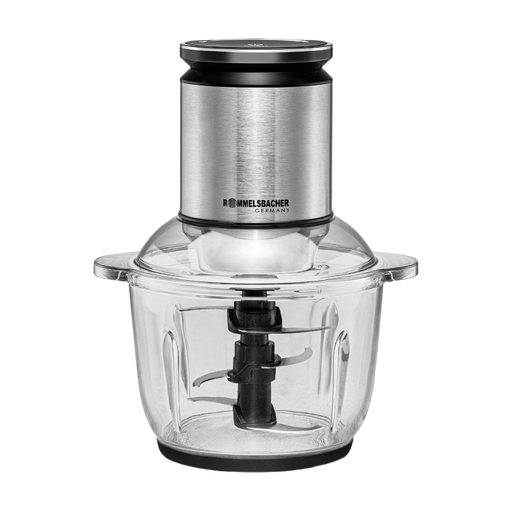
Why it suits this profile: The 2-litre glass bowl and 22 speed settings provide plenty of flexibility for families, sauces, pesto, salads and larger portions.
The capacity and speed control are specified clearly. However, bear in mind the short operating time of a maximum of 0.5 minutes per cycle.
600 watts, six stainless steel blades, 2-litre glass bowl and dishwasher-safe removable parts.
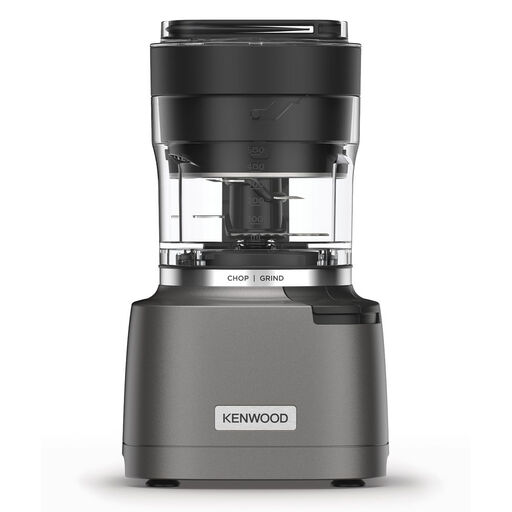
Why it suits this profile: This model combines a chopping function with a separate grinding solution for coffee, herbs and hard ingredients, among other things.
The two separate bowls and blade configurations make it clear which function each one is intended for. The chopping bowl has a capacity of 500 ml and the appliance has two speeds.
800 watts, separate grinding and chopping attachments, dishwasher-safe removable parts and a stackable design.
We have put together a complete, up-to-date list of products that fully meet these strict selection criteria and the applicable European safety regulations.
Before using the appliance for the first time, read the instructions and check that the bowl, lid and blades are fitted correctly. On many models, a safety lock prevents the motor from starting when the lid is not securely closed. This is a useful feature, but it is no reason to touch the blades while the appliance is in use.
To keep running costs down:
The lifespan depends on the materials, frequency of use and maintenance. A model with a glass bowl may be suitable for intensive household use, but it requires care to prevent drops and sudden changes in temperature.
This is possible with models whose product information lists meat as a suitable application. Cut the meat into small pieces, remove any hard parts and work in short pulses. Always check the maximum quantity and operating time for the appliance you choose.
Some models are described in their product information as suitable for puréeing baby food. Allow ingredients to cool first, then check the temperature and texture yourself after puréeing. Do not use an appliance that is not suitable for hot ingredients.
A mini food chopper usually uses electricity for only a short time, so energy consumption per preparation remains limited. The main costs generally involve the purchase price, maintenance and any replacement parts. A dishwasher-safe bowl and blades can save time, but always check the instructions before putting parts in the dishwasher.
