
Vandaag of morgen in huis

Kwaliteit gegarandeerd

Welkomstaanbiedingen ontgrendelen: GRATIS bezorging | Tot 80% korting | Gratis 30 dagen JoyPlus-proefperiode
Download de app
As a Joybuy Product Recommendation Officer, I see many DIYers struggle with purchasing a mini cordless polisher. The market is flooded with models that promise the world but often fall short in practice. A brilliant finish for your car, boat, or furniture starts with the right tool. This guide will help you see through the marketing hype and choose a machine that gets the job done, without incurring unexpected extra costs.
Before you open your wallet, it's crucial to recognise the most common problems. Many buyers fall into the same traps, leading to frustration and a half-finished job.
car polisher kit and discover it only includes a basic pad. Suddenly, you need all sorts of extra pads and accessories for scratch removal, wax application, or headlight polishing. What seemed like a bargain quickly becomes a costly mistake.To avoid these pitfalls, focus on a few key specifications. These determine whether a cordless buffer is a sound investment or a waste of money.
Don't be swayed by voltage alone. A 12V polisher typically offers enough power for most detailing jobs. What really matters is the capacity, expressed in amp-hours (Ah). A higher Ah rating (e.g., 2.0 Ah or more) means a longer runtime per charge. A model with two included batteries is even more practical, allowing you to keep working while the other one charges.
A detailing polisher must have variable speed. Different jobs require different speeds:
A machine with multiple, clearly defined speed settings gives you the control you need to avoid damaging the paintwork.
Always check what's actually in the box. A good starter kit includes not just the machine and batteries, but also:
Below are some popular choices, matched to specific user profiles. We've focused on specifications that directly address the pitfalls mentioned earlier.
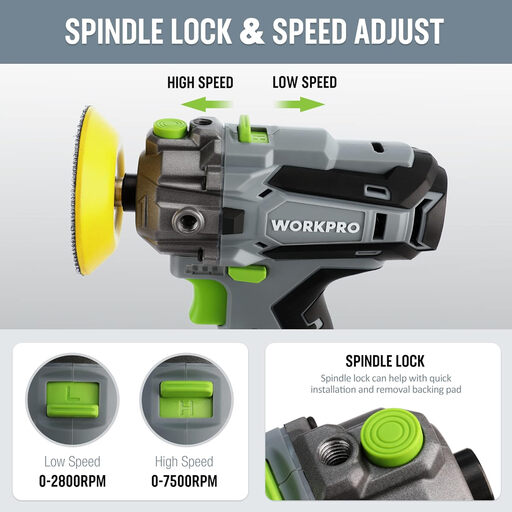
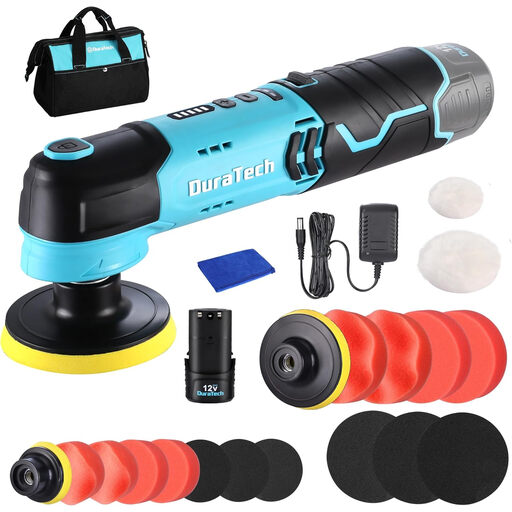
Why This Fits Their Persona: Ideal for the DIYer who wants to get started right away on various jobs, from car polishing to furniture restoration. This kit is focused on ease of use and completeness.
Tackles the 'incomplete kit' pitfall. It comes with two batteries, various polishing foams, a wool pad, sandpaper, and a storage case. You don't need to buy extra accessories right away.
Two 2.0 Ah batteries: Ensures continuous runtime. Complete accessory kit: Ready for polishing, waxing, and light sanding out of the box.
Why This Fits Their Persona: Suited for the serious car enthusiast who wants maximum control over the polishing process. The focus is on precision, adjustability, and the ability to work in tricky spots.
Avoids the 'awkward design' pitfall. Weighing just 810 grams and including two backing plate sizes (50mm and 80mm), this machine is designed for control and comfort, even in tight spaces.
5 speed settings (600-3000 RPM): Offers highly precise control for any task. Includes 50mm and 80mm pads: Versatile for both small details and larger surfaces.
We have compiled a complete, up-to-date list of products that fully meet these strict selection criteria and local regulations.
This depends heavily on the capacity (Ah) and usage. A 2.0 Ah battery will last about 30 to 45 minutes under average use. That's why a kit with two batteries is a smart choice. You can use one battery while the other charges, allowing you to work without interruption.
Absolutely. A headlight polisher is one of its most popular applications. For this, use a slightly higher speed and a medium polishing pad, combined with a polish specifically designed for plastic. The small footprint of a mini polisher is ideal for precisely following the contours of a headlight.
Always start at a low speed to spread the polish. To remove light scratches (swirls), you can increase the speed to around 2500-3000 RPM. For applying a layer of wax, a low speed of about 1000-1500 RPM is sufficient. Always read the instructions for both the machine and the polishing compound.
