
Cooking a large pan of soup
If you’re preparing several carrots, you’ll want to know how many fit in the chopper per batch. Philips distinguishes between bowl capacity and chopping capacity for its HR1393 models.


When choosing a mini chopper for carrot soup, focus on how much you want to chop in each batch, rather than just the stated bowl capacity or wattage. A manual chopper works without a plug, but you’ll need to pull the cord; an electric model avoids this, although you’ll still need to check the permitted quantities, the chopping size you want and how to clean it. Philips, Tefal and Kenwood publish product specifications, but these are not comparative tests using raw carrots.
If you’re preparing several carrots, you’ll want to know how many fit in the chopper per batch. Philips distinguishes between bowl capacity and chopping capacity for its HR1393 models.
If you want to chop rather than purée your carrots, pay attention to the controls and check the size of the pieces as you go. Tefal says that pulling the cord more often gives a finer result with the K1320404; this is not a test using carrots.
If you want to avoid as much hand-washing as possible after chopping, check which parts of the exact model are dishwasher-safe. Kenwood lists the bowl, blade and lid for the CHP62.400SI.
A good fit if: you want to chop without a plug and are happy to prepare several batches if needed. Tefal describes the K1320404 as having a pull-cord mechanism.
The trade-off: pulling the cord takes effort; the stated bowl capacity of 900 ml doesn’t confirm how many raw carrots you can chop in one batch.
A good fit if: you want to avoid repeated pulling and can prepare the ingredients in batches. Kenwood lists a 600 ml glass bowl for the CHP62.400SI.
The trade-off: a larger bowl doesn’t automatically mean you can process more carrots at a time; check the instructions for ingredients and cleaning too.
| What to consider | What should you check? | Who is this important for? |
|---|---|---|
| Chopping raw carrots | Check the ingredients list and instructions for the exact model; wattage alone doesn’t confirm how it will handle carrots. | I want to know whether my chopper can handle raw carrots for soup. Around 36% of consumers say suitability for carrots is their main purchasing concern. |
| Amount per batch | Look for the chopping capacity or maximum quantity of solid ingredients, not just the bowl volume. | I’m preparing carrots for a large pan and want to estimate how many batches I’ll need. Around 29% of consumers mainly consider the amount they can chop per batch. |
| Size of the pieces | Check how you start and stop the chopper and whether you can check the contents as you go. | I want visible pieces of carrot in my soup, not an accidentally over-fine result. Around 21% of consumers prioritise control over the size of the pieces. |
| Cleaning | Check which parts are dishwasher-safe for each model; don’t assume this includes the motor unit. | I want cleaning to be as easy as possible after preparing several batches. Around 14% of consumers say cleaning is their main purchasing concern. |
The bowl capacity isn’t always the amount you can actually process. Philips lists a 0.7 l bowl and a chopping capacity of 0.5 l for its HR1393 models.
Look up the maximum quantity you can process for the exact model, and don’t convert the bowl capacity in litres into a weight of carrots.
A smaller working capacity may mean you need more batches than you expect.
Wattage or a general description of suitable ingredients doesn’t amount to a comparable test using raw carrots. A claim about vegetables doesn’t tell you how many carrots you can chop at a time either.
Check the ingredient instructions for the exact model, and assess capacity and controls separately.
Philips lists the HR1393/00 as 450 W, while a Joybuy product title states 400 W. A difference in a key specification is a good reason to check the exact model.
Compare the model number and specifications before assuming that listings refer to the same version.
Tefal describes both manual and electric choppers, including the K1320404 and MQ80E8.
The Easy Chop+ range includes the CHP62.400SI with a 600 ml glass bowl and the separate CHP61.100WH with a 500 ml bowl.
For the HR1393 series, Philips distinguishes between bowl capacity and chopping capacity.
Bosch describes the MMR08A1 as an electric chopper with pulse control.
This selection includes manual and electric choppers for preparing ingredients. One product specifically mentions carrots; check the permitted quantities and ingredients for each model.
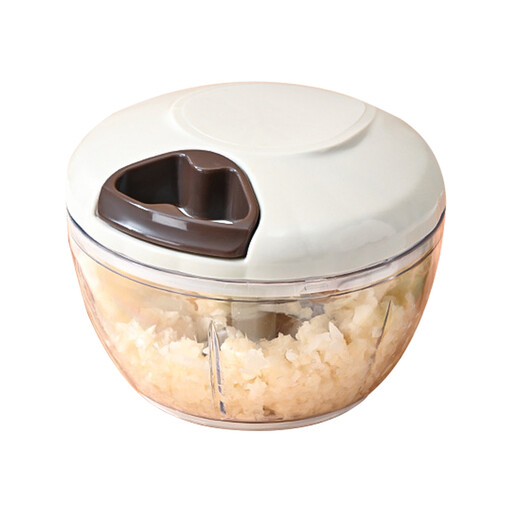 No image available
The pull-cord mechanism gives you a manual way to chop ingredients; bear in mind that it takes effort to pull.
Capacity: 500 ml. The description mentions stainless steel blades and hand-washing.
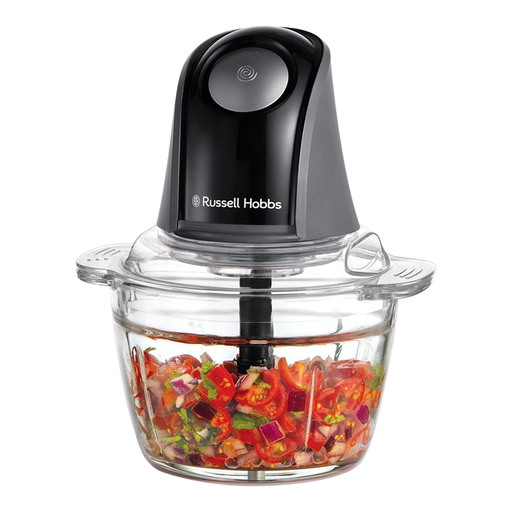 No image available
The product description lists carrots as a suitable ingredient and says you can control the chopping time with a button.
Filling capacity: 500 ml. The description mentions a glass bowl and dishwasher-safe parts.
According to the product information, children aged 8 and over may use the appliance only under close supervision and after receiving instructions; it is not intended for children under 8.
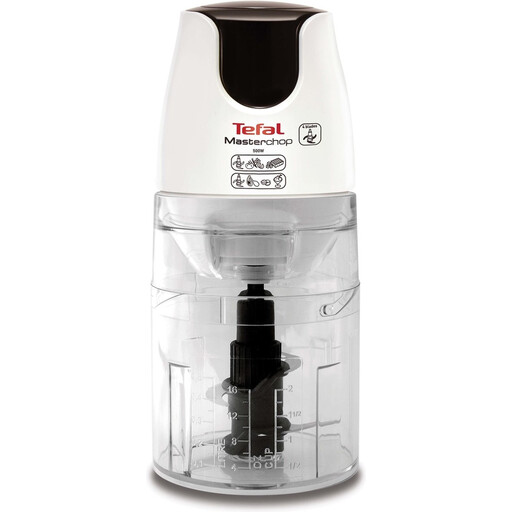 No image available
The press-down control makes this an electric option for chopping ingredients; the description mentions onions, nuts and herbs, among other things.
Power: 500 W. Usable capacity: 500 ml. The bowl, lid and blades are listed as dishwasher-safe.
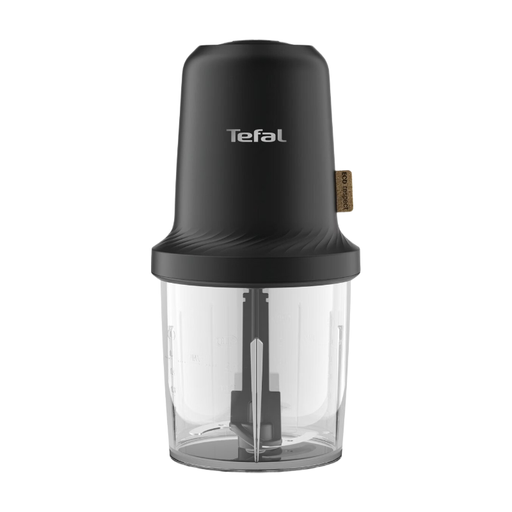 No image available
The stated quantity of solid ingredients can help you plan portions; the description also mentions chopping, stirring and mixing.
Up to 300 g of solid ingredients; for semi-liquid mixtures, the description lists a maximum of 500 ml. The blades are made of stainless steel.
 No image available
The glass bowl lets you see the contents as you chop, so you can check the texture.
Capacity: 2 l. Power: 300 W. The description lists two speeds and stainless steel blades.
According to the product description, cut large ingredients into 2 cm pieces beforehand and don’t run the motor for more than 30 seconds at a time. The blades are sharp; don’t immerse the motor unit, plug or cord in water.
Not without checking the instructions for the exact model. For example, Philips lists a bowl capacity of 0.7 l and a chopping capacity of 0.5 l for the HR1393/00, /01 and /90. These figures aren’t a general filling guideline for other models, and they don’t indicate a weight of carrots.
Check the size of the pieces as you chop and follow the model’s instructions. Tefal says that pulling the cord more often gives a finer result with the manual K1320404; this is the manufacturer’s description, not a measured result for carrot soup.
This varies by model and part. Kenwood lists the bowl, blade and lid for the CHP62.400SI; Bosch lists dishwasher-safe parts for the MMR08A1. Check the cleaning instructions for your model’s bowl, blades, lid and motor unit.
For a consumer purchase in the Netherlands, the retailer is your point of contact for a solution if the product is faulty, according to the Dutch Government. This is separate from any manufacturer’s guarantee. For online purchases, you’re also usually entitled to a 14-day cooling-off period; the circumstances of the purchase matter.