
For those who like their salsa chunky
You want to be able to judge the pieces of tomato, onion and herbs as you chop. So compare models with controls you can adjust yourself; this won’t guarantee a particular chunk size.


For small portions and a workspace without a plug socket, a manual pull-cord chopper could be a good choice. If you make salsa more often, compare compact electric choppers with adjustable controls. Check the usable filling capacity, external dimensions and cleaning instructions for each part. A hand blender set is worth considering if you’ll use its extra features too; product details are not a like-for-like test of salsa texture.
You want to be able to judge the pieces of tomato, onion and herbs as you chop. So compare models with controls you can adjust yourself; this won’t guarantee a particular chunk size.
You make small portions and need to put the appliance away after use. Compare its external dimensions and the parts you’ll need to store, rather than relying on the word ‘mini’ or the bowl capacity alone.
You want to be able to clean the bowl, blade and, if applicable, lid thoroughly after use. Cleaning instructions can vary by part, even when some parts are dishwasher-safe.
A good fit if: you occasionally make a small portion and don’t want to use a plug socket. Tefal says that the number of pulls affects how finely the K1330404 chops.
Trade-off: you operate the pull cord yourself. Tefal lists a 500 ml bowl; this doesn’t tell you how much salsa you can process at a time.
A good fit if: you chop more often and want a separate appliance with push-button or pulse controls. Bosch lists a momentary switch for the MMR08A1; Kenwood lists two speeds for the CHP61.100WH.
Trade-off: you’ll need a plug socket and somewhere to store the appliance. The available controls alone don’t prove that it will chop to a particular texture or speed.
A good fit if: you’ll use a hand blender and whisk as well as making salsa. Braun lists these attachments with the MQ50236M, alongside a 500 ml chopper.
Trade-off: the extra parts need space and cleaning; the set’s power rating doesn’t prove it will give you better salsa texture.
First, choose the type of controls that suit your portions. Then check how much storage space you have and how each part should be cleaned.
| What to consider | What to look for | Who it matters to |
|---|---|---|
| Salsa texture | Compare pull-cord, push-button or pulse controls, and check the texture as you go. | If I want recognisable pieces, I want to be able to adjust the chopping as I go. Around 31% of consumers put control over the size of the pieces first. |
| Space and portion size | Check the external dimensions and the recommended filling capacity of the exact model. | With limited cupboard space, I want to be able to store the separate parts too, and make a portion that fits my bowl. Space and portion size are top priorities for around 25% of consumers. |
| Cleaning after use | Check the instructions for each model’s bowl, blade, lid and motor unit. | In a shared kitchen, I want to be able to clean every part I’ve used thoroughly. Around 25% of consumers prioritise cleaning after use. |
| Whether extra features are useful | Think about which attachments you’ll actually use and how many parts you’ll need to store. | If I mainly make salsa, I don’t want to choose a set with attachments I won’t use. Around 19% of consumers weigh up extra features against how often they’ll use them. |
A bowl’s total capacity may not be the same as the amount you can practically chop. For example, Philips lists a 0.7-litre bowl and a usable volume of 0.5 litres for the HR1393/91.
Check the usable filling capacity and the instructions for the exact model before judging the portion size.
The Tefal K1330404 has different cleaning instructions for the lid and for the bowl and blades.
Check the instructions for each part. Tefal says the bowl and blades are dishwasher-safe, but the lid is not.
The stated motor power of a hand blender set doesn’t tell you what texture your salsa will have.
Only choose a set if you’ll also use the hand blender or whisk; assess the chopper and its controls separately.
The manual 5 Second Chopper K1330404 is an option if you want to chop without plugging in.
The standalone MMR08A1 is designed for those looking for a separate electric chopper.
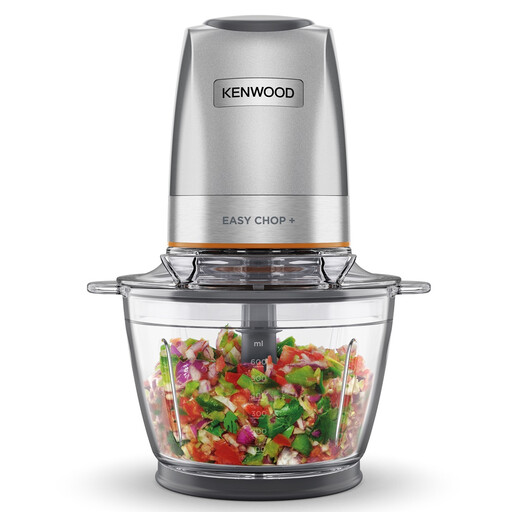
The Easy Chop CHP61.100WH and Easy Chop+ CHP62.400SI differ in bowl and design.
The MultiQuick 5 MQ50236M is a hand blender set with a chopper and extra attachments.
The Mini Chopper 5KFC3516ECU is an electric model with pulse control.
This selection includes a manual pull-cord chopper and electric mini choppers for preparing small portions of salsa.
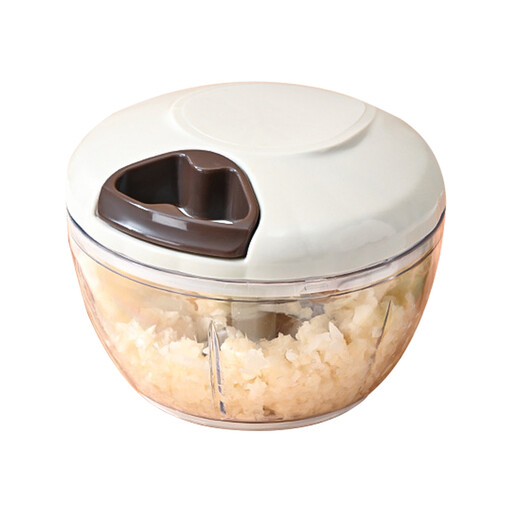 No image available
An option for small portions of salsa when you don’t need electric power.
The title lists a 500 ml capacity and stainless steel blades. The product description says to wash by hand.
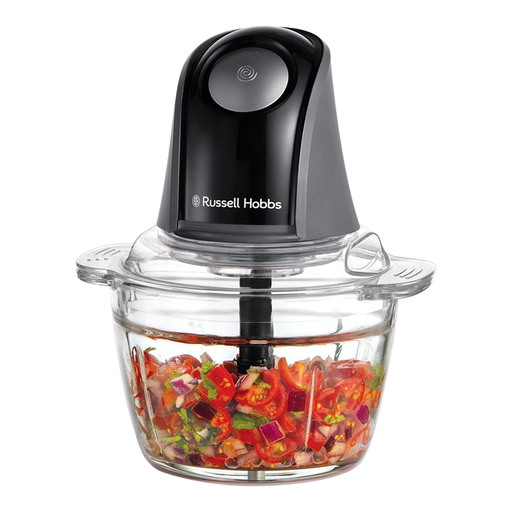 No image available
A standalone electric chopper for those who want to control the chopping time themselves.
The product details list a glass bowl with a filling capacity of 500 ml and a power rating of 200 W. Some parts are listed as dishwasher-safe; check the instructions for each part.
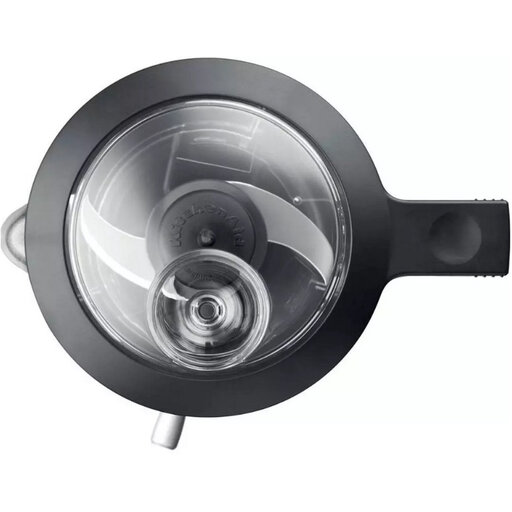 No image available
An electric option if you want to choose between speeds and pulse control as you chop.
The product details list an 830 ml bowl, a height of 22,2 cm and cord storage. According to the description, cut larger ingredients into pieces no bigger than 2,5 cm first.
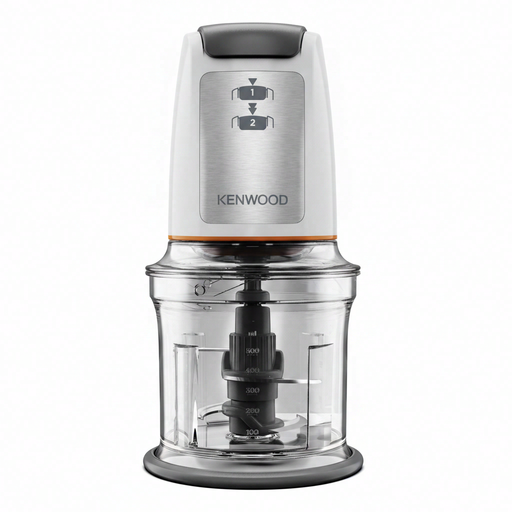 No image available
A standalone chopper for small amounts of vegetables and herbs, with two-speed controls.
The product details list a 500 ml bowl, a filling weight of 225 g and four blades. Use the appliance for no more than 30 seconds at a time, then let it cool for 2 minutes.
 No image available
An option if you want a glass bowl which, according to the product details, also comes with a lid for preparing and storing food.
The product details list a 600 ml bowl, an opening for adding liquid and external dimensions of 19,1 × 17,4 × 25,6 cm.
No. The bowl’s capacity isn’t automatically the same as its usable capacity. Philips lists a 0.7-litre bowl and a usable volume of 0.5 litres for the HR1393/91, so check the usable filling capacity of the model you choose.
Not necessarily; cleaning instructions can vary by part. Tefal says the bowl and blades of the K1330404 are dishwasher-safe, but the lid is not. Kenwood lists the bowl, blade and lid of the CHP62.400SI as dishwasher-safe. Follow the instructions for the exact model and don’t assume the motor unit is dishwasher-safe.
Wash raw vegetables and fresh herbs under running water, and use clean kitchen utensils. The Netherlands Nutrition Centre advises keeping equipment that has come into contact with raw meat or fish separate. Store leftovers covered in the fridge at a set temperature of 4 °C for no more than 2 days.
No. According to the Dutch government, the Netherlands does not have a fixed statutory warranty period. You’re entitled to a product that works properly for as long as you can reasonably expect it to; if a product is faulty, contact the seller. A manufacturer’s warranty is in addition to your statutory rights.
The requirements depend on the product and the conditions that apply to it. The Netherlands Food and Consumer Product Safety Authority (NVWA) explains that CE marking is mandatory for electrical products covered by that requirement; the applicable electrical regulations depend, among other things, on the rated voltage. Materials that come into contact with food must comply with the rules for food-contact materials. This alone does not establish that a specific model on sale demonstrably meets all applicable requirements.