
Leek tart baker who wants to keep some texture
Wants to be able to stop chopping and check the texture of the filling, rather than relying solely on the motor’s power.


For chopping leeks for a tart, a manual chopper is a good choice if you want to work without a plug socket and provide the pulling force yourself. An electric model does the work for you, but needs space for the motor and cord. Choose a control that lets you chop in short bursts, checking the texture as you go. Also compare the usable capacity with the amount you need: the bowl capacity is not always the same as the maximum chopping capacity.
Wants to be able to stop chopping and check the texture of the filling, rather than relying solely on the motor’s power.
Wants to weigh up the size of the whole appliance, the cord and the storage space it needs against a manual alternative.
Looks at the usable amount per batch and which parts need cleaning after chopping vegetables.
A good fit if: you want to work without a plug socket and control each chopping burst yourself.
Bear in mind: you provide the pulling force yourself; check after each short burst whether the leeks have the texture you want.
A good fit if: you want the motor to do the work and have space for the appliance and its cord.
Bear in mind: even with pulse or push-button controls, you still need to check the texture as you go.
A good fit if: you want to choose the size of the pieces yourself and avoid storing another appliance.
Bear in mind: you’ll need to chop everything yourself and clean the kitchen utensils afterwards.
| What to consider | What to look for when buying | Who is this important for? |
|---|---|---|
| Leek texture | Check whether you can use the controls in short bursts, so you can assess the pieces as you go. | I don’t want to chop the filling any finer than necessary, and I want to be able to adjust as I go. That’s why around 33% of consumers prioritise control over texture. |
| Worktop and storage space | Compare the dimensions of the complete appliance and allow space to fill and operate it. | In a small kitchen, I want to know whether the appliance will fit on my worktop and can be put away after use. Around 27% of consumers prioritise the space the chopper takes up. |
| Usable capacity | Check the maximum chopping capacity for the exact model; don’t rely on the bowl capacity alone. | For one tart, I want to know whether all my leeks will fit in one batch or whether I’ll need to do several. Around 20% of consumers prioritise the amount that can be processed per batch. |
| Cleaning | Check which parts the manufacturer says are dishwasher-safe and how to clean the motor housing. | After chopping, I want to know how many parts need cleaning and which of them can go in the dishwasher. Around 20% of consumers prioritise easy cleaning and fewer separate parts. |
The bowl capacity doesn’t automatically tell you how much you can chop effectively. For some HR1393 models, Philips lists a bowl capacity of 0.7 l and a chopping capacity of 0.5 l.
Check the usable capacity of the exact model and follow the filling instructions. A lower usable capacity may mean preparing the leeks in several batches.
A matching brand or base number doesn’t necessarily mean it’s the same version, accessories or service terms.
Before choosing, compare the full model code and the details of the version you’re looking at.
The bowl doesn’t show how much space the complete appliance takes up. Bosch lists dimensions of 250 × 195 × 195 mm for the MMR08R2.
Measure the space for the whole appliance and leave room to operate and fill it.
Controls and specifications vary by model; the features below are not a judgement on how well each one chops leeks.
Tefal says its manual 5 Second Chopper K1330404 has a capacity of 500 ml.
KitchenAid says the electric 5KFC3516 has an 830 ml bowl, two speeds and a pulse setting.
Kenwood describes the Easy Chop CHP61.100WH as an electric mini chopper with a 500 ml bowl.
The MMR08R2 is an electric chopper with push-button controls.
The Princess 221040, version 01.221040.01.001, comes with separate chopping and grinding cups.
The product selection below includes electric mini choppers and a manual pull-cord chopper. Compare the controls and capacity of each version, and consider how much space you can make for it.
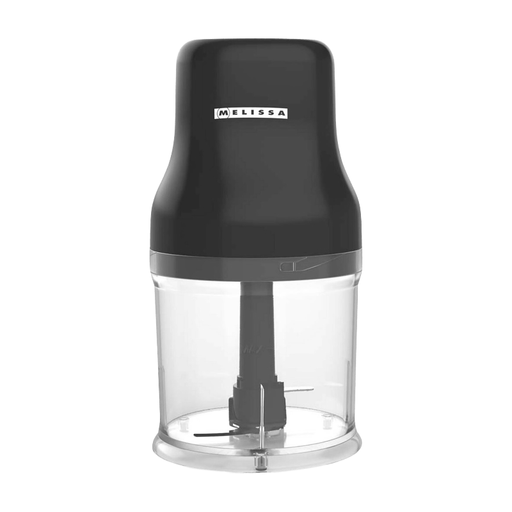 No image available
An electric option to consider if you want to chop in short bursts and check the texture as you go.
Listed specifications: 200 W, 0.5 l and 1 speed.
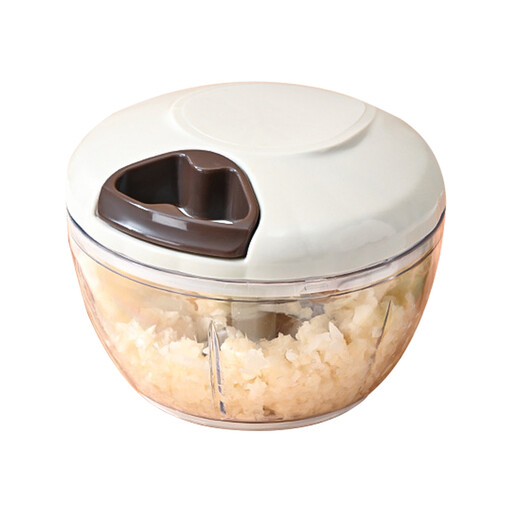 No image available
A manual option if you want to chop without a plug socket; you provide the pulling force yourself.
The product name lists a capacity of 500 ml and stainless steel blades. The parts need to be washed by hand.
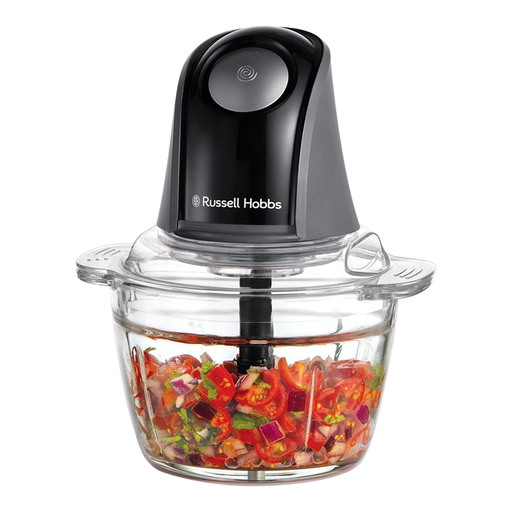 No image available
An electric mini chopper to consider if you want to control the chopping time yourself.
The product name lists 200 W and dishwasher-safe parts.
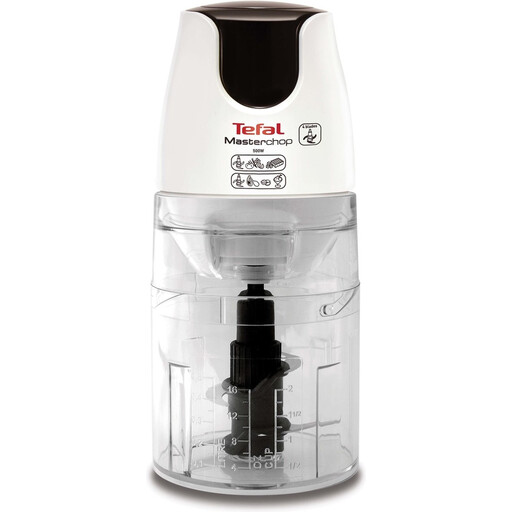 No image available
An electric option to consider for small amounts; check whether the permitted quantity suits the portion you’re preparing.
The product name lists 500 W, 500 ml and 3-in-1.
 No image available
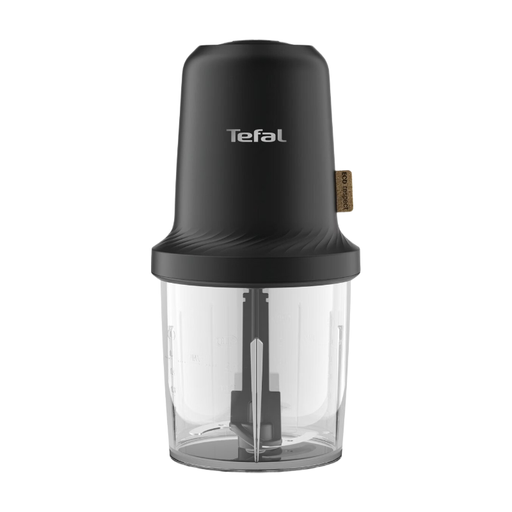
An electric option if you’re looking for a food chopper; check the permitted quantity for the ingredients you want to prepare.
The product name lists a capacity of 0.5 l and a power rating of 500 W.
Wash the leeks under running water, divide them into batches if needed and chop in short bursts. Check the texture of the pieces as you go to avoid chopping for longer than necessary. The Netherlands Nutrition Centre (Voedingscentrum) advises washing vegetables under the tap.
Check the manual for each part and model. Princess says that the removable cups for version 01.221040.01.001 are dishwasher-safe; this doesn’t automatically apply to the motor housing or other models.
Contact the seller and ask for an appropriate solution. According to the Government of the Netherlands (Rijksoverheid), there is no fixed statutory warranty period that applies to all products in the Netherlands; what’s appropriate depends on the fault and the circumstances. Normal wear and tear or damage caused by your own actions is not automatically covered.
Materials that come into contact with food must comply with the relevant EU rules, including Regulation (EC) No 1935/2004. According to the European Commission, CE marking applies only to products for which specific EU rules require it. These general rules do not confirm that an individual item complies with the applicable requirements.