
Making a family-sized batch
You want to make enough hummus and decide in advance whether making several batches is acceptable. Bowl capacity and working capacity can differ; Philips, for example, makes this distinction for certain HR1393 models.


When making hummus for the family, the amount you want to prepare in each batch matters more than the stated bowl capacity alone. Check the usable fill limit for the exact model. You should also choose an appliance or accessory specifically designed for puréeing. A larger food processor or hand blender may suit you better if you prefer to make one bigger batch, while a manual chopper is only a suitable choice if the set includes the required puréeing blade.
You want to make enough hummus and decide in advance whether making several batches is acceptable. Bowl capacity and working capacity can differ; Philips, for example, makes this distinction for certain HR1393 models.
You need an appliance or accessory that purées chickpeas rather than simply chopping them roughly. The Netherlands Nutrition Centre describes puréeing as part of the hummus-making process.
You prioritise compact storage and easy cleaning, or want to work without a power socket. A small capacity may mean making more than one batch; a manual model also requires you to pull the cord.
First, compare the amount in your recipe with the actual fill limit. Then choose based on whether you prioritise puréeing, easy cleaning or working without a power socket.
| What to consider | What should you check? | Who is this important for? |
|---|---|---|
| Amount per batch | Check the permitted fill limit for the exact model and compare it with your recipe; don’t assume the working capacity from the bowl capacity alone. | If I’m making hummus for the family, I want to know whether I can process everything at once. Around 34% of consumers prioritise the amount they can make per batch. |
| Puréeing | Look for a dedicated puréeing function or check that your chosen manual set includes a puréeing blade. | If I want a smooth dip, I make sure the appliance or accessory is designed for puréeing. Around 33% of consumers put texture first. |
| Cleaning | Check the cleaning instructions for each part; dishwasher suitability can vary by component and model. | If I’m making several batches, I don’t want to have to wash every part by hand afterwards. Around 20% of consumers prioritise cleaning and storage. |
| Working without a power socket | Check whether it’s a manual pull-cord model and whether the set also includes the puréeing accessory you need. | If I want to make hummus somewhere without a power socket, manual operation is practical, as long as the set is suitable for puréeing. Around 13% of consumers prioritise being able to work without plugging in. |
The bowl’s full capacity isn’t always the amount you can process at once. For example, Philips lists a 0.7-litre bowl capacity and a 0.5-litre chopping capacity for certain HR1393 models.
Compare the amount in your recipe with the stated capacity of the exact model. A lower working capacity may mean you need to make extra batches.
According to Tefal, the K1321324 set includes a puréeing accessory; this accessory isn’t listed for the K1330404.
Check the model number and what’s included in the box before buying.
The lid of this model must be washed by hand.
KitchenAid lists an 830 ml bowl capacity, two speeds and uses including hummus and puréeing for its compact 5KFC3516.
Kenwood offers several Easy Chop models, including the CHP62.400SI with a 600 ml glass bowl and the CHP61.100WH with a 500 ml bowl.
The manual 5-Second Chopper is available in several versions; the K1321324 is a 900 ml set with a puréeing accessory.
For certain HR1393 models, Philips lists a 0.7-litre bowl with a 0.5-litre chopping capacity; the HR1507/00 has a 2-litre glass bowl.
This selection includes compact manual and electric choppers for small preparations. Check each model to make sure its stated functions and fill capacity suit your hummus recipe.
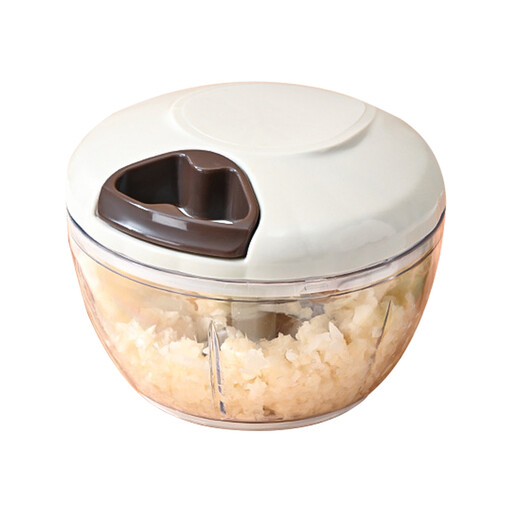 No image available
A manual model for anyone who wants to work without a power socket; the product information lists fruit purée as one of its uses.
The title states a capacity of 500 ml and stainless steel blades.
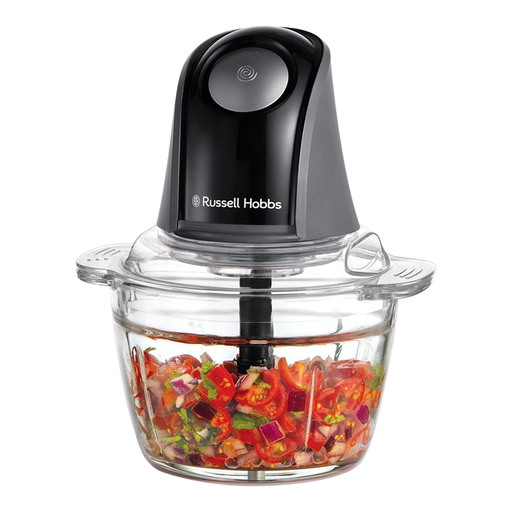 No image available
The product description lists homemade hummus as one of its uses, making this model a good match if you’re looking for a chopper for dips.
The description lists a 500 ml fill capacity, a glass bowl with a storage lid and dishwasher-safe parts.
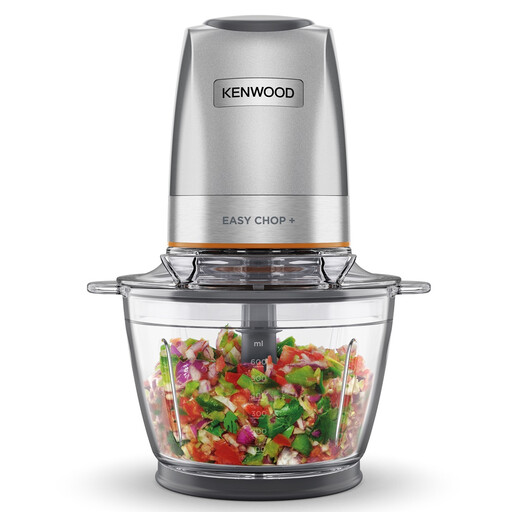 No image available
The glass bowl is handy if you’re looking for a compact chopper that you can also use to prepare and serve food.
The product information lists a 600 ml bowl, two speeds and an opening for adding liquid.
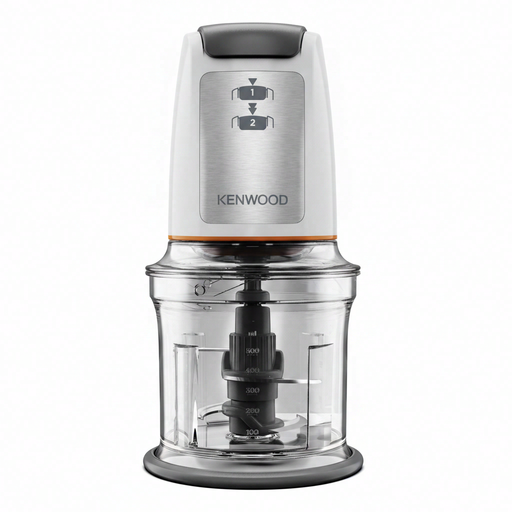 No image available
A compact option for smaller preparations, such as dips; compare the fill capacity with your recipe.
According to the product description, the appliance can run for a maximum of 30 seconds at a time, after which it needs to cool down for 2 minutes.
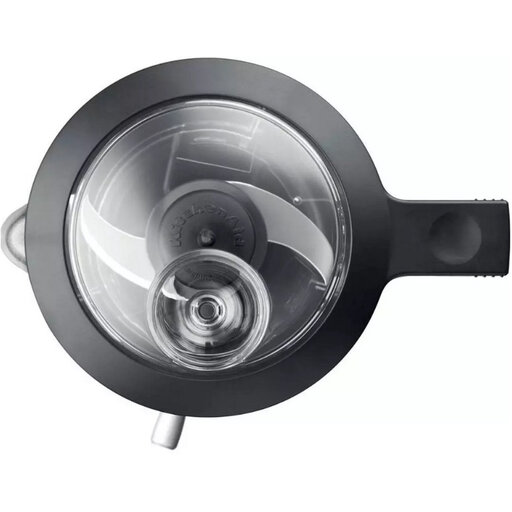 No image available
The product description mentions hummus and puréeing, making this a good option if you’re looking for a compact chopper for smooth dips.
The description lists an 830 ml bowl, two speeds and a pulse function. According to the product specifications, the appliance isn’t dishwasher-safe.
Not without checking the actual fill limit. For example, Philips lists a 0.7-litre bowl capacity and a 0.5-litre chopping capacity for certain HR1393 models. Compare the limit for the exact model with the amount in your recipe.
In its hummus recipe, the Netherlands Nutrition Centre suggests adding a little water if you want a smoother texture. Make sure you stay within your appliance’s permitted fill limit.
The Netherlands Nutrition Centre recommends keeping homemade hummus in the fridge for 1–3 days. Return it to a fridge, ideally at 4 °C, as soon as possible; don’t leave it out of the fridge for more than 2 hours, and always use clean cutlery.
According to ACM ConsuWijzer, the seller is responsible for the statutory guarantee if a product doesn’t meet what you could reasonably expect. Any manufacturer’s guarantee doesn’t automatically determine how long your statutory rights apply.
According to the NVWA, CE marking is required for electrical products covered by the Commodities Act Decree on Electrical Equipment. The low-voltage rules mentioned apply to a nominal AC voltage of 50–1000 V or a DC voltage of 75–1500 V; these voltage rules don’t apply to a manual pull-cord chopper.