
Cooking for a large group
You want to make enough tapenade for the community meal and, above all, find out how much you can chop in each batch.


For olive tapenade at a community meal, the amount you can process in each batch matters more than the bowl’s capacity to the brim. A small mini chopper may mean working in several batches. A food processor is more convenient if you also want to slice or grate, but remember to check its working capacity, controls and cleaning requirements too.
You want to make enough tapenade for the community meal and, above all, find out how much you can chop in each batch.
You want to chop the ingredients without automatically puréeing them until smooth, so you’re looking for controls that let you check the texture as you go.
You’ll use the appliance after the community meal too, so you’re weighing up compact storage and easy washing-up against extra slicing and grating functions.
Start with the working capacity per batch, then consider texture control, cleaning and how you’ll use it after the community meal.
| Buying consideration | What to look for | Who is this most important to? |
|---|---|---|
| Working capacity | Compare the stated amount per batch with your recipe; don’t rely on the nominal bowl capacity alone. | For a community meal, I want to know how much I can chop in each batch so I can work out how many batches I’ll need. Around 33% of consumers say working capacity is their main buying consideration. |
| Texture control | Check whether a chopping blade is included and whether the controls allow you to use short pulses. | I want to keep the olives and herbs chunky and check the texture as I go. Around 27% of consumers prioritise control over the chopping result. |
| Cleaning | Check the cleaning instructions for each part; clean the motor unit in accordance with the manual. | After preparing the food, I want to clean the parts without unnecessary fuss before serving. Around 20% of consumers focus mainly on cleaning. |
| Future use and storage | Decide whether you’ll also want to slice or grate, and check the dimensions and included parts. | I want to keep using the appliance after the meal, but I also need somewhere to store it. Around 20% of consumers focus mainly on future use and available storage space. |
The stated working or chopping capacity may be lower than the nominal bowl capacity. Philips lists a 0.7 l bowl and a chopping capacity of 0.5 l for the HR1393/00; Kenwood lists 1.3 l and 0.75 l respectively for the FDP22.130GY.
For your recipe, compare the permitted amount per batch and plan to work in several batches if needed.
A larger quantity may require extra batches.
A large main bowl isn’t automatically the most convenient size for a smaller quantity. Magimix lists three bowls of 2.6, 2.2 and 1.2 l for the CS 3200XL.
Check which bowl and blade are suitable for your recipe, and which parts are included.
Several bowls and accessories take up storage space and may mean more washing-up.
The Netherlands Government explains that there is no fixed statutory guarantee period in the Netherlands; what you can reasonably expect from a product is what matters. If a product is faulty, the seller is your point of contact.
Keep any additional guarantee terms separate from your statutory rights and check what the extra cover includes.
The HR1393/00 is a compact mini chopper for anyone who mainly wants to chop ingredients in smaller batches.
The MultiPro Go FDP22.130GY combines chopping with slicing and grating in a compact food processor.
The MultiTalent 3 MCM3501M is a multifunctional model for anyone who wants to slice, grate and mix as well as make tapenade.
The CS 3200XL has several bowls for different preparations and portion sizes.
This selection includes mini choppers and food processors for making olive tapenade, with a focus on bowl size, texture control and extra slicing or grating options.
 No image available
An option if you want to slice or grate as well as chop when making tapenade.
The title lists a 1.8 l bowl, a chopping function, and slicing and grating discs. The description recommends cutting ingredients into pieces of around 2 cm in accordance with the instructions, and using short pulses.
 No image available
Two bowl sizes are useful if you want to choose a different nominal bowl capacity for different preparations.
The title lists 2L/8 Cup and 0.6L/2.5 Cup glass bowls, and a power rating of 300W. According to the product description, the bowls and lids are not heat-resistant; avoid sudden temperature changes of more than 50 °C.
 No image available
An option if having different bowl sizes and pulse control is important to you when chopping.
The product description lists three stackable bowls of 2.5L, 2.2L and 1.8L, with two speeds and a pulse function. It also states that each pulse should last no more than 30 seconds.
 No image available
The product description recommends short pulses to help you achieve your preferred texture gradually.
The title lists a 2L glass bowl, a power rating of 300W and two speeds. The instructions recommend cutting large ingredients into pieces of around 2 cm before processing, and using short pulses.
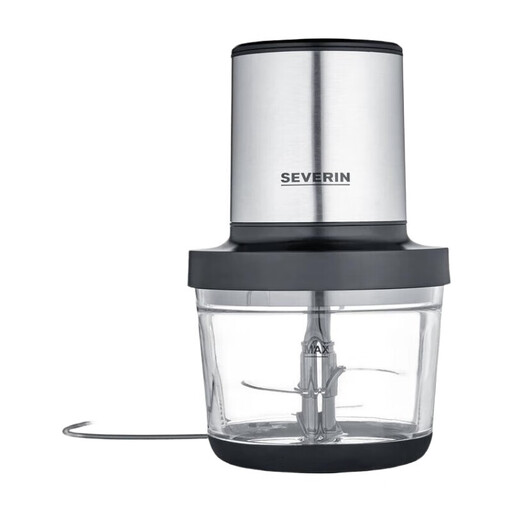 No image available
An option if you want to check the texture as you chop, in short bursts.
The product description lists a 1000 ml glass bowl and a pulse button. The instructions recommend letting the motor cool down between batches.
No, the bowl capacity isn’t necessarily the same as the working capacity. Philips lists a 0.7 l bowl and a chopping capacity of 0.5 l for the HR1393/00; Kenwood lists 1.3 l and 0.75 l respectively for the FDP22.130GY. Check the permitted amount per batch for the model you choose.
Follow the cleaning instructions for each part. Philips says not to rinse the motor unit or put it in the dishwasher for the HR1393/00; instead, Philips recommends wiping it with a damp cloth.
Keep the tapenade chilled and don’t leave perishable food out of the fridge for long. The Netherlands Nutrition Centre recommends setting your fridge to 4 °C and not leaving highly perishable food out for more than 2 hours. For leftovers from a home-cooked dish, it recommends keeping them covered in the fridge for no more than 2 days. Its separate advice of 4 days for opened tapenade applies to a product that has been opened; don’t automatically apply this to every homemade recipe.
The requirement cited by the Netherlands Food and Consumer Product Safety Authority applies to businesses offering food to consumers. Ask your guests about allergies and check the ingredients and labels. If you’re selling food from home or providing catering, consult the relevant rules from the Netherlands Food and Consumer Product Safety Authority.
Choose a model with a chopping blade and controls that let you pause processing to check the texture, such as a pulse function. Work in short bursts and check the result as you go; having a pulse function alone doesn’t guarantee a particular texture.