If you’re making a small portion of pesto for each participant, compare compact choppers based on their blade and pulse control. For larger batches or extra slicing and grating tasks, a food processor may be a better fit. Don’t just look at the stated bowl capacity: check the usable capacity, the included attachments and how to clean them between preparations.
Who is this buying guide for?
Making small portions
You want participants to chop a small amount of pesto individually and control the texture using the pulse setting. The Voedingscentrum lists a food processor as one way to purée pesto, while KitchenAid describes the pulse setting on the 5KFC3516EER.
Preparing batches for a group
You’re processing ingredients for several participants and may also want to slice or grate. The Consumentenbond describes food processors as suitable for tasks including chopping, slicing and grating; Bosch and Magimix list models with bowls and additional attachments.
Sharing equipment
You use the same equipment for different recipes or participants, so cleaning and ingredients that may contain allergens are important considerations. The Dutch Food and Consumer Product Safety Authority sets out the information businesses must provide about allergens when serving food to consumers.
What should you look for when choosing?
Compact chopper
A good fit when: participants are making small portions individually and chopping matters more than slicing and grating.
Trade-off: with a larger group, small portions may mean making several batches in a row.
Food processor with a larger bowl
A good fit when: you’re processing more ingredients per batch or want to use the same machine for slicing and grating.
Trade-off: the stated bowl capacity doesn’t tell you how much pesto the machine can process effectively.
Compact food processor with a separate mini bowl for pesto
A good fit when: you want to combine small preparations with other food processor tasks.
Trade-off: check which bowls and accessories are included with the exact model, and what processing capacity is specified.
When participants make their own pesto at a workshop, the main things to consider depend on portion size, how quickly you need to process batches and whether the equipment will be shared.
| What to consider |
What should you check? |
Who should pay particular attention? |
| Small batch of pesto |
Check the usable capacity, whether a chopping blade is included and whether you can add oil gradually. Don’t assume the minimum quantity based on the stated bowl capacity. |
If I’m making a small portion for each participant, I want the ingredients to reach the blade and to be able to control the texture. Around 40% of consumers say small portions are their main consideration. |
| Processing batches for a group |
Compare the processing capacity with your recipe and work out how many separate batches you’ll need. |
When I’m processing ingredients for several participants, what matters most is how much I can do in each batch. Around 30% of consumers prioritise processing batches for a group. |
| Cleaning between preparations |
Check the cleaning instructions for each part and plan how to clean the equipment when recipes vary. |
When equipment is shared, I want to know how to clean the bowls and blades between recipes, especially when ingredients that may contain allergens are involved. Around 20% of consumers prioritise cleaning when equipment is shared. |
| Worktop and storage space |
Check the appliance dimensions and how many separate parts you’ll need to store. |
If I have limited worktop and storage space, I want to know in advance how much room the appliance and accessories will take up. Around 10% of consumers focus mainly on the space it takes up. |
Common buying pitfalls
-
Assuming the stated bowl capacity equals the usable capacity for pesto
The stated bowl capacity alone doesn’t tell you how much of your recipe the appliance can process effectively. For the Mini Plus, for example, Magimix distinguishes between total bowl capacity and processing capacity.
Compare the stated processing capacity and included bowl with the quantity of ingredients you’ll need for each participant.
-
Confusing a dough mixer with a food processor that has a chopping blade
An appliance for mixing or kneading isn’t automatically equipped for the chopping, slicing or grating tasks you want to do at your workshop.
Check the blade and the parts included with the exact model.
-
Assuming you always need an extended warranty
According to the Dutch government, an additional warranty is mainly worthwhile if it offers more than the rights you already have. Terms also differ between private and business purchases.
Compare the terms of an additional warranty with your existing rights, and check which situation applies to your purchase.
Brands to compare
KitchenAid
KitchenAid describes the 5KFC3516EER as a mini chopper with an 830 ml bowl, pulse control and an opening for liquids.
- The manufacturer lists chopping and puréeing among its uses.
- For larger batches or slicing and grating tasks, it’s worth comparing a different type of appliance.
Bosch
Bosch lists a 2.3 l bowl, a universal blade, and slicing and grating discs for the MultiTalent 3 MCM3200W.
- Bosch lists two speeds and pulse control.
- The bowl capacity doesn’t tell you the minimum or maximum quantity of pesto the appliance can process effectively. Bosch says the accessories are generally dishwasher-safe.
Magimix
Magimix lists 1.7 l and 0.5 l bowls and a processing capacity of 600 ml for the Mini Plus. A Magimix recipe uses the mini bowl with a small metal blade to make pesto.
- The manufacturer says a storage box is included with this model.
- The stated 30-year warranty covers the motor, not necessarily every part. Check the model and terms.
Kenwood
Kenwood lists a 2.1 l bowl, pulse control, a multi mill and built-in scales for the MultiPro Compact+ FDM316SS.
- The additional attachments may come in handy if you’re making other preparations at the workshop too.
- Check which accessories you need and which parts the manual says are dishwasher-safe.
Joybuy products
This selection includes compact choppers and food processors for making pesto, from small portions to preparations where other functions may also be useful.
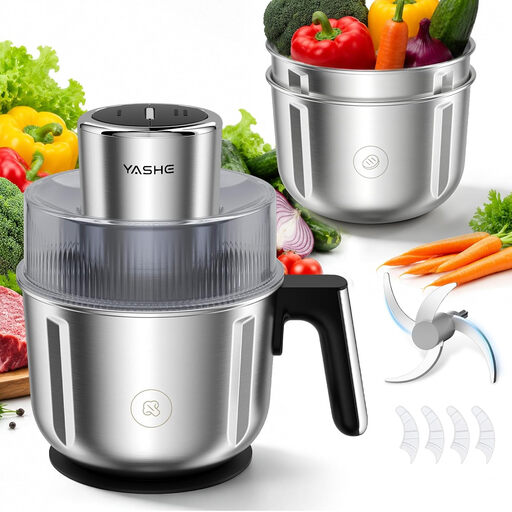 Image unavailable
YASHE 25JM08-Q Electric Chopper, 3 Bowls
The product title lists three bowls for meat, vegetables and sauces. Compare the set with the different preparations you’ll be making at your workshop.
View at Joybuy
 Image unavailable
ochama Food Processor, 750W, 1.8L
An option to compare if you want to slice or grate as well as chop. The product title lists 750 W, 1.8 l, and slicing and grating discs.
View at Joybuy
 Image unavailable
Bear Electric Food Chopper QSJ-D03Q1, 2 Glass Bowls
The two bowl sizes listed give you a useful basis for comparing small and larger preparations. The product title lists 2 l and 0.6 l glass bowls, and a power rating of 300 W.
View at Joybuy
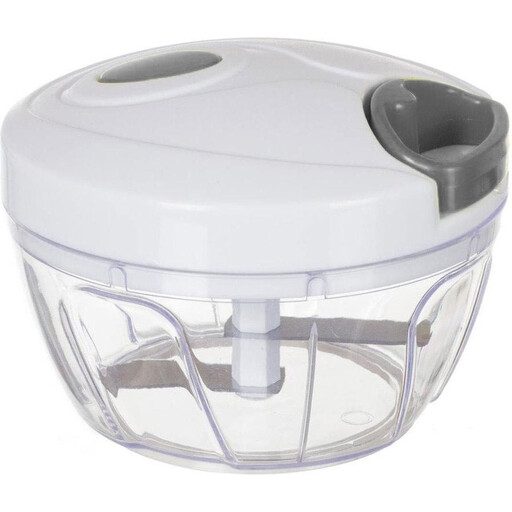 Image unavailable
5five Mini Food Processor, 400 mL
A compact option to compare for small preparations. The product title lists a capacity of 400 ml.
View at Joybuy
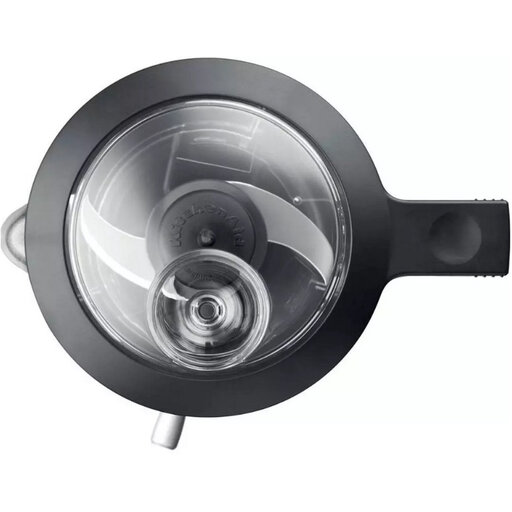 Image unavailable
KitchenAid Mini Chopper Gray, 5KFC3516ECU
A compact chopper to compare if you’re mainly making small preparations. Check the features of this exact model.
View at Joybuy
Frequently asked questions
Can you use a hand blender to make pesto?
Yes. In its basil pesto recipe, the Voedingscentrum suggests using either a hand blender or a food processor and recommends adding the oil gradually. If pesto is the only thing you’ll be making, first check whether you already have a suitable hand blender.
How do you use a mini bowl to make pesto?
A Magimix recipe uses a mini bowl with a small metal blade inside the large bowl, adding the oil while mixing. This method is for the Magimix set-up described; for another appliance, follow the instructions for the exact model.
Are all food processor parts dishwasher-safe?
It varies by appliance and part. Bosch says the MCM3200W accessories are generally dishwasher-safe. Check the cleaning instructions for each part of the model you’re considering.
What should you know about allergens at a cooking workshop?
If you’re a business serving food to consumers, the Dutch Food and Consumer Product Safety Authority says you must tell customers about any allergens present. The NVWA says that if you sell food several times a year, you must have a food safety plan or follow a hygiene code. These requirements don’t automatically apply to every private workshop, so first establish how the workshop is being organised.


