
Anyone who enjoys making chunky salsa
You want recognisable pieces rather than a smooth sauce, and need controls that let you stop at the right time.


If you want recognisable pieces of tomato and onion, choose a chopper that lets you control the chopping in short bursts, and stop as soon as the salsa is chunky enough. Also compare the usable amount per batch, the power source and how easy it is to clean. A manual model doesn’t need a socket, while electric models use a press or pulse function. Bowl capacity and features are manufacturer specifications; on their own, they don’t tell you how much salsa you can chop at a time or what the result will be.
You want recognisable pieces rather than a smooth sauce, and need controls that let you stop at the right time.
You’re making salsa for several participants and want to know how many ingredients will really fit in each batch, so you can work in portions if needed.
You need to consider where the nearest socket is and how to clean the chopper between batches. Manual and electric models involve different considerations.
| What to consider | What should you check? | Who is this important for? |
|---|---|---|
| Controlling the texture of chunky salsa | Check whether you can pulse briefly or easily interrupt the chopper, and check the texture as you go. | If I want to keep pieces of tomato and onion, I need to be able to stop chopping as soon as the salsa is chunky enough. Around 33% of consumers say this texture is their top priority. |
| Amount per batch | Check the usable chopping capacity of the exact model and compare it with your recipe and the number of portions. | When making several portions for a workshop, I want to know whether all the ingredients will fit at once or whether I’ll need to work in batches. Around 27% of consumers put the amount per batch first. |
| Using it without a conveniently placed socket | Check where the socket is and, for an electric model, the cord length. Also consider whether pulling a cord would suit you. | If there isn’t a socket in a convenient place, I want to be able to chop without a cord trailing across the worktop. Around 20% of consumers say this is their most important consideration. |
| Cleaning between batches | Check the manual to see which parts can be washed by hand or in the dishwasher. Wash vegetables and herbs, and use clean kitchen utensils. | When using a chopper repeatedly during a workshop, I want to know how to clean the parts between batches. Around 20% of consumers say cleaning is their top priority; the Netherlands Nutrition Centre advises washing vegetables, fruit and kitchen utensils thoroughly. |
The total bowl capacity may not be the same as the amount you can chop at a time. For example, Philips lists a 0.7-litre bowl and a chopping capacity of 0.5 litres for the HR1393/00, /01 and /90; these specifications don’t automatically apply to other models.
Check the usable capacity of the exact version and plan your portions accordingly.
You may need to chop in extra batches when preparing several portions for a workshop.
Tefal states that the K1320404 isn’t dishwasher-safe. This may mean you’ll need to allow time to wash the parts by hand, following the instructions, between workshop batches.
Read the cleaning instructions for the exact version before choosing.
A stated power rating alone won’t tell you whether the salsa will stay chunky. To get the texture you want, you need to be able to check the chopping and stop at the right time.
Compare the controls and the amount you can chop per batch. Assess chopping results only using information about the exact model.
According to KitchenAid, the electric 5KFC3516ECU has an 830 ml bowl and a pulse mode.
The manual 5 Second Chopper K1320404 is an option if you don’t want to use a socket at your workstation.
According to Kenwood, the electric Easy Chop CHP61.100WH has two pressure-sensitive speeds and a stated capacity of 500 ml.
The electric MMR08A1 has one speed and pulse operation, which may suit you if you’re looking for simple controls.
These electric products at Joybuy are designed for controlled chopping for salsa and other small preparations. Before choosing one for a workshop, check the portion size, cleaning instructions and usage restrictions for each model.
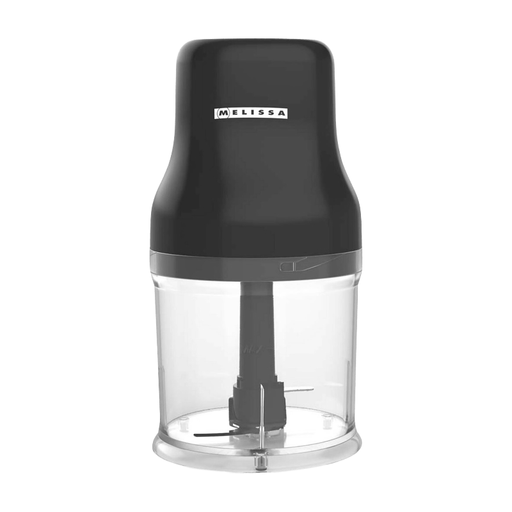 No image available
The description mentions short pulses for coarse chopping, as well as a dishwasher-safe bowl and blades. This may suit you if you want to check the texture as you go and clean the parts between batches.
Bowl capacity: 0.5 litres. The description says it’s for domestic use only and excludes commercial use, so check whether it’s suitable for your workshop. Don’t run the motor for more than 30 seconds at a time, and let it cool for 1–2 minutes between cycles. The blades are sharp.
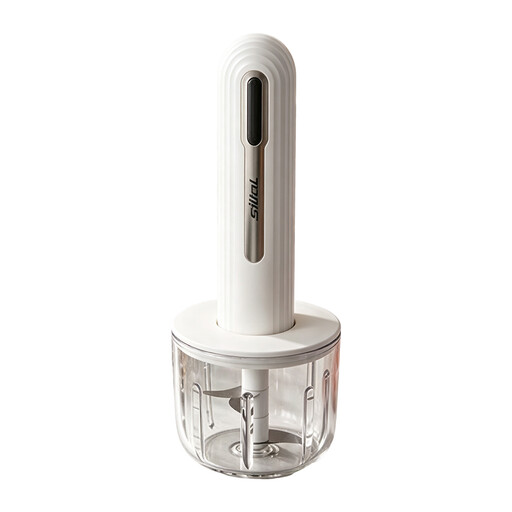 No image available
The product description mentions cordless chopping and short bursts, which may be useful if there’s no socket near your workstation and you want to check the texture as you go.
Cut ingredients into small pieces beforehand. Don’t use the appliance for bones, ice or hot ingredients; wash the parts by hand.
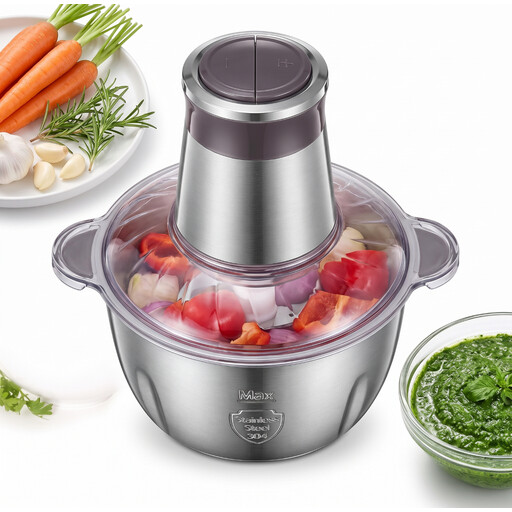 No image available
The description mentions chunky salsa and two speeds. Compare the bowl capacity with your recipe, but don’t assume it’s the usable amount you can chop per batch.
The product name lists a stainless steel bowl and three blades; the description says the bowl is dishwasher-safe.
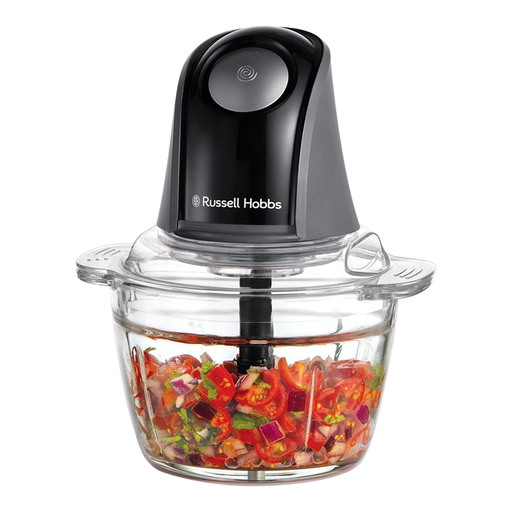 No image available
According to the description, the large control button lets you choose how long to chop for, which may be useful if you want to check the texture as you go.
Filling capacity: 500 ml. The description lists dishwasher-safe parts; check the manual to see which parts can go in the dishwasher.
 No image available
The product description mentions salsa and short pulses. Check the texture as you chop and stop as soon as it’s chunky enough.
The product name lists a 2-litre glass bowl and 304 stainless steel blades. The description recommends washing the bowl and blades in warm, soapy water. Don’t run the motor for more than 30 seconds at a time, and handle the sharp blades with care.
Chop briefly and check the texture as you go. KitchenAid describes the 5KFC3516ECU as having a pulse function that lets you work from coarse to fine; a tomato and coriander salsa recipe recommends chopping coarsely rather than blending until smooth.
Not necessarily. Philips lists a 0.7-litre bowl and a chopping capacity of 0.5 litres for the HR1393/00, /01 and /90. Check the usable capacity of the exact model you’re considering, and don’t assume these Philips specifications apply to other models.
Wash raw vegetables and herbs, and use clean kitchen utensils. Follow the chopper’s cleaning instructions for each part. According to the Netherlands Nutrition Centre, keep food that needs chilling at 4 °C and return it to the fridge promptly.
Yes. When you buy as a consumer, your legal guarantee applies alongside any manufacturer’s or seller’s guarantee. ACM ConsuWijzer explains that the seller is responsible for offering a suitable solution if a product doesn’t do what you could reasonably expect under normal use. There isn’t a fixed legal guarantee period for every appliance.
A CE mark is required for electrical equipment covered by EU rules that prescribe the mark. The Netherlands Food and Consumer Product Safety Authority explains the scope of the Low Voltage Directive; the rules that apply depend, among other things, on the product’s design. The mark is the manufacturer’s declaration of conformity, not an independent quality mark or proof of a particular salsa result.