
Making breadcrumbs for one dish
You mainly want to turn a small amount of bread into crumbs, so you’re looking first for a model where the manufacturer specifically lists this use. KitchenAid lists making breadcrumbs as a use for the 5KFC3516ECU.


If breadcrumbs are your main reason for buying a mini chopper, a sensible place to start is with a model whose manufacturer specifically lists making breadcrumbs as a use for that exact model. KitchenAid lists this use for the 5KFC3516ECU. Then consider portion size, how you control the chopping to get the texture you want, and what needs cleaning afterwards. A manual chopper works without a socket, but first check that bread is confirmed as a suitable use for that type of appliance.
You mainly want to turn a small amount of bread into crumbs, so you’re looking first for a model where the manufacturer specifically lists this use. KitchenAid lists making breadcrumbs as a use for the 5KFC3516ECU.
You want coarser or finer crumbs for different dishes, so you’re looking for pulse control or a manual pull-cord mechanism. KitchenAid describes two speeds and a pulse function for the 5KFC3516ECU; Tefal explains how the number of pulls affects fineness for the K1330404.
You want to chop small portions without a power supply. Tefal describes the K1330404 as a manual chopper, but doesn’t list bread as a separate use; check this before choosing the model for breadcrumbs.
| What to consider | What to look for | Who it matters to |
|---|---|---|
| Suitable for bread | Check whether making breadcrumbs is listed as a use for the full model number; look for a quantity per batch if necessary. | If your main aim is to make breadcrumbs, confirmation for the specific model gives you a clearer indication than a general claim about chopping. Around 31% of consumers prioritise confirmed suitability for bread. |
| Usable portion size | Compare the chopping capacity or recommended fill level with the portion you want to process; bowl capacity isn’t automatically the same as chopping capacity. | If you usually make one small portion, you’ll want to know whether that amount can be chopped by the blade. Around 25% of consumers give portion size top priority. |
| Coarse or fine crumbs | Check whether the model has pulse control or another way to control the chopping in short bursts. | For recipes that call for different crumb textures, control over the chopping matters. Around 19% of consumers put this control first. |
| Cleaning | Check which parts are dishwasher-safe, especially the lid. | After a small chopping job, you don’t want more washing-up than necessary, so check which parts need to be cleaned by hand. Around 13% of consumers give ease of cleaning the most weight. |
| Use without a socket | Check whether the model is manual and whether bread is confirmed as a suitable use for the exact model. | A pull cord can be handy somewhere without a power supply, but suitability for bread should also be clear if you’re making breadcrumbs. Around 12% of consumers prioritise being able to use a chopper without a socket. |
The total capacity doesn’t automatically tell you how much the appliance can chop effectively at a time. For the Philips HR1393 models, Philips lists a bowl capacity of 0,7 l and a chopping capacity of 0,5 l; these figures don’t automatically apply to other models.
Compare the usable capacity of the exact model and look for a separate quantity per batch for bread.
Kenwood’s general FAQ mentions breadcrumbs and a maximum of 50 g for mini choppers, but doesn’t link this to the CH180B or CHP61.100WH.
Check the full model number and its user manual before buying the appliance for breadcrumbs.
For the Tefal K1330404, Tefal says the bowl and blades are dishwasher-safe, but doesn’t say this about the lid.
Check the cleaning instructions for each part before you buy.
According to the Government of the Netherlands, you have statutory rights against the retailer if a product isn’t as it should be. An additional protection plan is separate from these rights.
Compare the terms of an extended warranty with your existing rights before choosing one.
The 5KFC3516ECU is worth considering if breadcrumbs are your main aim: KitchenAid specifically lists making breadcrumbs as a use for this model.
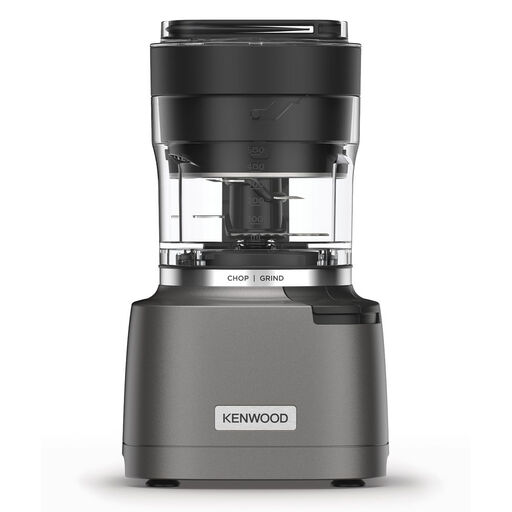
Kenwood describes the CH180B and Easy Chop CHP61.100WH as compact models for small quantities.
The manual K1330404 is an option to compare if you want to work without a socket.
The information about the HR1393 models can help you distinguish between bowl capacity and chopping capacity.
These products are compact electric choppers for small preparations; only the KitchenAid 5KFC3516ECU specifically lists making breadcrumbs as a use.
 No image available
This compact chopper could suit small preparations, but the available model-specific information doesn’t specifically confirm that it’s suitable for breadcrumbs.
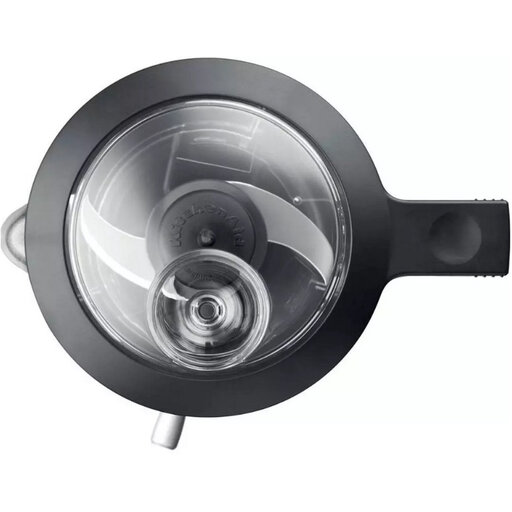
The chopping bowl has a capacity of 500 ml. The product description lists a Quadblade system, two speeds and dishwasher-safe chopping parts.
 No image available
This model is worth considering if you want to make breadcrumbs: KitchenAid specifically lists this use for the 5KFC3516ECU.
The bowl has a capacity of 830 ml and the model has a pulse option. The product listing doesn’t state a separate maximum quantity of bread per batch and says the appliance isn’t dishwasher-safe.
First check whether the manufacturer lists making breadcrumbs as a use for the exact model. KitchenAid lists this for the 5KFC3516ECU; a general mention of chopping nuts or vegetables doesn’t automatically confirm that a model can process bread.
KitchenAid says the 5KFC3516ECU has two speeds and a pulse function to help you control the chopping. Follow the model-specific filling instructions; the product information doesn’t state a maximum weight of bread per batch.
Not the Tefal K1330404: Tefal says the bowl and blades are dishwasher-safe, but the lid isn’t. Clean the lid with a damp sponge or cloth, as recommended by the manufacturer.
According to the Government of the Netherlands, you’re entitled to a product that works properly and can contact the retailer if there’s a fault. The Netherlands doesn’t have a fixed statutory warranty period; what you can reasonably expect from the product is taken into account. For online purchases from a business, you’ll often also have a 14-day cooling-off period, subject to legal exceptions.
The Netherlands Food and Consumer Product Safety Authority says that articles intended to come into contact with food must comply with the relevant Dutch rules and EU requirements. Electrical appliances may also be subject to EU rules requiring CE marking; according to the European Union, CE marking is only mandatory when the relevant rules require it.