
Workshop leader making small batches
Wants to check the crumb texture for each batch and be able to stop the chopper as they go. Good Food describes pulsing biscuits until they have a breadcrumb-like texture.


For small batches where you want to adjust the texture as you go, a compact electric mini chopper with pulse control suits the task. Good Food describes pulsing biscuits until they have a breadcrumb-like texture for a biscuit base. Process larger quantities in separate batches that fit the usable chopping capacity, rather than relying on the bowl capacity alone. A manual pull-cord chopper is a socket-free alternative, but it requires pulling by hand and may have different cleaning instructions.
Wants to check the crumb texture for each batch and be able to stop the chopper as they go. Good Food describes pulsing biscuits until they have a breadcrumb-like texture.
Prepares successive batches and considers the usable capacity and the time needed to clean the chopper between sessions.
Wants a manual way to crumble biscuits at a workstation where electric operation is impractical.
| What to consider | What should you check? | Who is this important for? |
|---|---|---|
| Crumb texture | Check whether the exact model has a pulse setting or controls you can pause; assess the result in small batches. | If I want to stop during chopping to check the crumbs, being able to operate the chopper in short bursts is important. Around 33% of consumers prioritise being able to adjust the crumb texture. |
| Batches for several participants | Compare the quantity per batch with the usable chopping capacity and plan several batches if needed. | When I need to prepare several batches in a row, I want to know how much can actually be processed each time. Around 25% of consumers give batch capacity their top priority. |
| Cleaning between batches | Check the cleaning instructions for each component and make sure clean equipment is available when the chopper is shared. | If participants are sharing the chopper, I want to know how to clean the bowl, blade and lid after each use. Around 25% of consumers prioritise cleaning between preparations. |
| Working without a socket | Check the workspace and consider whether repeated pulling is practical for the number of batches. | When there’s no socket at my workstation, I need to be able to operate the chopper there without electricity. Around 17% of consumers give working without a socket their top priority. |
The bowl capacity may not be the same as the quantity you can chop effectively. For example, Philips distinguishes between a 0.7 l bowl and a chopping capacity of 0.5 l for the HR1393/90.
Look up the usable capacity of the exact model and don’t assume that bowl capacities are the same across different models.
A lower usable capacity may mean you need to plan more batches.
Cleaning instructions can vary from one component to another. Tefal says the pull-cord lid on the 5-Second Chopper should be cleaned with a sponge and must not be submerged.
Check the manual for every removable component, especially if the chopper will be shared between sessions.
The lid may need extra hand-cleaning between workshop sessions.
The KitchenAid 5KFC3516EER version and the Joybuy listing for the 5KFC3516ECU do not have the same full model code; sharing a base code does not prove that the versions are identical.
Compare the full model code and specifications before treating a listing as a replacement.
The 5KFC3516 series may suit small batches where pulse control is useful.
The MMR08A1 is an electric option with push-button operation for those who value simple controls and easy-to-clean components.
The manual 5-Second Chopper K1330404 may suit a workstation without a socket.
The HR1393 series shows why bowl capacity and usable chopping capacity should be considered separately.
These product choices focus on compact choppers for small batches of biscuit crumbs, with operation, capacity and cleaning in mind.
 No image available
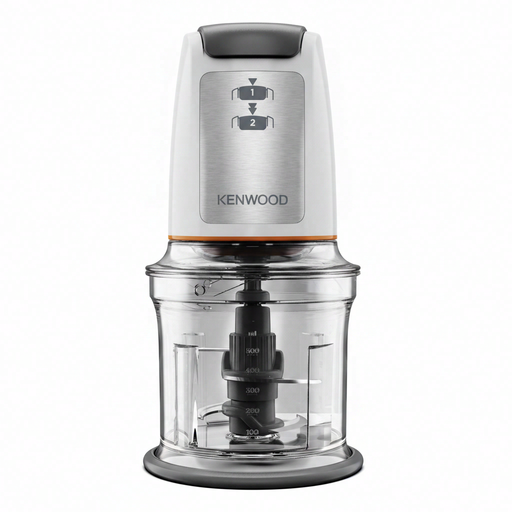
The product description lists two speeds and four chopping blades, making it suitable for those who want to adjust the settings for each batch.
According to the product description, the bowl has a capacity of 500 ml and a maximum filling weight of 225 g.
The instructions state that it should be used continuously for no more than 30 seconds, followed by a 2-minute cooling period.
 No image available
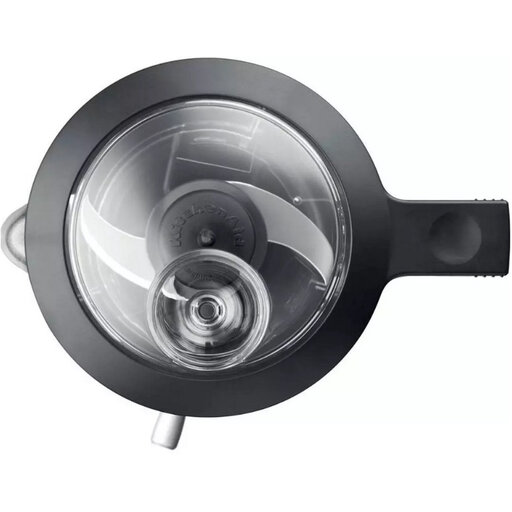
The product description lists two speeds and a pulse option, so you can adjust the processing of small batches as you go.
According to the product description, the bowl has a capacity of 830 ml; it also mentions breadcrumbs as a use.
The product specifications state that this model is not dishwasher-safe. Check the cleaning instructions before using it between workshop sessions.
Good Food describes pulsing biscuits until they have a breadcrumb-like texture for a biscuit base. Only use this method if the appliance and its manual allow those ingredients to be processed, and check small batches as you go.
Tefal says the bowl and rotor blade of the 5-Second Chopper can be washed by hand or in the dishwasher. According to Tefal, the pull-cord lid should be cleaned with a sponge and must not be submerged. Follow the manual for other models.
That depends on the activity and the organiser’s role. According to the Netherlands Food and Consumer Product Safety Authority (NVWA), businesses offering food to consumers must provide information about the allergens it contains. For businesses that prepare, process or sell food, the NVWA describes working with an HACCP food safety plan or hygiene code. When equipment is shared, clean utensils and keeping preparations separate are important to prevent cross-contamination.
For a consumer purchase in the Netherlands, the Dutch Government says you should contact the seller for a solution, not the manufacturer. A manufacturer’s warranty is in addition to your statutory rights; the Netherlands has no fixed statutory warranty period. If you’re buying for a business workshop, check which terms and conditions apply to that purchase.