Who is a small portion useful for?

Coffee drinker who wants to grab a single portion

You don’t want to have to cut a large cake every time. An individually wrapped slice makes the weight of one piece clear in advance: Peijnenburg lists its plain 10-pack as containing slices weighing 28 g each.

Shopper comparing sugar levels

You’re looking for a small portion, but want to know what a claim such as ‘less sugar’ means for the portion you choose. So compare the nutritional information for the exact variety, not just the wording on the front of the pack.

Coffee drinker who wants to offer a choice of flavours

You like to serve a selection of small cakes to guests, or prefer to choose between plain, pearl sugar or another variety yourself. In that case, the ingredients and allergens in each flavour matter as well as the number of pieces.

What should you look for when choosing?

First decide whether you want an individually wrapped piece or would rather cut slices from a larger cake yourself. Then compare the varieties you’re considering for their nutritional information and ingredients.

What to consider What to check when buying Who it matters to
Set portion size Check the weight per piece and whether the slices are individually wrapped. Peijnenburg lists its plain 10-pack as containing ten wrapped slices weighing 28 g each. If I want to grab a single piece with my coffee, having a set portion helps me choose. Around 33% of consumers would put a set portion size first.
Nutritional information Compare sugars, energy, fibre and salt per 100 g and per portion; consider what ‘less sugar’ means in relation to the product it is compared with. Even when I choose a small cake, I still want to know what’s in the piece I’m eating. That’s why around 27% of consumers would put nutritional information first.
Flavour and allergens Read the ingredients and allergen information for the exact flavour, particularly if rye, cereals containing gluten, milk or nuts are relevant to you. When I’m choosing a flavour for myself or guests, I need to be able to check which ingredients it contains. Flavour and allergens would be the main consideration for around 20% of consumers.
Type of packaging Compare the number of pieces and the difference between individually wrapped slices and a pre-sliced cake. Consider which format suits your coffee breaks. If I’m buying breakfast cake for several coffee breaks, the amount in each pack matters a lot. Around 20% of consumers would put the type of packaging first.

Common mistakes

  • Assuming a mini cake is low in sugars

    ‘Mini’ describes the size, not the nutritional value. The Netherlands Nutrition Centre lists 11.2 g of sugars in a 30 g slice of breakfast cake; the amount in a particular brand or size may differ.

    Use the packaging to check the weight of one piece, then read the nutritional information per portion.

  • Assuming different sugar claims mean the same thing

    ‘Less sugar’ compares a product with another product. ‘No added sugars’ doesn’t mean the product contains no sugars at all. The claim on the front of the pack is no substitute for the nutritional information table.

    First compare similar breakfast cakes per 100 g, then check the amount in the piece you want to eat.

  • Assuming all breakfast cakes contain iodine

    The Netherlands Food and Consumer Product Safety Authority says that iodine compounds may be present in bakery products through baker’s salt containing no more than 65 mg of iodine per kg of salt. This requirement doesn’t tell you whether a particular breakfast cake contains this salt.

    If you want to know whether a specific cake contains baker’s salt with iodine, check the ingredients on the packaging or ask the manufacturer.

  • Assuming the allergens in one variety apply to every flavour

    Plain and flavoured varieties may contain different ingredients and allergens. Rye and cereals containing gluten may be relevant even in a plain product, as may statements about the possible presence of milk and nuts.

    Always read the current allergen information for the variety you’re buying, even if you know another variety from the same brand.

Brands to compare

Peijnenburg

The plain 10-pack is worth considering if you want to choose an individually wrapped slice to have with your coffee. Peijnenburg says the pack contains ten slices weighing 28 g each; other small packs and flavours are also available.

  • The number of slices and weight per piece are clearly stated for the plain 10-pack.
  • A set portion size doesn’t tell you how much sugar it contains; also check the ingredients and allergens for the variety you choose.

Snelle Jelle

A brand to consider if you want to compare a breakfast cake bar with a small slice. PLUS lists, among other products, a 5-pack of Kruidkoek with less sugar.

  • According to PLUS’s product listing, this 5-pack contains 30% less sugar than Snelle Jelle plain Kruidkoek.
  • That’s a comparison with the plain variety, not an indication of the amount of sugar in each bar. Check the nutritional information on the packaging.

PLUS

The own-label range offers breakfast cake bars as an alternative to small, individually wrapped slices. It includes several varieties in 6-packs.

  • You can compare bar sizes and flavours side by side.
  • Before making your final choice, check the nutritional information and allergens for the individual product.

Koek & Bakker

The 485 g pre-sliced breakfast cake listed by Aldi is a different packaging format if you’d rather cut slices from a larger cake yourself.

  • The cake is pre-sliced; Aldi describes this variety as having no added sugars.
  • The slices aren’t individually wrapped mini portions. Check the current packaging to assess the amount per slice and the nutritional information.

Breakfast cake bars at Joybuy

This bar could suit you if you want an individually wrapped piece for coffee time and want to compare a ‘less sugar’ claim with the nutritional information. Just make sure the bar size matches the portion you’re looking for.
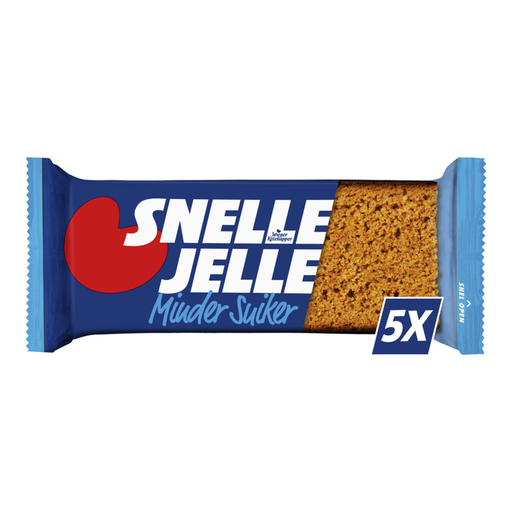
Snelle Jelle breakfast cake with less sugar, 250 g pack

Snelle Jelle breakfast cake with less sugar, 5-pack (250 g)

For anyone who would rather grab a breakfast cake bar than cut a slice from a large cake.

250 g pack containing five bars. According to PLUS’s product listing, this variety contains 30% less sugar than Snelle Jelle plain Kruidkoek; check the current packaging for the amount of sugar per 100 g and per bar.

View at Joybuy

Frequently asked questions

Which type of breakfast cake gives you the clearest portion size?

An individually wrapped slice or bar has a set weight. For example, Peijnenburg lists its plain 10-pack as containing slices weighing 28 g each; with a larger pre-sliced cake, you choose how many slices to take.

Does ‘less sugar’ mean a breakfast cake bar is low in sugars?

No, the wording compares the bar with another product. PLUS lists its Snelle Jelle Kruidkoek with less sugar 5-pack as containing 30% less sugar than its own plain variety. Also check the packaging to see how much sugar is in the portion you choose.

How much sugar is in a slice of breakfast cake?

The Netherlands Nutrition Centre lists 11.2 g of sugars in a 30 g slice of breakfast cake. A mini cake, bar or flavoured variety may have a different weight and nutritional values, so check the information on its own packaging.

Does every breakfast cake in the Netherlands contain iodine?

No, the rules on baker’s salt don’t mean that every breakfast cake contains iodine. The Netherlands Food and Consumer Product Safety Authority says that iodine compounds may be present in bakery products through baker’s salt containing no more than 65 mg of iodine per kg of salt. Check the ingredients or ask the manufacturer what applies to the specific product.

What should I look for if I need to check rye, gluten, nuts or milk?

Read the allergen information for the exact variety you’re buying. Ingredients and statements about possible traces can vary between breakfast cakes, including different flavours from the same brand.
