
当日/次日达

品质保障

开启新人专享福利: 全场免邮 | 低至 2 折 | 免费试用 30 天 JoyPlus 会员
下载 Joybuy
Buying mineral water might seem straightforward: pick still or sparkling, grab a multipack, and you’re done. Yet households, offices and hospitality businesses sometimes end up paying for packaging or a brand name that doesn’t really suit how they use it. When ordering online, three pitfalls stand out in particular.
The first is confusing volume with price. A low price per bottle isn’t necessarily good value if you’re buying lots of small packs. The second is confusing marketing language with product specifications. Words like “pure”, “refreshing” or “premium” tell you very little without information about volume, origin and mineral composition. The third is underestimating the packaging. A 500 ml bottle is handy on the go, but for a family or office, 1.5 litre bottles or a bulk pack are often more practical.
With the right checks, you can compare natural mineral water, sparkling mineral water, still mineral water and even coconut water based on facts rather than appearance.
First, choose the type that suits when and how you’ll use it:
With sparkling varieties, also pay attention to the closure and storage. An opened bottle will lose its fizz over time. Store opened water according to the instructions on the packaging and refrigerate it when recommended.
Don’t just compare the price of a case – work out the total volume. A pack of 24 x 500 ml contains 12 litres, for example. A pack of 6 x 1.5 litres contains 9 litres. A bulk mineral water pack can therefore have a different price per litre than a multipack of small bottles.
When checking a mineral water deal, look at:
For families, a combination can work well: large bottles for the fridge and 500 ml bottles for school, work or days out. Offices and hospitality businesses should also consider stackability, weight and storage space.
The mineral list is usually given in milligrams per litre. Look in particular at calcium, magnesium, sodium and bicarbonate. A higher or lower value isn’t automatically better – it comes down to your taste preference and how you’ll use it.
Spa Reine, for example, states around 3 mg of sodium per litre in the Eco Pack 5L and 5 mg of calcium per litre. Evian states 80 mg of calcium, 26 mg of magnesium and 6.5 mg of sodium per litre. Beypazari Sade Soda, on the other hand, has a noticeably higher mineral concentration, with around 205.867 mg of calcium, 124.588 mg of magnesium and 138.181 mg of sodium per litre.
Use this data to compare, not to draw medical conclusions. If a brand claims a particular effect or suitability, treat it as a brand statement: according to the brand’s own information. Always check the current label, especially if you’re on a salt-restricted diet or using the water for baby food.
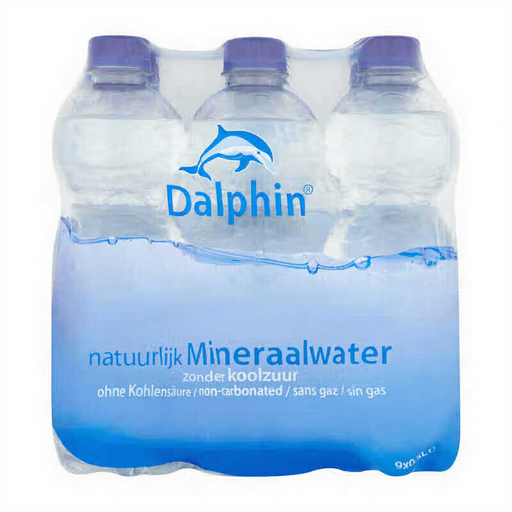
Why this fits the profile: The nine 500 ml bottles are easy to manage at home, on the go or in a small office. The multipack contains 4.5 litres in total.
The number of bottles and total volume are clearly stated, so you’re not just relying on the case price.
500 ml format, 9 bottles per pack and free from the 14 major EU allergens according to the product information.
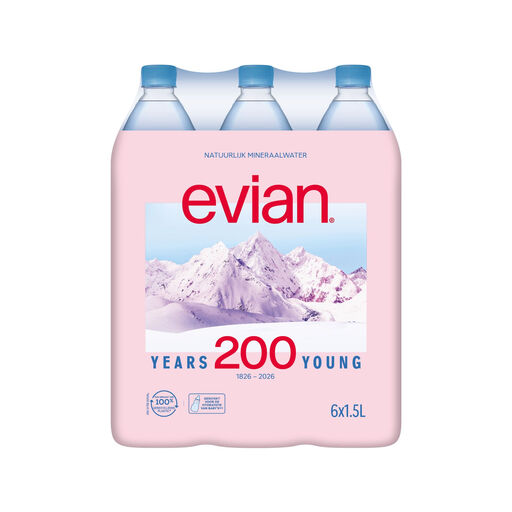
Why this fits the profile: The six 1.5 litre bottles suit households that regularly keep still natural mineral water in the fridge.
The format means you don’t need lots of small bottles for everyday use. The mineral values are specified per litre.
6 x 1.5 litres, 9 litres total, with stated values including 80 mg of calcium and 26 mg of magnesium per litre.
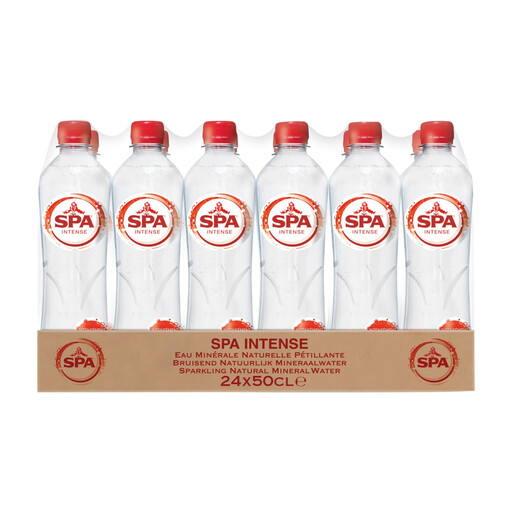
Why this fits the profile: The case of 24 x 500 ml bottles is ideal for meetings, hospitality, catering and situations where chilled single servings need to be available quickly.
The product type, number of bottles and low mineralisation are all stated. So you know exactly what you’re buying before ordering in bulk.
Sparkling natural mineral water, 24 x 500 ml, with added carbon dioxide and a stated sodium value of 5 mg per litre.
We’ve put together a full, up-to-date list of products that fully meet these strict selection criteria and comply with current European safety regulations.
Before you check out, always look at the product page and the label. Watch out for discrepancies between the title and the description – for example, a pack described as “still” but elsewhere vaguely described as sparkling. Also check whether the product needs to be refrigerated after opening and whether the packaging could be damaged during storage.
For a low weight per bottle, you can choose mineral water 500 ml. For a family, Bar Le Duc 12 x 0.5 litre, evian 24 x 500 ml or g'woon Sparkling Mineral Water 1.5 litre x 5 are possible formats to compare. If you need large quantities of still water, you could look at Bar Le Duc 6 x 2 litre or Spa Reine Eco Pack 5L and 10L.
Coconut water is not a type of mineral water. It typically contains natural sugars and sometimes added sugar or fructose. Bamboo Tree, for example, states 98.5% coconut water and cane sugar; Vietcoco states 99% coconut water, less than 1% fructose and vitamin C. So choose coconut water as a fruit drink, not as a one-to-one replacement for water. Check the ingredients and nutritional values per pack.
Natural mineral water comes from a protected underground source and has a constant mineral composition that is stated on the label. Spring water can also come from a source, but the legal requirements and composition may differ. Always check the product name and the information on the packaging.
This varies by product and packaging. Seal a bottle tightly, store it according to the instructions and generally refrigerate opened water if the label says so. Drink it within the period stated on the packaging or product page. Don’t use any packaging where the seal was already broken when you bought it.
Not always. Divide the total price by the number of litres and factor in delivery costs. A bulk pack can be better value for offices, families and hospitality, but it needs more storage space and has a higher total weight. A mineral water deal is only worthwhile when the volume, price per litre and your usage all match up.
