Start by deciding how large you want the mineral to appear in the frame. For wider shots, a suitable close-up lens may be enough, while small crystals may need a macro lens with the right magnification. For deep specimens, a stable set-up with a series of focus points can help. Also check lens compatibility, lighting and the total cost of your set-up; there’s no single approach that suits every mineral.
Who is this choice relevant to?
Collector of small crystals
You want to capture fine crystal shapes clearly and at a large scale. The lens’s magnification and the space available for lighting around the specimen both matter. Gea, Natuurtijdschriften and Mindat discuss these considerations for mineral photography.
Photographer of three-dimensional specimens
You want both the front and the parts behind it to be in focus, and are happy to work with a stable set-up and multiple focus points. Minerant describes focus bracketing as an approach to stacking.
Home photographer documenting a collection
You photograph your collection regularly and want to keep colour and lighting consistent. National Museums Scotland describes colour control using tools such as a grey card or colour checker; a camera feature alone cannot guarantee consistent colour reproduction.
What should you look for when buying?
Start by identifying the main limitation of your set-up: the magnification you want, the depth of the specimen, colour control or the components you need.
| What to consider |
What should you check? |
Who should prioritise this? |
| Magnifying small crystals |
Compare the size of your smallest specimen with the maximum magnification of the lens in question. Also check how much space there is in front of the lens for lighting. |
If you want small crystals to appear clearly and at a large scale, lens magnification will be a key factor in your choice. Around 31% of consumers give the highest priority to detail in small crystals. |
| Getting a deep specimen in focus |
Check whether the camera and lens combination in question supports focus bracketing, and whether the images can be stacked in-camera. If not, find out what software and stable positioning you’ll need. |
If you want a three-dimensional mineral to appear sharp from front to back, you’ll need to account for taking multiple shots and combining them. Around 25% of consumers prioritise depth of field. |
| Controlling colour and lustre |
Check for RAW capture and white balance settings. Also leave room for consistent lighting, diffusion and, if needed, a grey card or colour checker. |
Consistent lighting matters for repeat collection photography, alongside any post-processing. Around 25% of consumers place the greatest value on colour and lighting control. |
| Putting together a complete set-up |
Check the exact kit contents and lens mount, and whether you’ll need a separate macro lens. Also allow for a stable set-up and suitable lighting. |
If you want a manageable complete set-up and don’t need maximum magnification straight away, the included components matter. Around 19% of consumers prioritise the set-up’s components above all. |
Compare magnification figures only for the lens and focusing method they refer to. Canon specifies a maximum of 0.16× with autofocus and 0.26× with manual focus for the RF-S 18-45mm at 45 mm; Nikon quotes 1:1 for the separate NIKKOR Z MC 50mm f/2.8. Lens specifications like these don’t automatically tell you what’s included in a camera kit.
Common buying mistakes
-
Assuming a close-up mode means 1:1 macro
A zoom lens with close-up capability won’t automatically give you 1:1 magnification. Canon specifies a maximum of 0.16× with autofocus and 0.26× with manual focus for the RF-S 18-45mm at 45 mm.
Before buying, check which lens is actually included and its maximum magnification. If small crystals don’t appear large enough in the frame, you may need a separate compatible macro lens.
A separate macro lens can be an extra component in your set-up.
-
Confusing focus bracketing with a fully sharp final image
Focus bracketing takes shots at different focus points; to get a larger area in focus, suitable images still need to be combined.
Check separately how to take the series, whether your chosen lens is supported and how the images are combined. Make sure your set-up is stable, too.
A focus series can take time and, depending on your workflow, may require software to combine the images.
-
Mistaking the minimum focusing distance for working space in front of the lens
The distance to the subject doesn’t automatically tell you how much room you’ll have to position studio lighting. Nikon quotes around 5 cm between the front of the lens and the subject at the minimum focusing distance for the NIKKOR Z MC 50mm f/2.8.
Consider the working distance at the magnification you want, and check whether your lighting can still reach the specimen.
-
Confusing the manufacturer’s warranty with your full statutory protection
According to the Government of the Netherlands, there is no fixed statutory warranty period in the Netherlands. The retailer is still your point of contact if a product doesn’t meet the standard you’re entitled to expect.
Read exactly what any additional warranty covers and how it relates to your statutory rights.
Brands to compare for mineral photography
Canon
An interchangeable-lens camera system that you can expand, with your choice of lens determining the magnification you get.
- Canon lists Focus Bracketing for the EOS R50. According to Canon’s lens specifications, the separate RF 85mm F2 Macro offers 0.5× magnification.
- The RF-S 18-45mm isn’t a 1:1 macro lens: Canon specifies a maximum of 0.16× with autofocus or 0.26× with manual focus at 45 mm. Check whether the lens is included in the kit.
Nikon
An interchangeable-lens camera system where a separate macro lens can determine the magnification available for capturing small details.
- Nikon specifies 1:1 magnification for the separate NIKKOR Z MC 50mm f/2.8 and lists it for use with DX cameras.
- Nikon quotes around 5 cm between the front of the lens and the subject at the minimum focusing distance. Allow for the space needed for studio lighting; this lens specification doesn’t tell you what’s included in a Z50II kit.
OM SYSTEM
The Tough TG-7 has a fixed lens and macro modes; the OM-5 Mark II offers an interchangeable-lens camera system.
- OM SYSTEM lists RAW and macro modes for the TG-7, and Focus Stacking for the OM-5 Mark II. According to OM SYSTEM, the separate M.Zuiko Digital ED 60mm F2.8 Macro is a 1:1 lens.
- For Focus Stacking, check whether the specific lens is supported. The camera body’s feature alone doesn’t determine magnification, and the separate macro lens isn’t automatically included in a camera kit.
Cameras for mineral photography
These Joybuy product picks are general camera options for photography. Check that the magnification and lighting available with each model and lens are suitable for your minerals.
 No image available
DJI Osmo Pocket 3 Creator Combo
The product description mentions photographing still subjects; check whether the set-up offers the magnification and lighting needed for small crystals.
The product name lists a 1-inch CMOS sensor and 4K/120fps video recording.
Joybuy
 No image available
Sony ZV-E10 with 16-50mm zoom lens, black
This package includes a camera and zoom lens; check the lens’s magnification if you want small crystals to fill the frame.
The product description lists an APS-C sensor.
Joybuy
 No image available
Sony Alpha A6100 with 16-50mm f/3.5-5.6 OSS II
This camera kit lists a 16-50mm lens; check whether its magnification suits the smallest specimens you want to photograph.
The product description lists an APS-C sensor.
Joybuy
 No image available
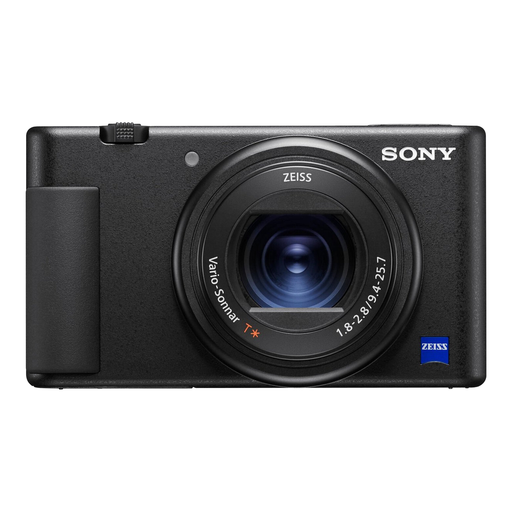
Sony ZV-1 compact camera
If you’re considering a compact camera, check whether its close-up capabilities are sufficient for the size of your minerals.
The product description lists RAW capture and 2.7× optical zoom.
Joybuy
 No image available
Sony ZV-E10 camera body, without lens
This is an option if you want to choose a compatible lens for mineral photography yourself; no lens is included.
The product description lists an APS-C sensor and compatibility with Sony E-mount lenses.
Joybuy
Frequently asked questions
Do I need a 1:1 macro lens for every mineral?
No, it depends on the size of the specimen and how tightly you want to frame it. Compare this with the maximum magnification of the lens in question: a zoom lens with close-up capability isn’t automatically a 1:1 macro lens, while small crystals may sometimes call for a separate macro lens.
How can I get a deeper mineral specimen sharp from front to back?
With a stable set-up, take a series of shots at different focus points and combine suitable images. Check whether the camera and lens combination in question can take the series and whether the images can be combined in-camera; if not, you may need software.
How can I keep the colours in collection photos consistent?
Use a repeatable lighting set-up and, when checking colour, include a grey card or colour checker. RAW capture can help you adjust colour later, but it doesn’t replace controlled lighting.
What are my rights when buying online from a business in the Netherlands?
For a qualifying distance purchase, you generally have a 14-day cooling-off period; exceptions and the type of sale matter. The Government of the Netherlands also states that there is no fixed statutory warranty period in the Netherlands: the product must meet the standard you’re entitled to expect, and the retailer is your point of contact if there’s a problem. The manufacturer’s warranty is separate from these statutory rights.


