
Host serving several lattes
You want to serve several friends one after another, so you compare the maximum frothing capacity per cycle rather than just the jug capacity or heating capacity.


When making several lattes, choose based on the maximum amount of milk a machine can froth in one cycle, not the amount it can only heat. Severin lists a frothing capacity of around 120–350 ml for the Spuma 700 SM 3586. If you want to practise pouring latte art with precision, the Consumentenbond recommends a high-pressure steam wand rather than the electric frothers in its test.
You want to serve several friends one after another, so you compare the maximum frothing capacity per cycle rather than just the jug capacity or heating capacity.
You want a particular foam texture or to make latte art, so you need to check whether an automatic frother is suitable.
You also make drinks with plant-based or cold milk and want to check the right setting and cleaning instructions.
A good fit if: you want to serve several guests and compare the frothing limit per cycle with your portion sizes. Severin lists a frothing capacity of around 120–350 ml for the Spuma 700 SM 3586. Sage lists a 0.7-litre jug for the Milk Café, but that is not the same as a stated frothing limit.
Bear in mind: a larger jug takes up more space, and the maximum heating capacity may be higher than the frothing capacity.
A good fit if: you usually make smaller portions and want automatic preparation. Inventum lists a maximum frothing capacity of 115 ml for the MK350; Nespresso lists a maximum of 120 ml for the Aeroccino 4.
Bear in mind: you may need to froth in several batches to make multiple large lattes.
A good fit if: you only want to make foam occasionally and can heat the milk separately. The Severin SM 3590 is a battery-operated handheld model and, according to its product specifications, does not have a heating function.
Bear in mind: you will need to heat and pour the milk yourself. Check whether batteries are included with the pack you choose.
A good fit if: your main aim is to practise making pourable foam for latte art and you have, or are considering buying, a suitable espresso machine.
Bear in mind: this is a different way of preparing milk from using a standalone frother. In its 2024 test, the Consumentenbond concluded that the electric frothers tested were not very suitable for latte art, for which a high-pressure steam wand is needed.
Each percentage reflects one main concern: the factor that matters most to consumers in this situation.
| What to consider | What to check before buying | Who should consider this? |
|---|---|---|
| Frothing capacity for entertaining | Work out how much milk you want for each latte and compare it with the frothing limit per cycle. Severin lists a frothing capacity of around 120–350 ml for the Spuma 700 SM 3586; its higher heating capacity is not a frothing limit. | When I have several friends round, I want to know how much milk the machine can actually froth in one cycle, so I’m not caught out having to start again. Around 29% of consumers prioritise enough capacity for entertaining. |
| Foam for a latte | Decide whether you want hot frothed milk or foam that can be poured for latte art. Don’t treat claims about foam quality as independent test results. | If you’re looking for a particular texture, you want the foam to suit the way you make your latte. Around 23% of consumers prioritise their preferred foam texture. |
| Different types of milk and temperatures | Check whether the exact model has a cold setting and follow the manufacturer’s guidance for plant-based milk. For the MK350, Inventum recommends soya or oat milk specifically designed for frothing. | If guests have different preferences for milk or drinks, I want to know whether the machine will suit their needs. Around 18% of consumers prioritise different types of milk or temperatures. |
| Equipment for occasional use | Check whether you already have a way to heat milk and whether you need automatic temperature and frothing programmes. A handheld whisk does not heat milk. | If you only make foam when you have guests, the number of separate steps and appliances you need matters. Around 18% of consumers are mainly looking for a suitable solution for occasional use. |
| Cleaning between batches | Check which parts are dishwasher-safe and follow the cleaning instructions for the exact model. Dishwasher-safe claims vary by product and component. | When I make several drinks one after another, I want to know how to clean the jug between batches and afterwards. Around 12% of consumers prioritise easy maintenance. |
For the models reviewed, the stated heating capacity may be higher than the amount that can be frothed in one cycle. This difference could mean you need to make extra batches for several guests.
Compare the maximum frothing capacity of the exact model with the amount of milk you want to use per batch.
In its 2024 test, the Consumentenbond concluded that the electric frothers tested were not very suitable for latte art. This conclusion applies to the appliances included in the test.
For foam that pours precisely, consider a suitable steam wand. Don’t treat a claim about fine foam as independent proof that it is pourable.
Cleaning instructions vary by model, and dishwasher-safe claims may apply only to specific parts. You also can’t assume that one type of milk will produce the same foam as another.
Check the instructions for the exact model and follow the manufacturer’s guidance for plant-based milk.
The models mentioned offer different ways to froth milk: a larger automatic jug, a more compact automatic frother and a handheld whisk.
The Milk Café SMF600BSS4EEU1 is worth considering if you want to compare temperature settings and different frothing discs.
The MK350 is a compact automatic option for hot or cold frothing, as well as heating milk separately.
The Aeroccino 4 is a compact frother with several stated preparation settings.
This selection includes milk frothers and espresso machines with a manual frothing or steam function for making latte milk at home.
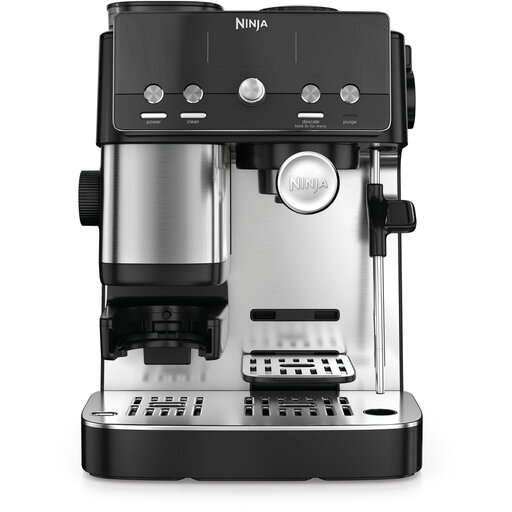 No image available
A good fit if you want to make espresso and filter coffee at home as well as froth milk.
The product title mentions an integrated grinder and a manual milk frother.
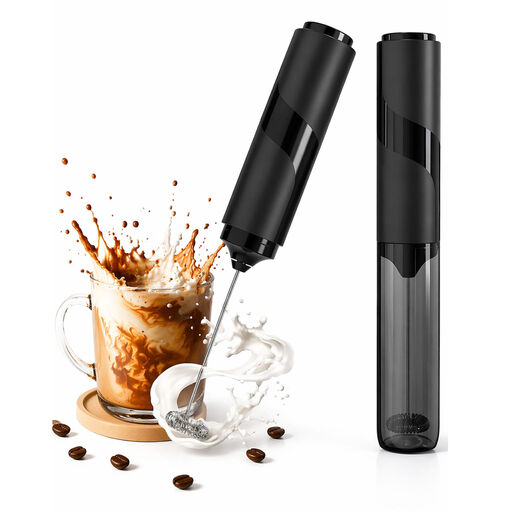 No image available
A good fit if you’re looking for a standalone handheld frother to froth milk for a latte.
The product title identifies this as an electric handheld milk frother.
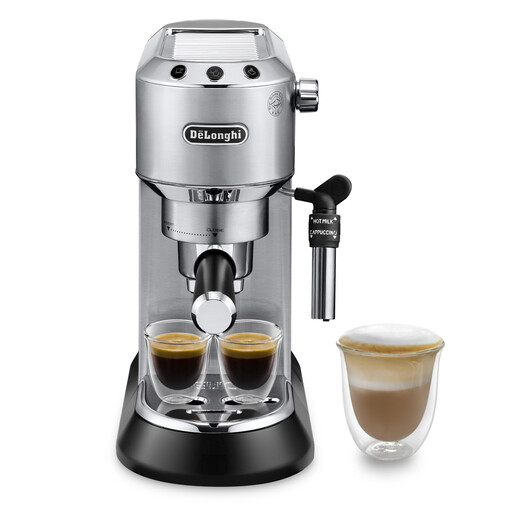 No image available
A good fit if you want to make espresso and manually frothed milk with one espresso machine.
The title mentions 15 Bar and a manual milk frother; the product description lists an adjustable steam wand.
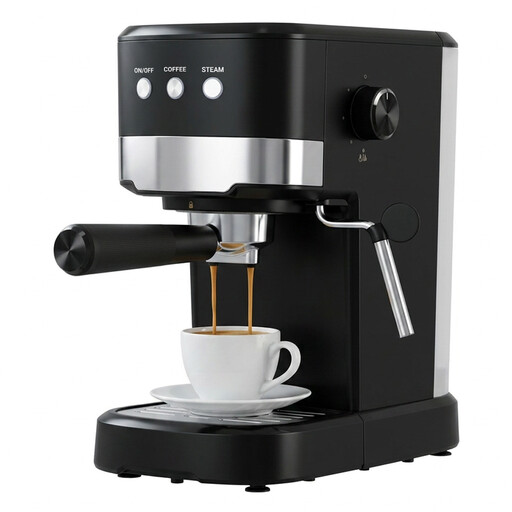 No image available
A good fit if you want to pair espresso with a steam function for frothing milk for lattes.
The product title mentions 15Bar, a cup warmer and a 1.2L water tank.
 No image available
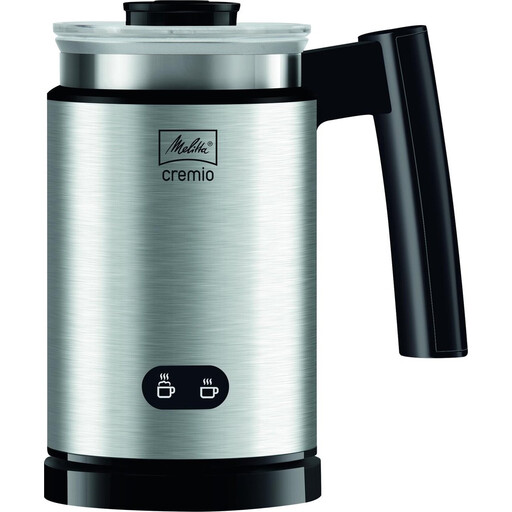
A good fit if you’re looking for an automatic frother and want to use different types of milk.
The product description mentions oat, soya and lactose-free milk, a non-stick coating, and a dishwasher-safe lid with mixer, among other features. For more stable foam, it recommends milk with at least 3 g of protein per 100 ml; do not fill above the MAX mark.
Not without first working out how much milk you want to use for each latte. Check the separate frothing limit: Severin lists a frothing capacity of around 120–350 ml for the SM 3586, while around 120–700 ml refers to heating.
Check the guidance for the exact appliance and the milk you choose. For the MK350, Inventum recommends soya or oat milk specifically developed for frothing; this doesn’t mean every plant-based milk will produce the same foam.
Read your model’s manual, don’t fill above the frothing mark, and follow the cleaning instructions. The Inventum MK350 manual warns that overfilling may cause the contents to spill over; Inventum recommends cleaning the jug immediately after use. The Voedingscentrum advises putting opened whole milk back in the fridge at 4 °C promptly after use.
No. According to the Rijksoverheid, statutory guarantee in the Netherlands has no fixed time limit: you are entitled to a product that is fit for purpose, and if there is a problem, the seller must provide a solution. Any manufacturer’s guarantee is additional and does not replace this right.
According to the Autoriteit Consument & Markt, consumers usually have a cooling-off period of up to and including 14 days after delivery of the product or confirmation of the contract for certain online or telephone sales. The NVWA also sets out safety requirements and responsibilities for businesses that design, manufacture or trade in electrical appliances. This does not prove that a particular model on sale meets every requirement; check the product information and usage restrictions for the specific appliance.