
Vandaag of morgen in huis

Kwaliteit gegarandeerd

Welkomstaanbiedingen ontgrendelen: GRATIS bezorging | Tot 80% korting | Gratis 30 dagen JoyPlus-proefperiode
Download de app
Milk biscuits are a handy addition to lunchboxes, a coffee break companion, or a sweet snack on the go. Yet many packs look alike, while the differences in filling, portion size, ingredients and nutritional value can be surprisingly large. If you only go by what’s on the front of the packet, you might end up paying for a large format that’s less practical, or choose biscuits with a flavour that doesn’t suit the occasion.
In this buying guide, you’ll learn what to look for in milk biscuits, cookies with milk, and filled milk biscuits. After that, we’ve rounded up some popular choices for families, fans of Japanese snacks, and anyone looking for biscuit snacks to take on the go.
The words “milk” or “with milk” on the front can refer to milk powder, lactose, milk protein, or just a flavouring. Always check the ingredients list. With Liga Milkbreak Cookies, the filling contains 27% milk-based ingredients according to the product information, including lactose, milk protein and milk powder. In other biscuits, milk powder is just one ingredient among many.
A 300g or 800g bag might appeal to a family, but it’s less suitable if the pack goes soft quickly after opening. Smaller portions are more practical for school, the office and travel. Also pay attention to how the pack is divided inside: some products come in packs of two or four biscuits, while other bags contain one larger portion.
Flavour descriptions are subjective. For an objective comparison, look at energy, fat, sugars, fibre and salt per 100g. Also check whether the product has a filling, coating or multiple layers. A biscuit with a milk filling can therefore have a different texture and nutritional value than a simple biscuit with milk powder.
Wheat, milk and soya are common in milk biscuits. Egg and nuts may also be present or listed as possible traces. If you have an allergy or intolerance, always use the actual pack as a check. Online product information can change and does not replace the legal labelling on the product.
Pay particular attention to these terms:
For a lunchbox, individual packs are convenient. Liga Milkbreak comes in six packs of two biscuits each, according to the product information. BelVita Milk & Cereals Biscuits contains six packs of four biscuits. Small bags of 40g to 115g are ideal for taking with you, while larger formats are better suited to home use or sharing with several people.
Always compare products on the same basis. A small portion may be low in calories, but still relatively energy-dense per 100g. The values listed on product pages for this category roughly range from around 443 to 573 kcal per 100g. That difference is due to fillings, coatings, nuts, fats and sugar.
Claims such as “source of fibre” or “rich in calcium” may only be used if they meet the requirements of current European nutrition claims regulations. For Liga Milkbreak, the product information mentions fibre, iron, calcium and vitamin B6, for example. Again, use the label on the pack for the most up-to-date information.
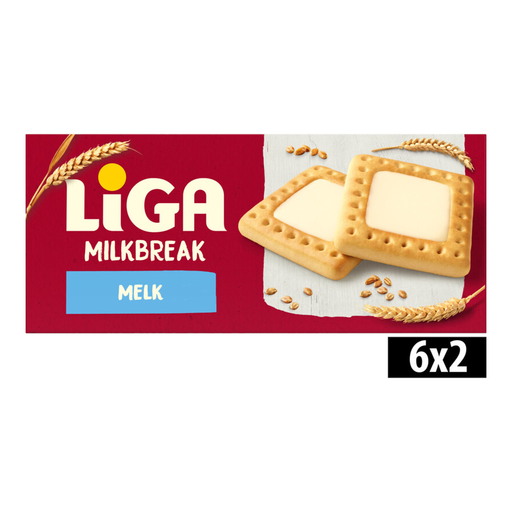
Why this fits the profile: The portion pack with two biscuits is straightforward for school, work or a short trip. The 245g size is handy when you want several portions in the house.
The portions are clearly divided, so you’re less reliant on an opened large bag. The product information also lists the filling and allergens separately.
Per 100g, the product lists 447 kcal, 21g sugars and 2.6g fibre. Contains wheat, milk, egg and soya.
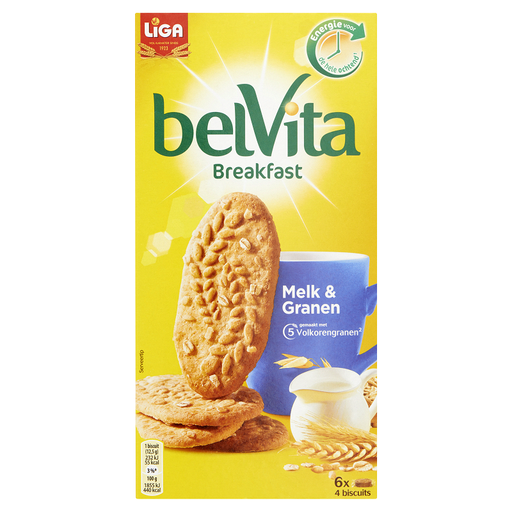
Why this fits the profile: This product combines milk with several grains and is packed in portions of four biscuits. That suits anyone who cares about texture, portion division and a grain-rich composition.
The grain types and nutritional values are clearly stated, so you don’t have to rely on packaging language alone. The portion pack makes it easy to take with you.
According to the product information, it contains 70.8% grains and 6.4g fibre per 100g. Calcium, magnesium and iron are also listed.
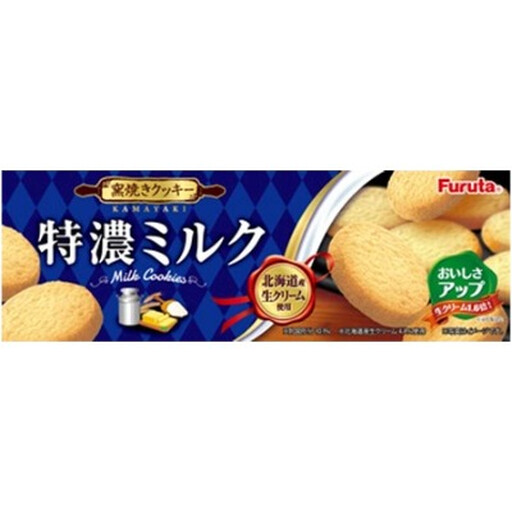
Why this fits the profile: These Japanese milk cookies are a compact choice for anyone looking for a pronounced milky flavour with coffee, tea or a quiet snack moment.
The 92g weight makes the purchase straightforward. The ingredients list includes dairy components and soya, so you can check the composition in advance.
Crunchy cookies with a stated milk and cream component. The product information lists 522 kcal and 28.4g fat per 100g.
We’ve put together a full, up-to-date list of products that fully meet these strict selection criteria and current European safety regulations.
Store biscuits in a dry, cool place away from direct sunlight. Heat and moisture can alter the texture of biscuits, fillings and coatings. Seal an opened pack tightly. Individual portions are handy for a lunchbox, but check that the packaging isn’t damaged before using the product.
For children, a small portion is often more practical than a large bag. Also pay attention to allergens, whether the snack is age-appropriate for the eating occasion, and the risk of crumbs in a bag. For on the go, compact biscuits like Tokimeki Panda or Glico Pocky are easy to take with you, while larger packs are better suited to home use.
That depends on the specific product and its composition. Check the ingredients, allergens, portion size and nutritional value. “Children’s biscuits” is not a uniform product category; the name alone says nothing about sugar, fat or salt content.
Milk biscuits usually contain milk powder, lactose or another dairy component in the biscuit itself. Filled milk biscuits also have a separate soft or creamy layer. That filling can enhance the flavour and texture, but it can also affect the amount of sugar and fat.
Always check the date and storage instructions on the pack. After opening, biscuits generally stay crunchier if you seal the pack tightly and store them in a dry place. If you notice an unusual smell, taste, damp texture or damaged packaging, it’s best not to use the product.
