Who is a mobile router suitable for?

Photographers stopping at different locations

You upload from different locations, so you want to know whether the mobile connection will be usable there. KPN’s coverage information lists factors such as your device and network congestion as affecting speed.

Travellers with a limited data allowance

You want to check in advance how much data you can use for photos and what conditions apply in the countries on your route. ACM ConsuWijzer explains that roaming within the EU may be subject to conditions, and different rates may apply outside the EU.

Travellers without regular access to power

You want to upload during stops without constantly having to find a power socket. Compare the stated battery life and charging connection for the exact version; manufacturers give different maximum figures for different models.

What should you look for when choosing one?

Use your phone as a hotspot

Choose this if: you use one or a few devices and your existing mobile connection is good enough at your stops.

Bear in mind: data and usage are subject to the terms of your phone plan, and you won’t have a separate router battery.

4G MiFi with SIM card

Choose this if: you want to share your own mobile connection and 4G coverage, your data allowance and upload speeds suit your needs on your route.

Bear in mind: stated speeds are manufacturer maximums; Wi-Fi speed doesn’t necessarily tell you how quickly photos will be sent over a mobile connection.

5G MiFi with SIM card

Choose this if: you upload large batches of photos and can use a suitable 5G connection and plan at the stops that matter to you.

Bear in mind: the manufacturer’s maximum upload speed won’t predict speeds along your route; check the version and device limit too.

Share an existing Wi-Fi or Ethernet connection

Choose this if: you can use a working Wi-Fi or Ethernet connection at a stop instead of mobile data.

Bear in mind: a router won’t provide an internet connection if your chosen Wi-Fi or Ethernet source isn’t available.

What to consider What should you check? Who is this important for?
Coverage and mobile uploads Check coverage at your stops, the mobile networks supported by the version, and the stated mobile upload speed separately from download and Wi-Fi speeds. If I send photos from different locations, I want to know whether there’s a usable upload connection there. Around 36% of consumers put this first.
Data allowance and roaming Check the countries on your route, the SIM card’s terms and conditions, and your available data. ACM ConsuWijzer notes that roaming conditions can vary by destination and plan. If I upload lots of files or cross borders, I want to know how much data my allowance includes. Around 29% of consumers prioritise their data allowance and roaming conditions.
Battery life and charging Compare the stated battery life and charging connection for the exact version; don’t treat a manufacturer’s maximum as guaranteed battery life. If I don’t always have access to a power socket at stops, I want to work out how to keep the router charged. Around 21% of consumers prioritise power during stops.
Devices and internet source Check how many devices can connect at once and whether the router uses mobile data or shares an existing Wi-Fi or Ethernet connection. If my phone and other travel devices need the same connection, I want to know which internet source and device limit will suit my needs. Around 14% of consumers prioritise sharing with devices or choosing between internet sources.

Common buying mistakes

  • Confusing download or Wi-Fi speed with upload speed

    Sending photos requires mobile upload speed. The actual connection can also vary by location and network congestion, as KPN points out.

    Compare the stated mobile upload speed separately and check coverage in the places where you plan to stop.

  • Assuming roaming or an unlimited home plan means unlimited EU data

    Your SIM card’s terms and conditions still apply when it’s in a router. If a data limit applies, extra charges or speed restrictions may apply; different rates may apply outside the EU.

    Check your plan and destinations before setting off. The ACM’s 2026 calculator is intended for plans the tool supports and not for pay-as-you-go.

    If you exceed the applicable data allowance or roaming limits, data used while travelling may result in extra charges or reduced speeds; the impact depends on your plan and usage.

  • Mixing up specifications for different hardware versions

    TP-Link lists different connections and SIM formats for M7450 versions: an older version is listed with micro-USB and micro-SIM, while the V3 is listed with USB-C and nano-SIM.

    Before buying, check the full model name and hardware version, and make sure your SIM card and charging cable are compatible.

  • Expecting a travel router to upload without a working internet source

    Wi-Fi or Ethernet sharing features can’t replace a connection that isn’t available at your stop.

    First decide whether you want to use mobile data, existing Wi-Fi or Ethernet, then choose the features that suit that source.

Brands to compare

TP-Link

TP-Link’s MiFi range includes different 4G and 5G versions, so you can compare mobile upload speeds, battery life and model variations.

  • TP-Link lists a mobile upload speed of up to 50 Mbps for the M7350 and M7450 V3. For the M8550(EU), the specifications list a maximum upload speed of 900 Mbps; these are manufacturer maximums, not a prediction of speeds on your route.
  • According to the stated specifications, the M7450 V2 and V3 differ in their connections and SIM format. The M8550 product page and EU specifications also differ on the maximum number of devices; check the version if this will affect your choice.

D-Link

The DWR-933 is a 4G hotspot for sharing mobile data with devices; the listed features apply to specific versions.

  • For the DWR-933 revision B1, D-Link lists a maximum mobile upload speed of 50 Mbps, support for up to 10 Wi-Fi devices and battery life of up to 14 hours. These are manufacturer figures, not guaranteed performance while travelling.
  • Check the revision: these features apply to B1 and don’t necessarily tell you anything about another version.

GL.iNet

The Mudi V2 (GL-E750V2) is worth considering if you want to use a repeater or Ethernet as well as mobile internet.

  • GL.iNet’s manual lists mobile internet, repeater and Ethernet as possible internet sources, and specifies a 7000 mAh battery.
  • Battery capacity alone doesn’t tell you how long it will last. Check the exact modem version and its accompanying documentation too.

NETGEAR

The European documentation for the Nighthawk M6 MR6150 can be a useful starting point when comparing a European 5G hotspot.

  • NETGEAR Support provides separate European specification and installation files for the MR6150.
  • Documentation for a European version doesn’t prove that a particular offer is for that version. Check the full model name and regional variant.

Joybuy products for travelling

This selection of Joybuy products includes mobile hotspots and travel routers. Check whether each model connects to mobile internet itself or uses an existing connection, and choose an internet source that suits your route.
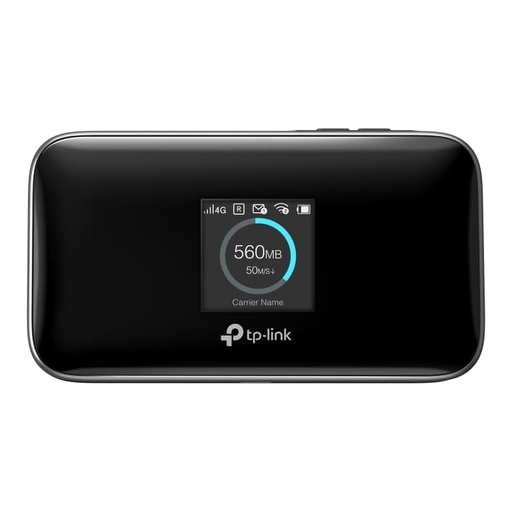
TP-Link M7750 mobile router

TP-Link M7750 mobile router

The product name positions this model for mobile networks; check that the version and SIM card are compatible with your provider and travel route.

View at Joybuy
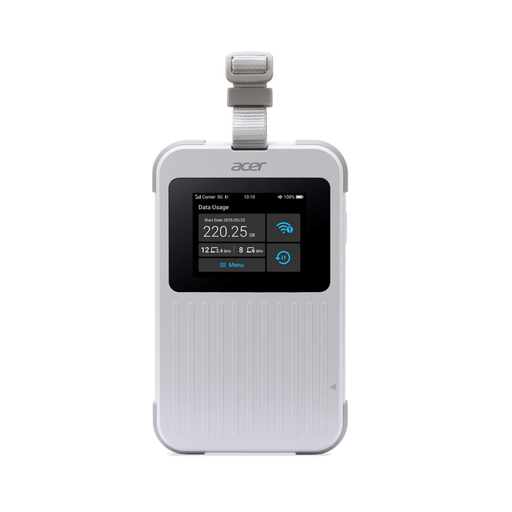
Acer Connect M6E Portable MiFi Router

Acer Connect M6E Portable MiFi Router

This portable 5G hotspot is worth comparing if you want to share mobile data with several travel devices.

The product information lists Wi-Fi 6E, dual-band, physical SIM card, eSIM and vSIM, and support for up to 32 devices. The product title also mentions 1 GB included; check the terms and conditions and whether the SIM options suit your plan and destination.

View at Joybuy
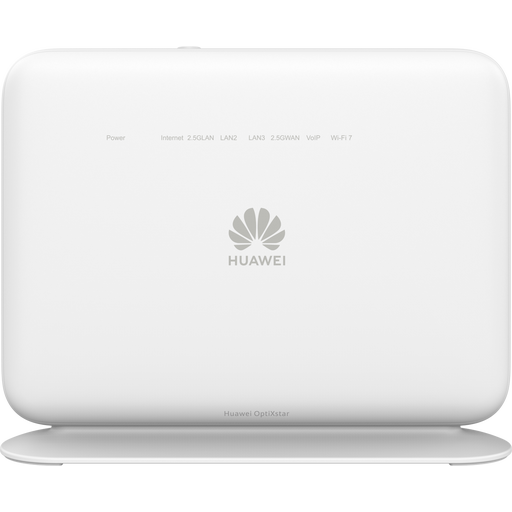
Huawei eKit OptiX LG8245B7N BE3600 dual-band Wi-Fi 7 4G dongle router

Huawei eKit OptiX LG8245B7N BE3600 dual-band Wi-Fi 7 4G dongle router

The product information describes 4G as a backup for a primary broadband connection, aimed at home and office use; this is different from a standalone mobile hotspot for travelling.

The product title lists dual-band Wi-Fi 7. Before buying, check whether this backup setup suits the internet source you’ll have available on a road trip.

View at Joybuy
TP-Link TL-WR1502X Wi-Fi 6 travel router

TP-Link TL-WR1502X Wi-Fi 6 travel router

The product title describes a wireless travel router. Before choosing it for uploading on the go, check which internet source and mobile support are included with the exact version.

The title lists Wi-Fi 6, dual-band at 2.4 GHz and 5 GHz, and 1500 Mbps. This is a stated Wi-Fi specification and doesn’t indicate mobile upload speed on its own.

View at Joybuy
TP-Link M7350 4G (CAT4) portable Wi-Fi router

TP-Link M7350 4G (CAT4) portable Wi-Fi router

This 4G MiFi router is an option if you want to share a mobile connection with several travel devices.

The product title lists support for up to 10 devices, a 2000 mAh battery and up to 8 hours of use. TP-Link lists a maximum mobile upload speed of 50 Mbps for the M7350; this is a manufacturer maximum, not a prediction for your stops. Check the SIM card and the terms of your plan.

View at Joybuy

Frequently asked questions

Do I need 5G to upload photos on the go?

No, you don’t always need 5G: the 4G models we looked at also have a stated mobile upload speed. Choose 5G only if your plan and coverage at your stops support it; manufacturer maximums don’t predict actual upload speeds.

How do I get started with a MiFi router?

Insert a compatible SIM card, switch on the router and connect your phone or laptop to its Wi-Fi network. Follow the manual for the exact version for details on SIM format, settings and charging; the TP-Link manual explains these steps for the M7350(EU).

How much will I pay to upload while on a road trip abroad?

That depends on your destination and plan. ACM ConsuWijzer explains that within the EU, you’ll generally pay your domestic rate, but an applicable fair-use data limit may result in extra charges; different rates may apply outside the EU. The ACM calculator uses 2026 rates and isn’t suitable for pay-as-you-go.

What if my router breaks too soon during normal use?

According to ACM ConsuWijzer, the statutory guarantee may apply if a product breaks sooner than you could reasonably expect during normal use; the seller must then provide an appropriate solution. There isn’t one fixed statutory guarantee period for every router.

Which product marking should I check when buying in the Netherlands?

The Dutch Authority for Digital Infrastructure says that radio equipment placed on the market in Europe must meet the applicable requirements and carry a CE marking. Check the marking on the actual device and ask for documentation for the exact version if you’re unsure; a model page doesn’t automatically prove that the item on offer complies.
