For a short stop when you’re sharing your route with one or a few people, your phone’s hotspot may be enough. A separate MiFi router is worth considering if several devices need to stay online for longer, or you want to preserve your phone’s battery. Before choosing, check mobile coverage at the terminal, your SIM card and data allowance, how long you expect to use it, and which network you’ll use on board.
Who might find a MiFi router useful?
Travel companions viewing the route together
You want to give phones or tablets access to the route through a single connection at the terminal. Count how many devices need to be online at the same time, and check whether your provider has coverage at the location. TP-Link states that the M7350 supports up to 10 connected devices.
Travellers facing a long wait
You want to keep the connection available without constantly relying on a socket or your phone’s battery. Compare the router’s stated battery life with the length of your expected travel day; actual battery life may vary. TP-Link quotes up to 8 hours for the M7350 and up to 15 hours for the M7450 V3.
Travellers who also want to get online on board
You want to know which network your SIM card uses on board. According to Your Europe, the European Union’s roaming rules for mobile terrestrial networks do not automatically apply to connections through a ship’s non-terrestrial network.
What should you look for when choosing one?
Your phone’s hotspot
Best suited to: briefly sharing your route when your phone and mobile plan already work at the location.
Trade-off: you’ll use your phone’s mobile connection and battery.
Portable 4G MiFi
Best suited to: connecting several travel companions’ own devices where usable 4G coverage is available.
Trade-off: you’ll need a suitable, active SIM card and data allowance; check the exact hardware version too.
Portable 5G MiFi
Best suited to: using the router regularly beyond this trip, if you can confirm provider compatibility, the model variant and 5G coverage.
Trade-off: a higher stated speed doesn’t guarantee a better connection at a busy terminal or one with poor coverage.
| Concern |
What should you check? |
Who is this important to? |
| Coverage at the terminal |
Check your provider’s coverage information for the location and, if possible, test the connection there. |
If I need to open the route online as soon as I reach the terminal, I want to know first whether my provider has coverage there. Around 36% of consumers put reliable coverage at the top of their list. |
| Connecting several devices at once |
Count how many devices need to be online at the same time, and check the maximum for the exact model version. |
If everyone I’m travelling with wants to view the route on their own phone or tablet, I look at how many devices can connect at once. Around 28% of consumers prioritise sharing with multiple devices. |
| Battery life |
Compare the time you expect to go without a charging point with the manufacturer’s quoted battery life, and check the charging connection on the version you’ve chosen. |
If I have a long wait with no socket, I want to know how long the router will last and whether I can charge it on the go. Around 22% of consumers say battery life is their main buying concern. |
| Data allowance and network on board |
Check your SIM card, data allowance, roaming settings and the charges for the network you’ll use during your journey. |
If I want to avoid unexpected data charges, I check before boarding whether the router will use a mobile terrestrial network or a ship’s network. Around 14% of consumers prioritise their data allowance and network switching. |
Things to check before you set off
-
Don’t assume a 4G or 5G top speed guarantees coverage
Your actual connection may be affected by network congestion, obstacles, your device and your mobile plan. A higher stated router speed won’t solve a lack of coverage.
Check your provider’s coverage at the terminal and, if possible, test the connection where you plan to use it.
-
Don’t assume the charges on board will be the same
EU roaming rules apply to mobile terrestrial networks, but don’t automatically cover connections through a ship’s non-terrestrial network. The network and charges may therefore change once you’re on board.
Before using the router, check which network it connects to and what your provider charges for it.
Using a ship’s network may incur extra data charges; the amount depends on your provider and the connection.
-
Don’t compare battery life or model names without checking the version
Battery life is a manufacturer estimate, not a guarantee of how long it will last for you. Also check that the hardware version listed matches the one you’re considering.
Compare the specifications for the exact version and check the charging connection before choosing.
Brands and model ranges to consider
TP-Link
The M7350 and M7450 V3 are examples of portable 4G MiFi routers tied to specific models.
- TP-Link states that the M7350 supports up to 10 connected devices and offers up to 8 hours of use. For the M7450 V3, the manufacturer quotes up to 32 devices and up to 15 hours.
- These are manufacturer estimates for the models listed, not independent real-world test results. Check which hardware version is being offered.
NETGEAR
The Nighthawk M6 is a portable 5G hotspot to consider if you’re also looking for a router for other uses on the go.
- NETGEAR states that the Nighthawk M6 supports up to 32 connected devices at once.
- The product page reviewed lists certification for US providers. Check compatibility with Dutch providers and the exact version separately.
ZTE
The MU5001 is a portable 5G router for which ZTE publishes a setup guide.
- The guide describes features including a nano SIM, USB-C connection and Wi-Fi settings.
- This information doesn’t confirm that a particular version will work with your Dutch provider.
HUAWEI
The Mobile WiFi 3s is an example of a compact 4G product range.
- For the version described, HUAWEI’s global specifications page lists a 1500 mAh battery and 2.4GHz Wi-Fi.
- Check that the Dutch version has the same specifications before comparing it.
Joybuy products for mobile internet on the go
This Joybuy selection includes portable mobile routers for sharing on the go, as well as a router with a 4G dongle function. Check whether each model suits how you plan to use it at the ferry terminal.
 No image available
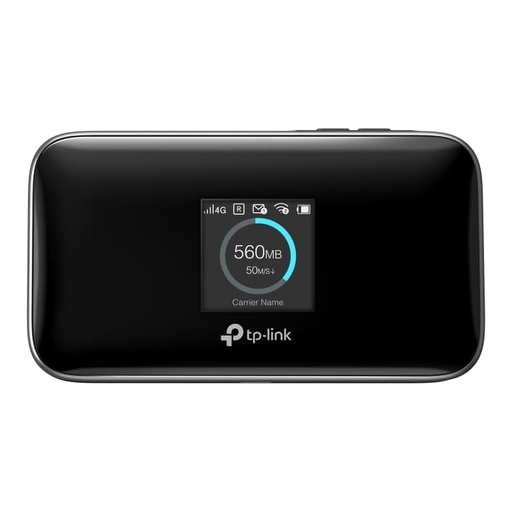
TP-Link M7750
The product name describes this model as a mobile network router; check that this version is suitable for mobile use at the terminal.
Before buying, check SIM card and provider compatibility, battery specifications and how many devices can connect at once.
View at Joybuy
 No image available
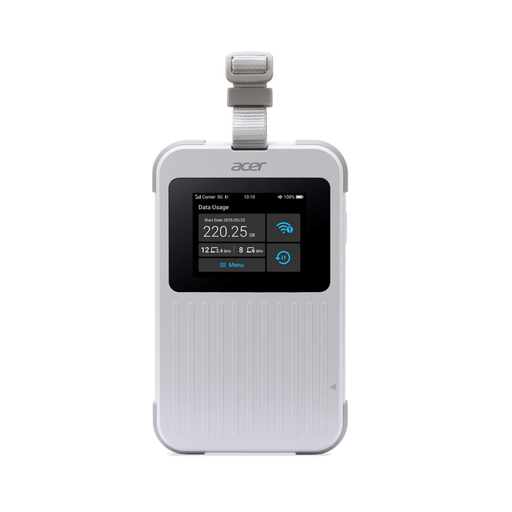
Acer Connect M6E
This portable MiFi router may be worth considering if you’re looking for a 5G model to share with several devices; the product name states that it supports up to 32 devices.
The product name also lists Wi-Fi 6E, dual-band and nano SIM. Check that your SIM card and provider are compatible with this version.
View at Joybuy
 No image available
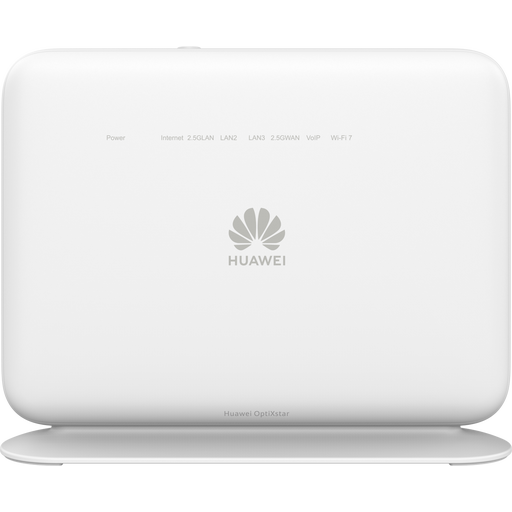
Huawei eKit OptiX LG8245B7N BE3600
According to the product name, this model is a dual-band WiFi 7 router with a 4G dongle function. Consider it only if that function suits the way you plan to use it.
Check whether the configuration on offer can connect to a mobile network on its own and is suitable for taking to the terminal.
View at Joybuy
 No image available
TP-Link M7350
This portable 4G MiFi router may suit you if you want to share a separate mobile connection with your travel companions.
TP-Link states that the M7350 supports up to 10 devices and offers up to 8 hours of use; the product name lists a 2000 mAh battery and a colour screen. Actual battery life may vary.
View at Joybuy
Frequently asked questions
Will a MiFi router work without mobile coverage at the terminal?
No, not if you need mobile data to load an online travel route. Check your provider’s coverage at the location. KPN says that factors such as network congestion and the device you’re using can affect speed.
How do I prepare the router for sharing my route?
Insert a suitable, active SIM card and set up the Wi-Fi connection before you need the route. Also check your data allowance, battery level and roaming settings. TP-Link says the M7350 displays information including data usage and battery level.
Is mobile internet from a ferry always covered by EU roaming at domestic rates?
No. According to Your Europe, the European Union’s roaming rules apply to the relevant mobile terrestrial networks, but not automatically to a non-terrestrial connection through a ship. Before using the router, check which network it connects to and what your provider charges.
What can I do if a router bought in the Netherlands develops a fault sooner than expected during normal use?
According to ACM ConsuWijzer, in addition to any manufacturer’s guarantee, you have a legal guarantee if the product doesn’t do what you could reasonably expect. If the fault is valid, the seller must resolve the problem free of charge, for example by repairing or replacing the product; there isn’t one fixed guarantee period for every product.


