
Traveller who wants to download on the go
You want to download language guides during your bus journey. So check your provider’s coverage along the route; KPN points out that factors such as location and conditions affect network strength.


For occasional downloads on one device, a phone hotspot may be enough. A MiFi is most useful if you want internet access separate from your phone or need to share it with fellow travellers. Before choosing a router, check mobile coverage along your route, make sure you have a suitable SIM card and data plan, and consider how long you’ll need to use it. The router’s stated speed doesn’t guarantee a connection on a moving bus.
You want to download language guides during your bus journey. So check your provider’s coverage along the route; KPN points out that factors such as location and conditions affect network strength.
You want to use a connection without relying on your phone’s battery. Compare the stated battery life with the length of your journey, and bear in mind that manufacturers’ figures may differ from real-world use.
You want to share one mobile connection with fellow travellers or your own devices. Check both how many devices can connect at the same time and how much data they’ll use together.
Choose this if: you occasionally download to one or a few of your own devices and your phone data plan is suitable.
Bear in mind: the connection and power supply still depend on your phone.
Choose this if: you want a connection separate from your phone or need to connect several devices, and you don’t specifically need 5G for this purpose.
Bear in mind: you’ll need a suitable, activated SIM card and data plan. The manufacturer’s stated speed or battery life doesn’t guarantee how it will perform on the bus.
Choose this if: you also want to use the router for more demanding tasks and have suitable 5G coverage and a suitable data plan in the places you’ll be travelling.
Bear in mind: if you’re only downloading language guides, the higher stated speed alone isn’t a reason to choose 5G.
| What to consider | What to look for | Who it matters most to |
|---|---|---|
| Coverage along the route | Check your provider’s coverage information for the route. KPN lists location and conditions as factors that affect network strength. | I want to be able to download along my planned route, so I check coverage first. Around 36% of consumers say coverage is their main purchasing concern. |
| Battery life | Compare the stated battery life for the exact version with the length of your journey, and check what charging options are available. | I want to use a connection on a long journey without constantly relying on my phone. Around 29% of consumers give battery life top priority. |
| Data and countries you’re travelling to | Check that the SIM card works in the router, how much data is available and what plan conditions apply in each country you’ll visit. | I want to download guides without losing track of my data allowance or travel conditions. Data charges are the main purchasing concern for around 21% of consumers. |
| Sharing with devices | Count how many devices need to be online at the same time, and check both the model’s limit and the data available. | I want several devices or fellow travellers to download over one connection. Sharing is the main purchasing concern for around 14% of consumers. |
A model’s stated speed doesn’t measure the connection along your route. Coverage also depends on your provider, location and conditions; KPN lists these factors in its coverage information too.
First, check the intended provider’s coverage along your route. Where possible, download important guides in advance, for example before travelling through an area where coverage is uncertain.
Without a suitable, activated SIM card with data, a MiFi can’t download guides over the mobile network.
Check the SIM card requirements, data plan and countries you’ll be visiting as part of the same decision.
TP-Link and Huawei both say that actual battery life may differ from the figures stated for their specific models.
Compare the figure for the exact version with the length of your journey, and plan a way to charge it if necessary.
The Dutch product information includes the portable 4G MiFi M7350 and the M7450 V3.
Huawei describes the 4G Mobile WiFi 3 (E5785) as a portable router with a micro-SIM card and dual-band Wi-Fi.
The European product specifications for the Nighthawk M6 MR6150 describe a 5G option for uses beyond downloading language guides.
These product options are intended for mobile Wi-Fi on the go and include models sold as 4G or 5G routers. Check each model to make sure its stated connection, data plan and battery life suit your trip.
 No image available
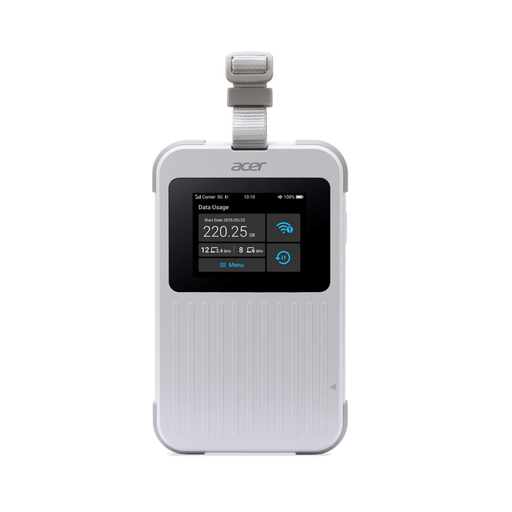
Suitable if you’re looking for a portable 5G hotspot with a connection for several devices.
The product name lists WiFi 6E, Nano SIM and support for up to 32 devices. The product description states that 1 GB of SIMO data is included; check whether that’s enough for your downloads.
 No image available
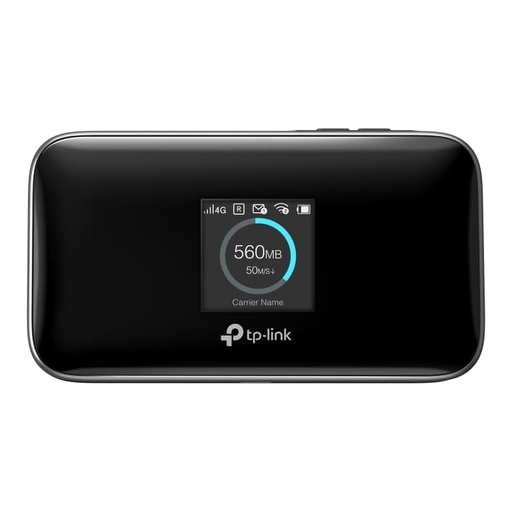
Suitable if you want to use a portable 4G router with a battery to connect several devices.
TP-Link lists support for up to 10 devices, a 2000 mAh battery and up to 8 hours of use for the M7350. These are manufacturer figures; actual battery life may vary.
 No image available
An option to consider if you’re looking for a mobile router for Wi-Fi on the go.
Not over the mobile connection on the MiFi models discussed here: you’ll need a suitable, activated SIM card with data. Check the SIM card size and your provider’s terms for the exact router.
Insert the suitable, activated SIM card as described in the instructions, then connect your device to the Wi-Fi network. Test the connection and downloads before you set off; on the journey, the connection will still depend on mobile coverage.
Check your data usage with your provider and, if necessary, switch off automatic updates on connected devices. Before crossing a border, check the terms that apply to your destination and data plan.
No, not without conditions. ACM ConsuWijzer explains that your Dutch tariff generally applies in the EU, but that a provider may apply a data limit or surcharge under certain conditions. Check the terms of your own plan.
Radio equipment sold in Europe must meet the applicable requirements and should carry a CE marking. The Dutch Authority for Digital Infrastructure explains these requirements for wireless equipment.