
Host serving warm custard
Wants to warm ready-made custard for several guests and check and stir the portions before serving.


To warm ready-made custard, a solo microwave with adjustable power is usually all you need, as long as your dish fits inside. A combination microwave is worth considering if you also want to bake or grill. Divide the custard into manageable portions and stir it during heating, as a turntable cannot prevent uneven heating. For homemade custard, follow the recipe, and store and reheat chilled leftovers according to the relevant guidance.
Wants to warm ready-made custard for several guests and check and stir the portions before serving.
Mainly wants a microwave for reheating and needs to weigh up the size of the appliance and dish against oven or grill functions.
Wants to use the same appliance for baking or grilling as well as reheating.
A good fit if: you can warm your custard in smaller portions and don't need an oven or grill function.
The trade-off: a smaller interior may mean heating several portions; check that your dish fits.
A good fit if: you want to use a larger dish and will also use the microwave for other reheating tasks.
The trade-off: the capacity in litres alone won't tell you whether your dish will fit; compare the interior dimensions and turntable diameter.
A good fit if: you want to bake or grill dishes as well as reheat food.
The trade-off: the extra functions aren't needed for warming custard and will take up space on your worktop.
The Netherlands Nutrition Centre recommends stirring food well as it heats. Even with a turntable, heat can still be unevenly distributed. So measure your dish first, then choose between a solo microwave for reheating and a combination microwave for a wider range of cooking methods.
| What to consider | What to look for | Who this matters to |
|---|---|---|
| Checking food as it heats | See which microwave power settings you can adjust manually and whether you can easily remove the dish to stir the custard. | When I warm custard, I want to be able to check and stir it as it heats. Around 36% of consumers prioritise control over the reheating process. |
| Space for portions for guests | Measure your dish and compare it with the interior dimensions and, if applicable, the turntable diameter. | For a dinner party, I want to know whether my dish will fit and how best to divide the portions. Around 29% of consumers prioritise space for portions for guests. |
| Other cooking functions | Decide whether you'll actually use the oven and grill functions, then consider the available space and controls. | If I also want to bake or grill other dishes, a combination microwave may offer more functions than a solo model. Around 21% of consumers prioritise these extra cooking options. |
| Size and ease of use | Compare the external dimensions, the positioning instructions in the manual, and how to set the power and cooking time. | With limited worktop space, I want an appliance that fits and has settings I understand, without paying for functions I won't use. Around 14% of consumers prioritise compact size and simple controls. |
According to the Netherlands Nutrition Centre, heat can still be unevenly distributed, even with a turntable. Stirring during heating may therefore still be important.
Choose a dish you can remove safely, and stir the custard as it heats.
The capacity in litres doesn't tell you whether your serving dish will fit inside or rotate on the turntable.
Measure your dish and compare its dimensions with the model's interior and turntable.
A solo microwave can reheat food; grill and oven functions are for other types of cooking and won't remove the need to stir as the custard heats.
Choose a combination microwave if you'll actually use its extra cooking functions.
Koopmans' recipe for custard made from powder includes preparation steps, such as bringing it to a gentle boil. That's different from reheating a ready-made dessert.
Follow the recipe when making custard, and use the instructions for the specific product when reheating ready-made custard.
The MN207S is a freestanding solo microwave for anyone mainly looking to reheat food and happy to work with smaller portions.
The NN-SD38QSEPG is a larger solo microwave with several specified power levels.
The MS23K3513AK/EN is a solo option with a stated capacity of 23 litres.
The FFL020MS2 is a freestanding solo microwave with published interior dimensions and separate power levels.
The CMV829 is worth considering if you want to bake and grill as well as warm custard.
This selection includes solo and combination microwaves for warming custard, with extra functions on models that also offer grilling or fan oven cooking.
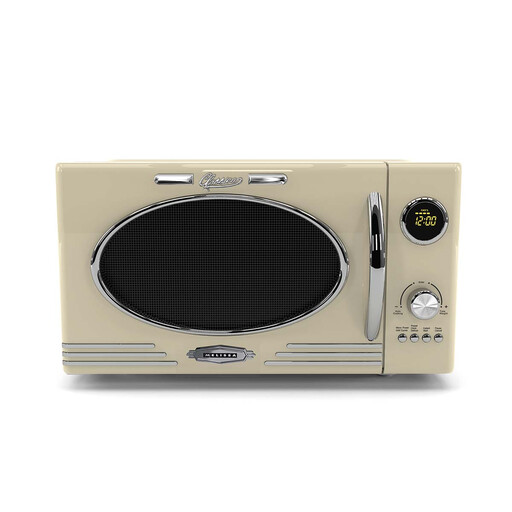 No image available
The stated microwave settings give you options when heating portions; stir as it heats and check the custard.
Features listed in the product name: 800 W, 23 L, 12 programmes, five power levels, defrost function and a 60-minute timer.
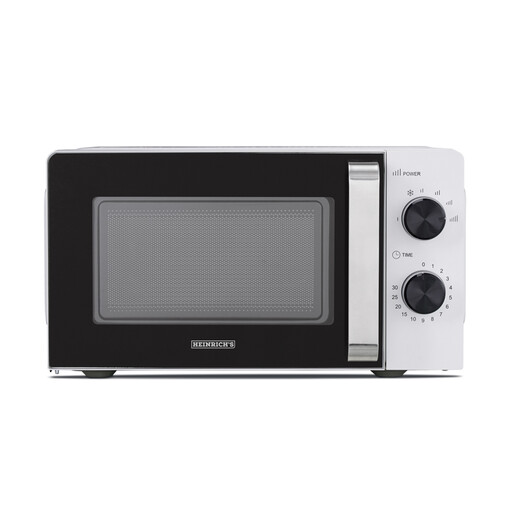 No image available
A compact solo microwave could be a good fit if you mainly want to reheat food; check beforehand that your dish will fit inside.
Features listed in the product name: six power levels, a 30-minute timer, defrost function, interior light and turntable.
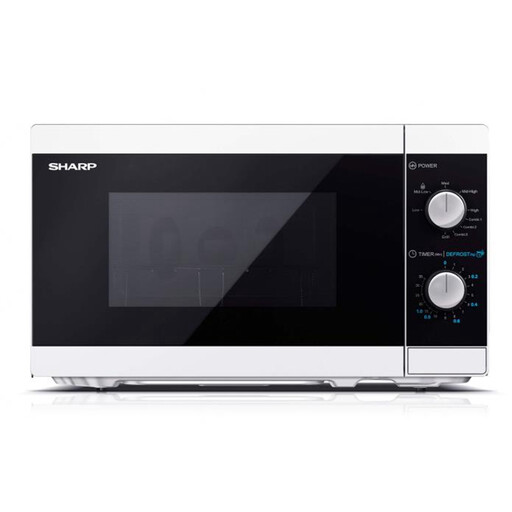 No image available
The microwave function is useful for custard; choosing a dish that fits and stirring during heating are still important.
Features listed in the product name: 20 L, 800 W and grill function.
 No image available
This model is suited to anyone who wants to use the listed grill and fan oven functions as well as warm custard.
Features listed in the product name: 25 L, grill and fan oven.
 No image available
The combination of microwave, grill and fan oven functions is useful if you also want to use the appliance for other types of cooking.
Features listed in the product name: 20 L, grill and fan oven.
No, you don't have to. The Netherlands Nutrition Centre recommends using small, as flat as possible portions and stirring them during heating, even if the microwave has a turntable. Choose portions that suit your dish and the microwave's interior.
Don't assume so: making custard is different from warming ready-made custard. Koopmans' recipe for custard made from powder involves heating, stirring and then simmering gently for around three minutes. Follow the recipe for your particular product when preparing it.
Use a dish that's suitable for microwave use and check for the microwave-safe symbol. The Netherlands Nutrition Centre lists glass, glazed earthenware and porcelain as suitable materials. Also measure your dish and check the appliance manual for instructions on where to place it.
Follow the recipe's instructions for homemade custard and store perishable leftovers carefully. Koopmans advises covering homemade custard and keeping it in the fridge. The Netherlands Nutrition Centre recommends not leaving perishable food out of the fridge for more than two hours. When reheating leftovers, stir them well and heat them thoroughly.
No. According to the Dutch government, there is no fixed statutory guarantee period in the Netherlands. What you can expect from a product depends, among other things, on how long it should reasonably last. If a product is faulty, contact the seller; a manufacturer's guarantee may provide additional cover.