
Anyone who wants to warm tortillas quickly
You usually heat only a few tortillas and mainly want them to be warm and soft. You don’t need an oven or grill function for that.


For a few tortillas, a solo microwave is suitable if your plate fits inside and you only want to warm them up. Choose controls that work well for short heating bursts; a grill or oven function is only relevant if you also want to brown or bake food. Cover the tortillas, heat them in short bursts and follow any instructions on the packaging.
You usually heat only a few tortillas and mainly want them to be warm and soft. You don’t need an oven or grill function for that.
You want to heat small portions, but you also need to check that the appliance, the ventilation space and your usual plate will all fit.
For short heating bursts, you may prefer a timer and several power settings, or perhaps straightforward rotary controls.
Start with the size of your plate and the space available; then choose the controls and features that suit what you want to do with the microwave.
| What to consider | What should you look for? | Who is this most relevant to? |
|---|---|---|
| Warming tortillas | Check the timer and power settings. Follow the instructions on the packaging and check whether the tortillas are warm as they heat. | If I mainly want to warm a few tortillas quickly while keeping them soft, I want to be able to adjust the time in short bursts; around 40% of consumers put this first. |
| Appliance and plate space | Measure the space and your plate; check the external dimensions, ventilation clearance and, if there’s a turntable, its diameter. | Anyone planning to put a microwave on a limited worktop needs to allow space for both the plate and ventilation; around 30% of consumers prioritise where the appliance will go and whether their plate will fit. |
| Controls | Compare the timer and power settings with how you want to set short heating bursts. | If I want to choose settings easily, I compare rotary controls with a timer and several power levels; around 20% of consumers put ease of use first when choosing. |
| Extra features | Decide whether warming is enough or whether you also want to brown or bake food; only then compare a grill or combination microwave. | Anyone who wants to use the same appliance for browning or baking has different needs from someone who only wants to warm tortillas; around 10% of consumers prioritise extra cooking functions. |
The capacity doesn’t tell you whether your plate will fit on the turntable or how much worktop space the appliance needs.
Measure your plate and the space available. Check the dimensions and placement instructions for the exact model.
The power rating and the layout of the cooking space don’t, by themselves, prove how your tortillas will heat up. Cover them and check on them as they heat.
Choose based on the controls and dimensions that suit how you’ll use it; don’t treat a single specification as proof of a better result.
A standard solo microwave heats food; according to the Consumentenbond, a grill is designed to give food a browned crust.
Decide in advance whether heating alone is enough. If you also want to brown or bake food, compare a model with a grill or oven function.
Otherwise, you’ll need a separate cooking method for browning.
A manufacturer’s warranty is in addition to your statutory rights. According to ACM ConsuWijzer, the retailer remains responsible if a product doesn’t do what you can reasonably expect under normal use.
Before buying, read what any extended warranty covers and keep that cover separate from your statutory rights.
The MN205S is a freestanding solo microwave with rotary controls for simple reheating.
The SMV720 is a freestanding solo option with rotary controls for reheating and defrosting.
The YC-PS204AE-S and YC-QS204AE-B differ in the layout of the cooking space.
The MWP 201 SB is a freestanding solo option with electronic controls.
This Joybuy selection includes solo and combination microwaves for small portions, with a range of controls and extra features.
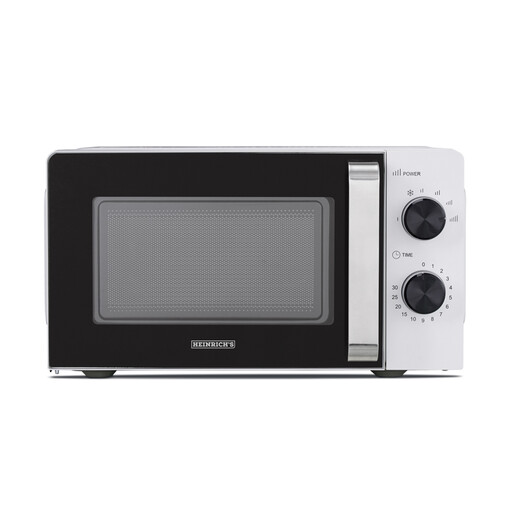 No image available
A solo model for anyone who mainly wants to reheat food and set the time or power in steps.
The product description lists six power settings, a timer of up to 30 minutes and a 9.6-inch turntable.
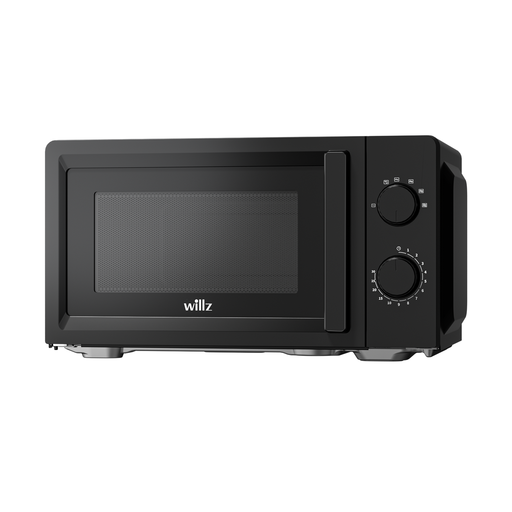 No image available
A microwave for anyone looking for a compact model with a mechanical rotary control.
The product description lists reheating and defrosting.
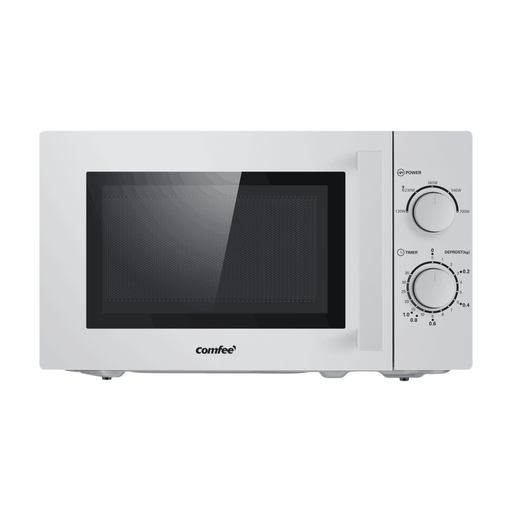 No image available
This microwave may suit anyone who wants to set short heating bursts using rotary controls.
The product information lists five power settings and a turntable.
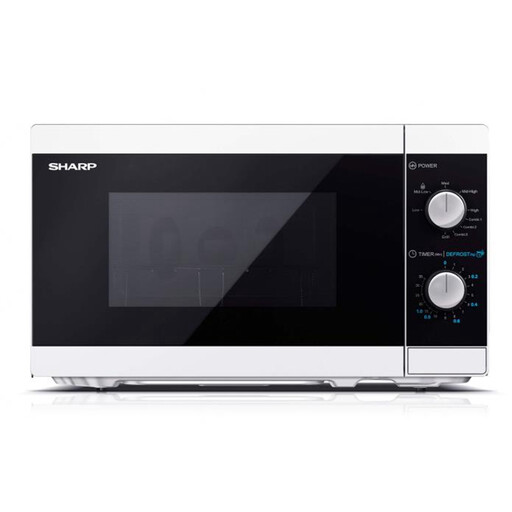 No image available
A model with a grill to compare if you want to brown food as well as reheat it.
The product name lists 800 W; the product description mentions five microwave settings, manual controls and a 25,5 cm turntable.
 No image available
This combination microwave is worth comparing if you also want grill and convection functions.
The product information lists ten settings and a 270 mm turntable.
No, the microwave function is enough for reheating. A grill is useful if you also want to brown tortillas; an oven function is for anyone who also wants to bake.
Place them on microwave-safe crockery, cover them with a damp cloth and heat them in short bursts. Check the instructions on the packaging first, then check whether they’re warm as they heat; the same time won’t suit every portion or microwave.
No, check the labels and instructions for the plate and packaging. The Voedingscentrum lists glass, glazed earthenware and porcelain as suitable for microwave use.
Follow the manual for the exact model. The ETNA SMV720 manual specifies at least 20 cm of clearance above and 10 cm behind; don’t assume these measurements apply to other models without checking.
Appliances covered by the relevant EU rules must carry a CE mark. This is the manufacturer’s declaration, not an independent quality mark. For online consumer purchases, you generally have a statutory cooling-off period of up to 14 days after delivery. Your statutory guarantee is separate from a manufacturer’s warranty; ACM ConsuWijzer explains that the retailer remains responsible if a product doesn’t do what you can reasonably expect under normal use.