
Precision baker
Your recipe calls for soft butter that you can cream with sugar until light and fluffy; your main priority is making sure it doesn’t melt.


For butter that needs to be soft but not melted, choose a microwave that lets you select a low setting of around 100 W; the Netherlands Nutrition Centre recommends this power for softening butter. A solo microwave is enough if you already have an oven, while a combination microwave is only worth considering if you also want to bake in it and your baking tin will fit. Check the butter as it heats and stop as soon as it is soft enough to press but still holds its shape. King Arthur Baking explains that butter that gets too warm holds less air when creamed with sugar.
Your recipe calls for soft butter that you can cream with sugar until light and fluffy; your main priority is making sure it doesn’t melt.
You already have an oven and want a straightforward appliance for softening butter and reheating other dishes.
You also want to be able to bake in the same appliance when you’re entertaining. In that case, the oven function and space for your baking tin matter.
First decide whether you only need a microwave or want oven space too. Then check whether you can set the microwave to a low power level with precision.
Choose this if: you already have an oven and your main task is softening butter; check that the model has a setting of around 100 W.
Bear in mind: a solo microwave does not have a fan oven function for baking.
Choose this if: you mainly want to reheat and defrost food and already have an oven elsewhere.
Bear in mind: the number of power levels alone doesn’t tell you whether you can select a setting of around 100 W.
Choose this if: you want to bake in the same appliance as well as use the microwave function.
Bear in mind: an oven function doesn’t replace a low microwave setting; also check that your baking tin will fit.
The Netherlands Nutrition Centre recommends around 100 W for softening butter. So check the microwave power setting you can select, rather than looking only at the maximum wattage. Use a microwave-safe dish and check the butter as it heats.
| What to consider | What should you check? | Who is this important for? |
|---|---|---|
| Keeping butter soft | Check whether you can set the microwave power to around 100 W and keep an eye on the butter as it heats. | If I want to cream butter and sugar until light and fluffy, I need the butter to be soft but still hold its shape. Around 42% of consumers prioritise just this texture. |
| Controls and oven function | Compare the controls and timer; choose a solo microwave if you already have an oven. | If I already have an oven, I’m mainly looking for a straightforward microwave for reheating and defrosting. Around 33% of consumers prioritise simplicity and having an existing oven. |
| Extra baking space | Check whether the microwave and fan oven functions can be used separately and whether your baking tin will fit. | If I also want to bake in the same appliance, my baking tin needs to fit inside. Around 25% of consumers prioritise extra baking capacity. |
A high maximum power rating doesn’t tell you whether you can set the microwave to a low level of around 100 W, which the Netherlands Nutrition Centre recommends for softening butter.
Check the power settings for the exact model before choosing a microwave for this baking task.
King Arthur Baking explains that butter that gets too warm holds less air when creamed with sugar.
Stop as soon as the butter is soft enough to press but still holds its shape, and follow the texture specified in your recipe.
A combination microwave won’t necessarily fit every baking tin; the capacity in litres doesn’t tell you whether your tin will fit on the turntable.
Measure your baking tin and compare its dimensions with the turntable and interior. Choose the oven function only if you need it.
This helps you avoid paying for features you won’t use or choosing an appliance that won’t fit your tin.
The NN-ST65QBEPG is a solo microwave to consider if you’re looking for an explicitly selectable low-power setting.
The range includes both a basic solo microwave and a model with a fan oven function.
The MN205S is a compact solo microwave to consider if you bake elsewhere.
The MS23K3513AK/EN is a solo microwave with an automatic defrost function.
This selection includes microwaves and combination microwaves for reheating; combination models with a fan oven function also offer the option to bake. For each model, check whether you can select a low microwave setting of around 100 W and whether your baking tin will fit. Appliances covered by CE rules must carry the CE mark; the Dutch government advises checking the mark and product details for the specific appliance.
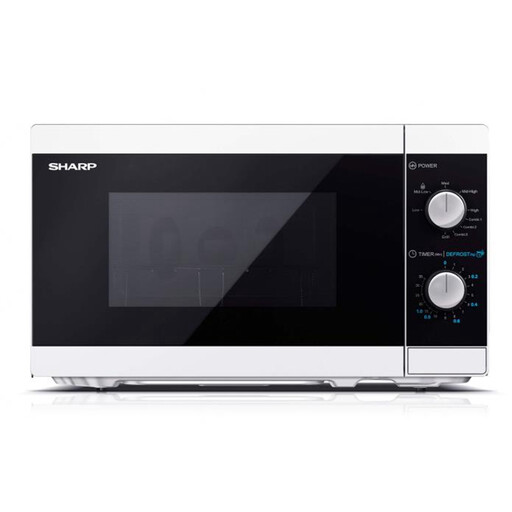 No image available
An option if you want a grill function as well as a microwave.
Listed specifications: 20 litres, 800 W and a grill. The product information warns against using the appliance when empty and placing metal objects inside the microwave cavity.
Check whether this model offers a low setting of around 100 W and whether the listed product details and CE mark apply to the appliance being sold.
 No image available
Worth considering if you want a fan oven function for baking as well as a microwave.
The product name lists a capacity of 25 litres. Compare the dimensions of your baking tin with the appliance’s interior.
Also check the low microwave setting, as well as the CE mark and product details for the exact model being sold.
 No image available
A combination model to consider if you also need a fan oven function.
The product name lists a capacity of 20 litres, a grill function and a fan oven.
If installing it in a cupboard, you’ll need a suitable bracket and enough ventilation. Also check the low microwave setting and details for the exact model being sold.
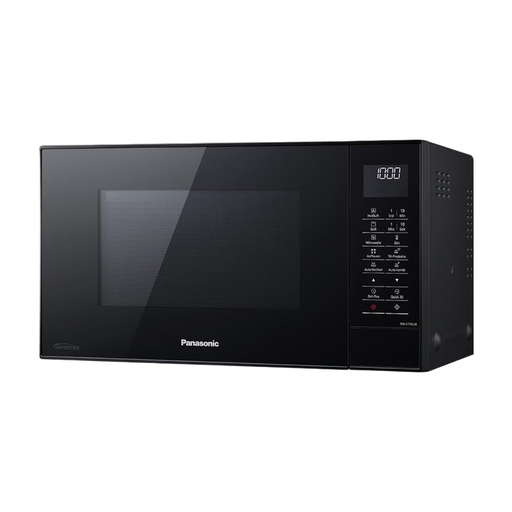 No image available
Worth considering if you’re looking for one appliance with microwave, grill and fan oven functions.
The product name lists a capacity of 27 litres, 1000 W and inverter technology. According to the product information, leave at least 10 cm of space for ventilation when installing it.
Check whether you can select a suitable low microwave setting and whether the product details apply to the model being sold.
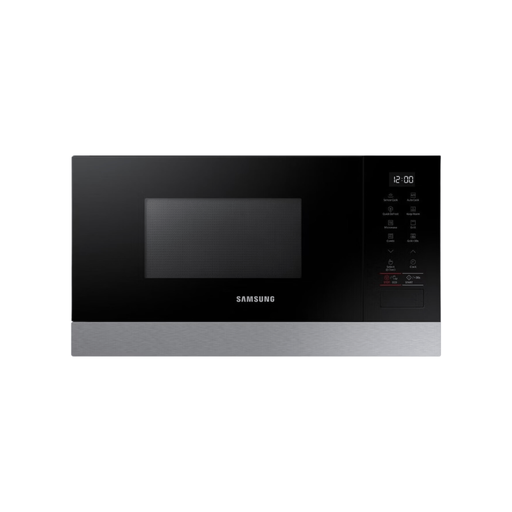 No image available
A built-in model to consider if your kitchen has a suitable space for it.
The product name lists a capacity of 22 litres and 900 W. Check the available space and installation requirements for your kitchen.
Also check whether the exact model offers a low microwave setting and whether the product details and CE mark apply to the item being sold.
The Netherlands Nutrition Centre recommends around 100 W for softening butter. Check it as it heats and stop when it is soft but still holds its shape; there isn’t a set number of seconds that works for every quantity and appliance.
A solo microwave doesn’t have a fan oven function for baking a cake. If you need this extra baking option, choose a combination microwave with an oven function and check that your baking tin will fit.
Use a dish marked as microwave-safe or described as such in the instructions, such as suitable glass, glazed earthenware or porcelain. Don’t use unsuitable metal packaging inside the microwave cavity.
Measure your baking tin and compare its dimensions with the appliance’s turntable and interior. Also check that the tin can rotate on the turntable if this is needed for the setting you’re using.
Check the CE mark and product details for the exact model being sold. According to the Dutch government, a manufacturer must apply the CE mark to an electrical appliance covered by the relevant CE rules once it has been assessed against the requirements.