
Home bakers with limited worktop space
You want to soften butter quickly, while also taking the appliance’s dimensions, door opening and required ventilation space into account.


If you already have an oven, a freestanding solo microwave with adjustable low-power settings is a sensible choice for gently softening butter. Betty Crocker recommends using short bursts at 10–30% power, checking and turning the butter in between. Also measure the appliance’s external dimensions and check the clearance required for that model. If you want to bake with the same appliance, look for a genuine oven or convection function: a grill is not the same thing.
You want to soften butter quickly, while also taking the appliance’s dimensions, door opening and required ventilation space into account.
You want to do more than soften butter: you also want to bake. So it’s worth knowing the difference between a solo microwave, a grill and an oven function.
You want to be able to select a low power setting and check the butter as it heats, without making extra baking functions your main consideration.
First decide whether you need your microwave just to soften butter or to offer an oven function too. Then compare the space available and the controls on models that suit your needs.
| What to consider | What to look for | Who should pay extra attention? |
|---|---|---|
| Soft, not melted, butter | Look for adjustable low-power settings and controls that let you set short bursts. Check the butter in between. | If I want to soften butter for a recipe but keep its shape, controlled heating is my main consideration. Around 29% of consumers prioritise butter texture. |
| Fitting on a small worktop | Compare the width, depth and height with the space available. Also check how the door opens and the installation instructions for the exact model. | When my worktop is short on space, I want to know whether the appliance will really fit with the required clearance. Around 29% of consumers make placement their top priority. |
| Baking with the same appliance | A solo microwave is designed for heating and defrosting with microwaves. If you’re considering a combination model, check specifically for an oven or convection function. | If I don’t want to use a separate oven, I look for an appliance that can genuinely bake. Around 24% of consumers prioritise extra baking functions. |
| Care and servicing | Compare how easy the model is to clean and check the servicing terms; keep your purchase information. | I want to know how to clean the appliance and who to contact if it breaks down. Around 18% of consumers prioritise care and servicing. |
Capacity doesn’t tell you whether the appliance will fit under a cupboard or have enough space around its casing. Depth, height and door clearance can matter too.
Measure the space available and check the external dimensions and installation instructions for the exact model.
Grilling and oven baking are different things. A grill function doesn’t mean you can use the appliance to bake a recipe that calls for an oven.
Check that the appliance specifically has the oven or convection function your baking recipe requires.
If you want butter to soften without melting, low settings and checking it as it heats are important. Butter that gets too warm or melts can affect the texture you need for a baking recipe.
Check the available power settings and heat the butter in short bursts, checking it in between.
These models illustrate some of the trade-offs between controls, features and dimensions. Mentioning a brand doesn’t mean every model is available on Joybuy.
The MN205SB is a freestanding solo microwave for people who already have an oven and prefer dial controls.
The MAX 49 MB shows that a smaller capacity doesn’t automatically mean a microwave will fit in a low or narrow space.
The FFL020MS2 is a freestanding solo microwave worth comparing when height and depth are important for the space available.
The MS20A3010AL/EN is a freestanding solo option to consider if you’re looking for dial controls.
These microwaves are worth comparing if you want to soften butter and have limited worktop space. For each model, check the external dimensions, required clearance and available settings.
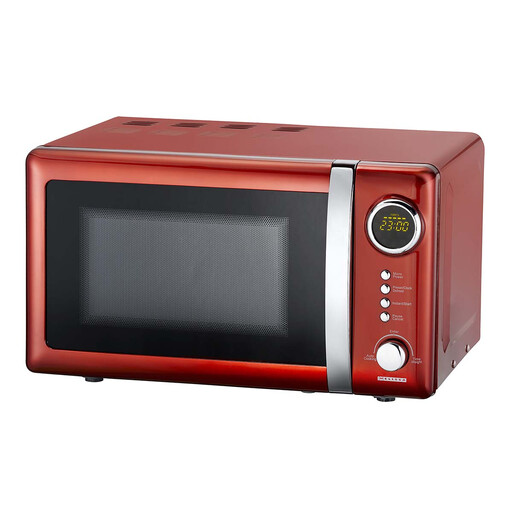 No image available
The adjustable power levels may come in handy if you want to heat the butter in short bursts and check it in between.
Five power levels; external dimensions 490 × 304 × 394 mm. The instructions specify at least 10 cm of clearance on all sides and above the appliance.
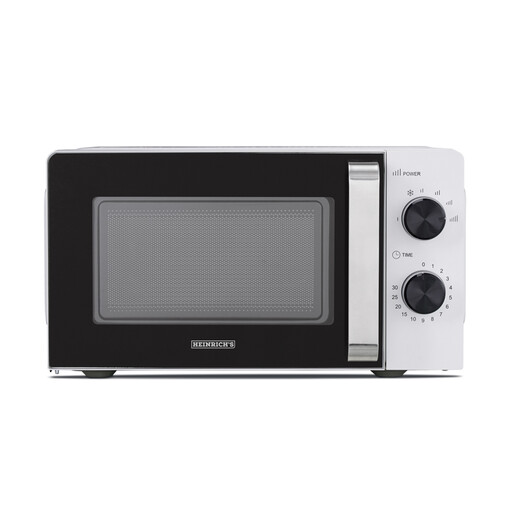 No image available
The six power levels give you settings to compare if you want to heat butter gently.
Six power levels, timer, defrost function and turntable. The listed external dimensions are 44,6 × 36,3 × 24,3 cm.
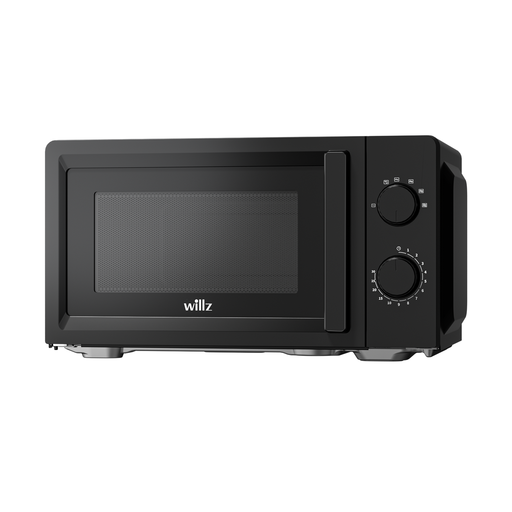 No image available
The listed capacity is 20 litres. Compare the external dimensions and required clearance with your worktop space, and check which power settings this version offers.
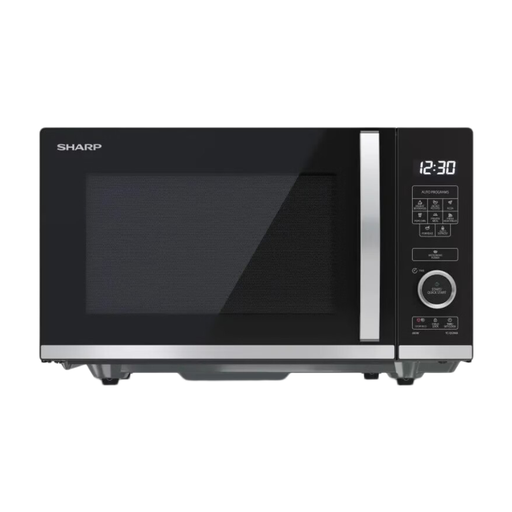 No image available
The ten power levels are worth considering if you want to compare different low settings for heating butter.
Flatbed design with no turntable; the listed external dimensions are 45,7 × 37,9 × 27,2 cm.
Use a microwave-safe plate, a low power setting or a suitable defrost setting, and check the butter after short bursts. As a starting point, Betty Crocker recommends using 10–30% power in five-second bursts, turning the butter in between. Adjust this to the amount of butter and your appliance.
A standard solo microwave doesn’t have an oven baking function. If you want to bake with the same appliance, look for a model with an oven or convection function and check the features of the specific version.
You can’t tell from the external dimensions alone. Check the installation instructions for the exact model and allow for the required clearance. The distances given in one model’s manual don’t automatically apply to another.
According to the Netherlands Food and Consumer Product Safety Authority, CE marking is mandatory for electrical products sold on the Dutch market. The marking is a declaration made by the manufacturer; on its own, it isn’t an independent test report or proof that an individual product has been checked.
Contact the seller. According to the Dutch Government, if a product is faulty, the seller must provide a solution and can’t simply refer you to the manufacturer. What’s appropriate depends on the fault and the purchase.