
Bakers who need softened butter
Your recipe calls for soft, not melted, butter and you want to know whether a microwave is suitable. Heel Holland Bakt and King Arthur Baking explain what to look for when softening butter.


If softening butter is your only reason for buying one, you don’t necessarily need a microwave: cutting or grating the butter is an alternative, and it can melt quickly in the microwave. A solo microwave makes sense if you also want to heat or defrost food and can bake elsewhere. If you want to bake in the same appliance, look for a model with an oven or convection function. A defrost setting or adjustable power level alone won’t guarantee that the butter stays soft rather than melting.
Your recipe calls for soft, not melted, butter and you want to know whether a microwave is suitable. Heel Holland Bakt and King Arthur Baking explain what to look for when softening butter.
You may also want to heat food, but the appliance needs to fit in the space available. Measure its external dimensions and allow for the clearance specified in the manual.
You may want to bake in the same appliance. If so, check whether the model has an oven or convection function; a microwave function alone is not the same thing.
First decide whether you want to heat food as well as soften butter, and whether you want to bake in the same appliance. Then measure the available space and check which functions you need.
| What to consider | What should you look for? | Who is this important for? |
|---|---|---|
| Keeping butter soft | Adjust the power and time if possible, check the butter as it heats, and don’t rely on a defrost programme without checking. | If I only occasionally need soft butter for a recipe, I want to avoid melting it and know whether I need an appliance. Around 33% of consumers prioritise the desired consistency of the butter. |
| Worktop space | Measure the space available and compare it with the external dimensions and placement instructions for the exact model. | I need to fit the appliance, its connection and the specified clearance on a small worktop. Around 25% of consumers give available space top priority. |
| Baking as well | Check that an oven or convection function is explicitly listed and that your baking tin will fit according to the product specifications; a grill function is not the same thing. | If I don’t have an oven, I want to know whether the same appliance offers the oven function my recipe needs. Around 17% of consumers prioritise being able to bake themselves. |
| Cost and controls | Consider which functions you really need, and check the controls and warranty terms for the exact model. | I want to weigh up whether an extra appliance is worthwhile and what controls and service options suit me. Around 25% of consumers consider this first. |
A microwave may be unnecessary for this task alone. Heel Holland Bakt suggests cutting or grating butter as an alternative when it needs to soften.
If softening butter is your only reason for buying an appliance, try a method that doesn’t require one first.
A defrost function doesn’t guarantee that butter will become perfectly soft; melted butter is not the same as softened butter.
Follow the consistency your recipe calls for and check the butter while heating or defrosting it.
If the butter melts, you may have to start again with the butter for your recipe.
Heating, grilling and baking are different functions. A solo microwave doesn’t have an oven function.
Before buying, check that the model explicitly has a suitable oven or convection function.
The MN205SZ is a freestanding 20-litre solo microwave for anyone who also wants to heat or defrost food.
The MS23K3513AK/EN is a 23-litre solo microwave for anyone who also wants to heat or defrost other food.
The MW 7761 is a 20-litre solo microwave with a flat base, for anyone who wants to make use of the interior without a turntable.
The MWP 101 W is a freestanding 20-litre solo microwave for heating food, without an oven function.
According to the datasheet, the R-208 W is a 20-litre solo microwave with mechanical controls.
This selection includes freestanding solo microwaves for heating and defrosting, as well as combination models with a grill or convection function for anyone who also wants to bake. Before buying, check the CE marking on the specific item on offer: the Dutch Government states that electrical products placed on the market in the EU must carry a CE marking.
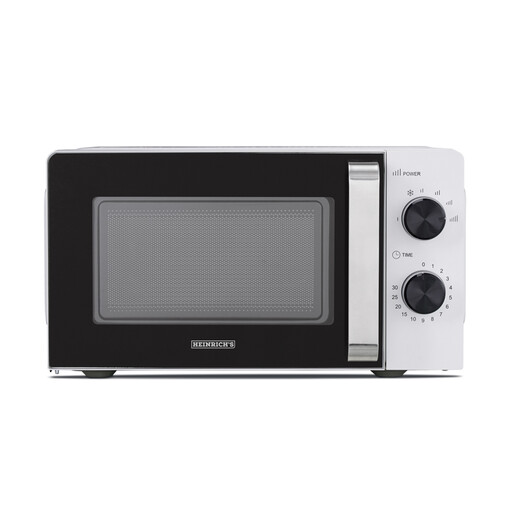 Image unavailable
Suitable for anyone who wants to heat or defrost food as well as soften butter.
Capacity: 20 l; power: 700 W; six power levels; defrost function; 30-minute timer.
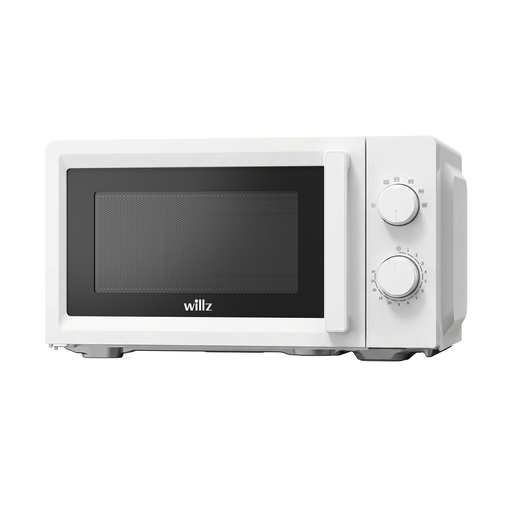 Image unavailable
An option for heating food as well as softening butter in a small living space.
Capacity: 20 l.
 Image unavailable
Suitable for anyone who wants a grill and convection function as well as microwave cooking.
Capacity: 25 l; convection settings: 110–210 °C; baking tray included.
 Image unavailable
Suitable for anyone who wants to use grill and convection functions as well as heat food.
Capacity: 20 l; seven automatic programmes; glass turntable; external dimensions: 34,5 × 44,2 × 26 cm.
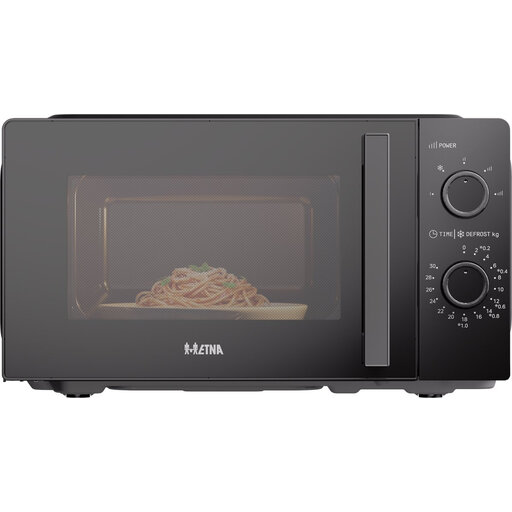 Image unavailable
Suitable for anyone looking for a freestanding solo microwave for heating or defrosting food.
Capacity: 20 l; power: 700 W; five power levels; defrost function; rotary controls; external dimensions: 434 × 329 × 241 mm.
No, not if softening butter is your only reason. Heel Holland Bakt suggests cutting or grating it as an alternative. Check the consistency you need, because soft butter is not the same as melted butter.
Not without checking the butter. A defrost function doesn’t guarantee that it will reach exactly the right consistency, so keep an eye on it as it defrosts to make sure it doesn’t melt.
A standard solo microwave is designed for heating and defrosting, not baking with oven heat. According to the Consumentenbond, you need a suitable oven or convection function to bake in the same appliance; a grill alone is different.
Measure the space available and compare it with the external dimensions and placement instructions in the manual for the exact model. Also allow for the specified clearance and the connection.
The Dutch Government states that electrical products placed on the market in the EU must carry a CE marking. Check the marking on the specific item on offer; the model name alone doesn’t confirm that the product supplied carries the marking.