
Bakers who want to get soft butter just right
Your recipe calls for soft, not melted, butter and you want to keep an eye on each portion across several baking batches.


When choosing a microwave for softening butter, look for an adjustable low-power setting and enough room for your dish; a high maximum power rating alone won’t tell you how much control you’ll have over the butter. The Netherlands Nutrition Centre recommends 100 W as a guide for softening butter. A solo microwave may be enough if you already have an oven; choose a combination microwave if you also want to bake in the same appliance. Cutting the butter into pieces is an alternative if you’d rather not use a microwave.
Your recipe calls for soft, not melted, butter and you want to keep an eye on each portion across several baking batches.
You’re making several batches and want to know in advance whether your usual bowl will fit in the microwave.
You’re looking for one appliance that can soften butter using microwave power and bake your treats using an oven function.
First, look at the settings and space for your dish to suit your baking batches. Then decide whether you also need an oven function or would prefer a compact, no-frills option.
| What to consider | What to look for when buying | Who is this important for? |
|---|---|---|
| Keeping butter soft | Check whether you can set a low microwave power level; the Netherlands Nutrition Centre recommends 100 W as a guide. Also check whether you can pause to inspect the butter and stop the microwave. | I want to stop each portion before the butter melts. Around 36% of consumers put texture control first. |
| Space for your dish | Measure your microwave-safe dish and compare its dimensions with the turntable diameter and the model’s internal dimensions. | When making several batches, I want to use my usual dish. Around 29% of consumers prioritise having enough room for their dish. |
| Baking in the same appliance | Check whether the model has a separate oven or fan oven function and whether your baking tin will fit in the usable oven space. | If I don’t have a separate oven, I want to be able to heat butter and bake in the same appliance. Around 21% of consumers prioritise an oven function. |
| Compact and straightforward | Compare the external dimensions, controls and available space; check which functions you really need in addition to softening butter. | I already have an oven and want a straightforward microwave that fits in my kitchen. Around 14% of consumers mainly choose a compact, no-frills option. |
The maximum power rating doesn’t automatically tell you how low you can set the microwave. A low setting is what matters for butter; heating it for too long can make it melt.
Compare the available low-power settings and check the butter as it heats. You can also cut the butter into pieces.
The turntable size and internal dimensions help determine whether your dish will fit in the microwave. The stated capacity in litres doesn’t tell you that on its own.
Measure your dish and compare it with the dimensions of the exact model. You may need a different dish or baking arrangement.
A solo microwave heats food, while an oven or fan oven function does the baking. According to the Consumers’ Association, the oven function is designed for baking.
Choose a solo microwave if you already have an oven; otherwise, check that the model you choose has a separate oven function and enough room for your baking tin.
The SMV720 is a freestanding solo microwave for anyone who already has an oven and wants straightforward controls.
The MN205SZ is a compact solo microwave; the MN305C is a combination model for anyone who also wants an oven function.
The NN-ST65QBEPG is a larger solo microwave with an explicitly listed low-power setting.
The Dutch version, MS23K3513AS/EN, is a solo microwave to consider if you’re also looking for a defrost programme.
These Joybuy picks include microwaves for heating butter, as well as combination microwaves for anyone who also needs an oven function.
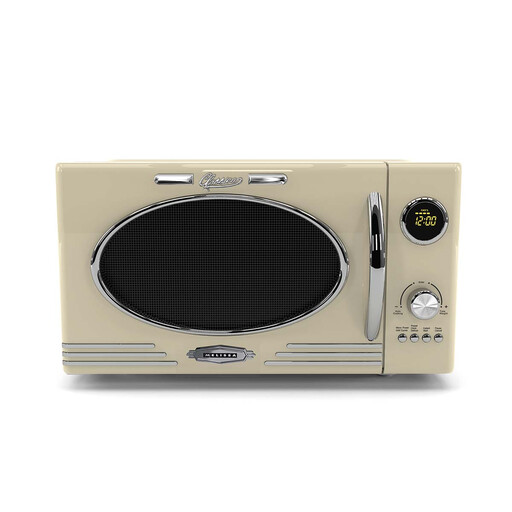 Image unavailable
The power settings matter if you want to heat butter using microwave power; check the butter as it heats.
Five adjustable microwave power levels; 270 mm turntable.
Defrost function and 60-minute timer.
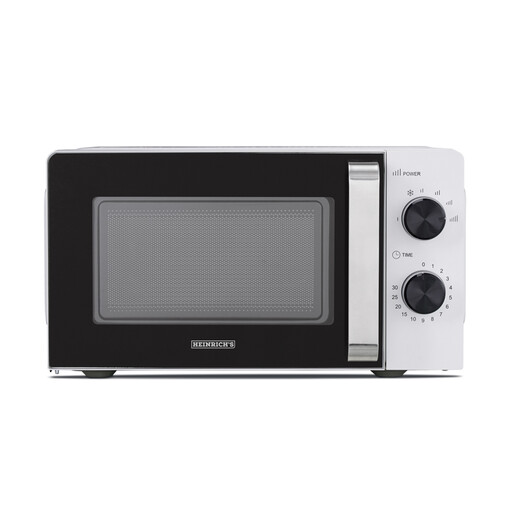 Image unavailable
This solo microwave is a good fit if you already have an oven; compare the stated dimensions with the space available in your kitchen.
Six power levels and a 9,6-inch turntable.
Dimensions: 44,6 × 36,3 × 24,3 cm. The description lists an interior light and two control knobs.
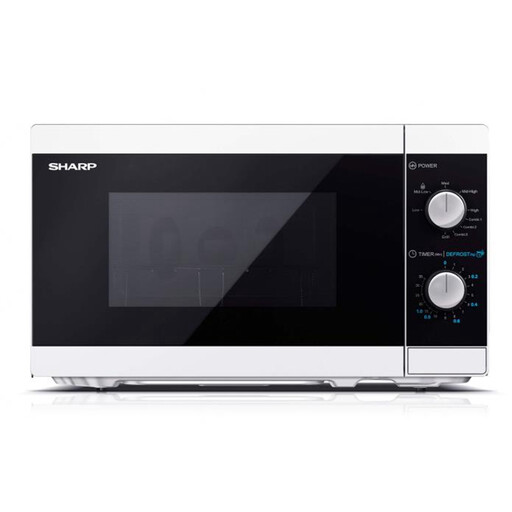 Image unavailable
The microwave power settings are useful for heating butter; check its texture as it heats.
Five microwave power levels and a 25,5 cm turntable.
Internal dimensions: 306 × 304 × 205 mm. Manual controls.
 Image unavailable
This combination model is an option if you need an oven function in the same appliance as well as a way to heat butter.
Fan oven function, grill and ten microwave power levels.
Oven space: 340 × 220 × 344 mm. Turntable: 270 mm.
 Image unavailable
A combination model is worth considering if you want to use an oven function in the same appliance as well as heat food in the microwave.
The product information lists a grill, fan oven and seven automatic programmes.
Capacity: 20 litres. Turntable: 270 mm.
The Netherlands Nutrition Centre recommends 100 W for softening butter. Check whether your microwave has this setting and pause to assess the texture; this doesn’t provide a set heating time for every quantity of butter.
Only if you want to do the baking in that appliance too. According to the Consumers’ Association, baking is done by the oven or fan oven function; a solo microwave doesn’t have one. Also check that your baking tin fits in the usable oven space.
Use a dish that’s marked or described as suitable for microwave use; don’t assume the original packaging is suitable. The Netherlands Nutrition Centre lists glass, glazed earthenware and porcelain as suitable materials.
Follow the positioning and cleaning instructions for the exact model. The Inventum MN205SZ manual says not to use a microwave with a damaged door or seal until it has been repaired by a qualified person; consult the manual for other models.
According to the Netherlands Food and Consumer Product Safety Authority, CE marking is compulsory for electrical products covered by the applicable rules. Check the marking on the actual appliance; information about a model alone doesn’t confirm it.