
Baker with an existing oven
You bake small batches and want to soften butter gently, but don’t need a second oven function. The Netherlands Nutrition Centre describes a solo microwave as an option for people who mainly want to reheat and defrost.


If you already have a microwave that works well, try a low setting first and check the butter as it heats. You may not need a new appliance just for this task. If you’re buying a microwave and already have an oven, a freestanding solo model may be enough; choose a combination model if you also want to bake in the same appliance. Measure the available space and check the relevant product information for the specific model before buying.
You bake small batches and want to soften butter gently, but don’t need a second oven function. The Netherlands Nutrition Centre describes a solo microwave as an option for people who mainly want to reheat and defrost.
You want to fit in a freestanding appliance, so you’re comparing its external dimensions, the space available for your dish and the installation requirements. Capacity in litres alone doesn’t tell you how much worktop space a model needs.
You may also want to bake in the same appliance. Inventum distinguishes solo models for reheating and defrosting from combination models with oven functions. If you’re considering a combination model, check that it has the functions you need and enough room for your baking tin.
The Netherlands Nutrition Centre recommends around 100 W, while the Consumers’ Association recommends 200 W, as guidance for softening butter. Treat these as guidelines, not as a set time or guaranteed result for every quantity of butter.
| What to consider | What to look for when buying | Who is this important for? |
|---|---|---|
| Soft, not melted, butter | Check whether you can select a low setting and interrupt the heating to check the butter as it warms. | When I soften butter for a baking recipe, I want to check its texture before it turns liquid. Consumers who prioritise control over the butter’s texture account for around 36% of those interested in this scenario breakdown. |
| Fitting into a small kitchen | Measure the full external dimensions and check the space for your dish and the model’s installation requirements. | When my worktop space is limited, I want to know whether the appliance will fit with enough room for use and ventilation. Consumers whose main priority is kitchen space account for around 29%. |
| Baking in the same appliance | Decide whether you already have a suitable oven. If you’re considering a combination model, check its functions and whether your baking tin will fit. | If I don’t have a separate oven, I want to know whether the appliance can also provide the baking function my recipes require. Around 21% of consumers give the ability to bake in the same appliance their highest priority. |
| Simple controls | Compare the available power settings, timer and controls. | For small everyday tasks, I want to be able to set the power and time myself with ease. Consumers who prioritise simple, basic controls account for around 14%. |
Guidance for softening butter recommends using a low power setting. For a recipe where butter and sugar are creamed together, the butter should be soft enough to press, but not greasy or liquid.
Compare the available low settings and check the butter as it heats, rather than choosing based only on the maximum wattage.
A solo microwave is designed for tasks such as reheating and defrosting; it won’t automatically replace the oven function a baking recipe requires.
Decide before buying whether you already have a suitable oven. If not, check the oven functions and internal capacity of the combination model.
Capacity doesn’t tell you how much worktop space the appliance needs or whether your dish will fit on the turntable.
Measure the available space and compare it with the external dimensions, room for your dish and installation requirements for the exact model.
The Dutch government states that the Netherlands does not have a fixed, general statutory warranty period. Your statutory rights if a product is faulty are separate from a manufacturer’s warranty.
Compare any extended warranty terms with your existing rights, and contact the seller if your product is faulty.
Inventum offers freestanding solo models as well as separate combination models with oven functions.
The SMV720 is a freestanding solo microwave for anyone looking for straightforward manual controls.
The freestanding FFL020MW0 is an option to compare if you want to see clearly specified low-wattage settings.
The MS23B3515AS/EN is a larger solo option if you want to use your microwave for other tasks as well as small baking jobs.
This selection includes microwaves for small kitchens, with both solo models and models with a grill. Compare the available settings and functions with what you need; a defrost function isn’t automatically a programme for softening butter.
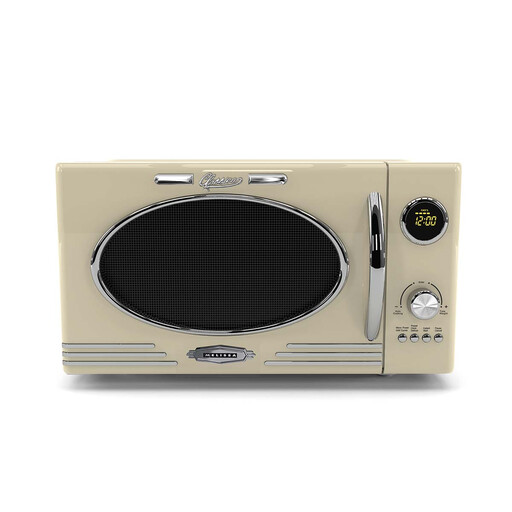 No image available
Suitable if you’re looking for a grill function as well as a microwave.
23 litres; 800 W; five power settings; defrost function; 60-minute timer.
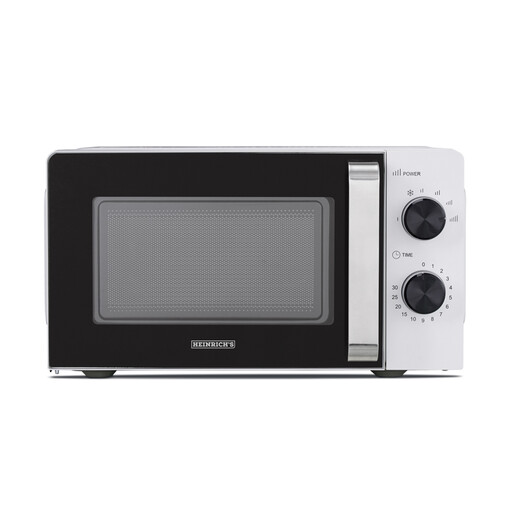 No image available
A solo model to compare if you already have an oven and want to adjust the settings manually.
Six power levels; 700 W; 30-minute timer; defrost function.
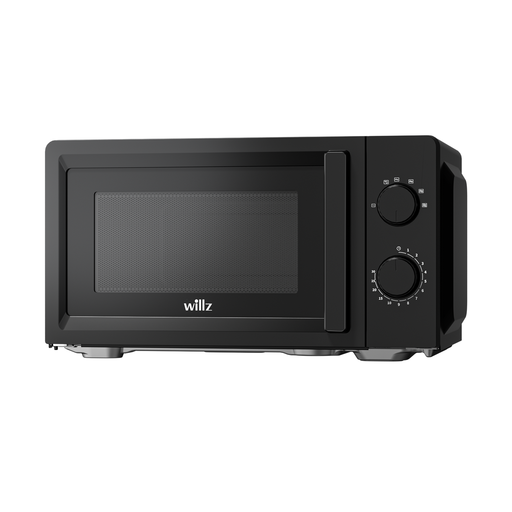 No image available
A compact option to consider if available kitchen space is an important factor in your choice.
20 litres; mechanical rotary controls; defrost function.
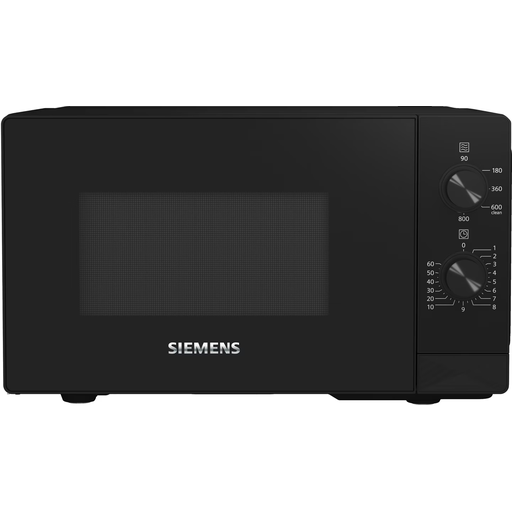 No image available
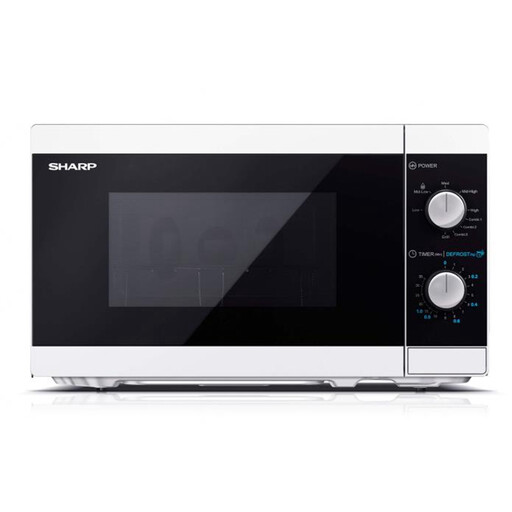
A solo microwave to consider if you already have an oven. Check that its external dimensions fit the available space.
20 litres; external dimensions 51 × 41 × 31 cm. For freestanding installation, the product information specifies at least 10 cm of ventilation space on all sides. For under-counter installation, use the supplied bracket as directed in the installation manual.
 No image available
A model with a grill to compare if you’d like that function as well as microwave cooking.
20 litres; 800 W; five power settings; manual controls; defrost function. The product information doesn’t list an oven or fan-assisted function.
Start with a low setting that you can adjust manually, and check the butter as it heats. The Netherlands Nutrition Centre recommends around 100 W, while the Consumers’ Association recommends 200 W; neither guarantees a particular time or result. For butter to be creamed with sugar, King Arthur Baking describes the ideal texture as soft enough to press but not greasy.
A solo microwave is enough if you already have a suitable oven and mainly want to reheat or defrost. If you also need the appliance to do oven cooking, compare combination models and check that their functions and internal capacity will suit your baking tins.
Measure the full external dimensions and check there’s enough room for your dish, as well as the installation requirements for the exact model. The Netherlands Nutrition Centre lists glass, glazed earthenware and porcelain as suitable materials for microwave-safe dishes; also check the label or instructions for your dish.
According to Your Europe, CE marking is mandatory for product groups covered by the relevant harmonised EU rules. Check the product information for the specific model; a claim on a sales page alone doesn’t prove that an individual item meets all the applicable requirements.
No. Inventum’s manual says not to use the appliance until the door or seal has been repaired by a qualified professional. For another model, follow the safety instructions in its manual.