
Host serving a large bowl of pasta
Wants to serve several portions at once, so checks whether their dish fits and can rotate freely. Smaller portions are an alternative if the dish is too large.


Choose a microwave based on the dimensions of your own microwave-safe dish and the space it needs to rotate freely; capacity in litres alone won’t tell you whether the dish will fit. If you’re only reheating pasta, a microwave function is enough. A grill or convection function is useful mainly if you also want to cook other dishes. If necessary, divide the pasta into smaller portions, stir it partway through and only use leftovers that have been stored safely.
Wants to serve several portions at once, so checks whether their dish fits and can rotate freely. Smaller portions are an alternative if the dish is too large.
Wants a grill or convection function for other dishes as well as reheating. These extra functions aren’t necessary if the microwave is only used for pasta.
Mostly wants to reheat portions and needs to balance a suitable external size with the space required for a large dish.
Best for: mainly reheating pasta and other portions, without needing to bake or grill.
Trade-off: a solo model doesn’t have an oven function for, say, a gratin side dish.
Best for: combining reheating with the occasional browned dish.
Trade-off: a grill function isn’t the same as convection for baking, and it doesn’t replace checking that the pasta is hot throughout.
Best for: using the same appliance to reheat pasta and bake or brown dishes.
Trade-off: extra functions and the space needed for installation may be unnecessary if you only reheat pasta.
| Key consideration | What to look for | Who it’s for |
|---|---|---|
| Space for your serving dish | Measure the dish, including its handles, and compare it with the interior space and turntable diameter of the exact model. | I want to use my large dish in one go and have enough room for it to rotate freely. Around 36% of consumers would make dish space their top buying priority. |
| Even, safe reheating | Choose settings that let you adjust the power and time; leave enough room to take out the dish and stir the food partway through. | When I reheat a full dish, I want to be able to deal with cold spots and serve the pasta piping hot. Around 29% of consumers would put even, safe reheating first. |
| Grilling or baking too | Check the full model number to see whether the appliance has a grill, a convection function or both. | I want to be able to grill or bake other parts of the meal too, not just reheat pasta. For around 21% of consumers, these extra cooking functions would be the main deciding factor. |
| Simplicity and worktop space | Compare the external dimensions, controls and size of your usual dish with the space available. | With limited worktop space, I want an appliance that suits the room I have and the way I use it, without functions I don’t need. Around 14% of consumers would give the most weight to simplicity and placement. |
Capacity in litres alone won’t tell you whether a wide dish will fit on the turntable or rotate freely.
Measure your dish and compare its dimensions with the interior space and turntable of the exact model. If necessary, plan to heat smaller portions.
Grilling is for browning; baking requires an oven or convection function. The category name alone doesn’t tell you which functions the model has.
Check the functions listed for the full model number before choosing an appliance for more than reheating.
Pasta that hasn’t been chilled promptly or kept cold enough can pose a food safety risk. Cold spots can also remain after normal reheating.
Only use leftovers that have been stored safely, and stir during heating until the pasta is piping hot throughout. The Netherlands Nutrition Centre emphasises that reheating doesn’t make unsafe storage safe.
Your statutory rights against the seller depend in part on what you could reasonably expect from the product with normal use. According to ACM ConsuWijzer, there is no fixed statutory guarantee period of exactly two years in the Netherlands.
Compare any additional cover with your existing rights and keep your proof of purchase.
The models mentioned range from a solo version to a roomier combination microwave.
According to Sharp, the YC-MG01E-W combines a microwave function with a separate grill function.
The NN-SD27HS is a solo model that uses inverter technology as a different technical approach.
The MS23B3515AS/EN is a freestanding solo model for anyone who doesn’t need a baking or grill function.
This selection includes solo microwaves and models with a grill or convection function for reheating pasta and, where applicable, preparing other dishes. Compare your dish size with the turntable, and only choose extra functions if you’ll use them for other dishes too.
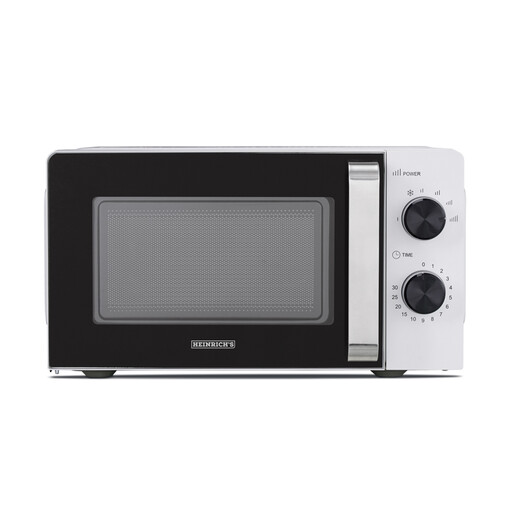 No image available
A solo model for anyone who mainly wants to reheat portions; compare your dish with the turntable.
The product name lists 20 l, 700 W, six power settings, a 30-minute timer, a defrost function and a turntable.
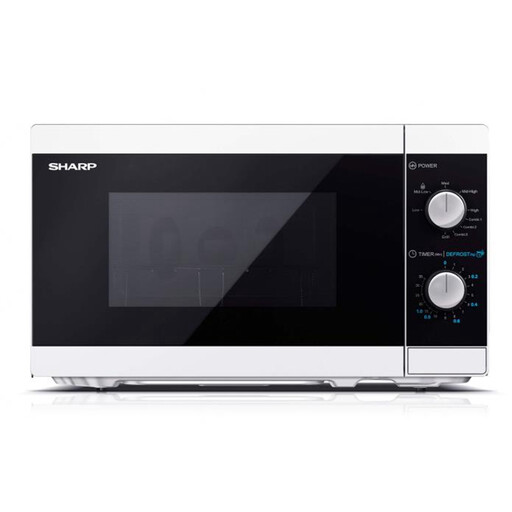 No image available
Ideal if you want to reheat pasta and have a grill function for other dishes too.
The product name lists 20 l, 800 W and a grill. Check that your dish fits on the turntable and can rotate freely.
 No image available
A combination microwave for anyone who wants to grill or bake with convection as well as reheat.
The product name lists 25 l, a grill and convection, in silver. Measure your dish rather than relying on capacity alone.
 No image available
The product name lists grill and convection functions for anyone who wants to prepare other dishes as well as pasta.
The product name lists 20 l. According to the product information, installation in a cabinet requires a bracket and sufficient ventilation.
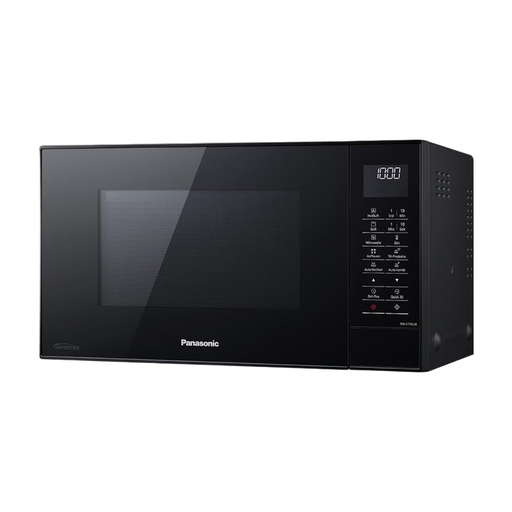 No image available
A combination microwave for anyone who wants to grill or bake with convection as well as reheat.
The product name lists 27 l, 1000 W microwave power, a grill, convection and inverter technology. Compare your dish with the turntable of the exact model.
If possible, divide the pasta into smaller, shallow portions in a microwave-safe dish. The Netherlands Nutrition Centre recommends adding 1 to 2 tablespoons of water, covering the dish and stirring once or twice during heating; heat the food until it’s hot all the way through.
According to the Netherlands Nutrition Centre, you can keep cooked pasta in the fridge for up to 2 days or in the freezer for 3 months. Cool leftovers quickly, store them in a sealed container and don’t leave them out of the fridge for more than 2 hours. Reheating won’t make pasta that has been stored unsafely safe to eat.
No. Check the container or packaging for a microwave-safe label; a food-contact symbol on its own doesn’t prove that the material is suitable for microwave use.
Electrical appliances placed on the market in the Netherlands must meet the applicable European requirements. Manufacturers must affix a CE mark and draw up an EU Declaration of Conformity. Check the documentation for the exact model; information for one model doesn’t automatically confirm compliance for another.
Yes. Subject to certain conditions, you can claim under your statutory rights against the seller if a product used normally breaks sooner than you could reasonably expect. According to ACM ConsuWijzer, there is no fixed statutory guarantee period of exactly two years in the Netherlands.