For frozen slices that you simply want to defrost, a solo microwave with a low power setting or defrost function is usually sufficient; a high maximum wattage alone doesn’t mean slices will defrost better. Choose a grill or oven function only if you also want to brown or bake your bread, and check that the plate and available space are suitable when preparing several portions. A dedicated bread programme is a model-specific feature, not independent proof of better results.
Which microwave is right for you?
Host with frozen slices
You want to defrost the bread carefully shortly before serving and check the result for each portion. The usage advice from the Consumers’ Association and the bread function Samsung describes for a specific model both relate to this choice.
Host who also wants to brown bread
Alongside defrosting, you’re looking for a grill or oven function to give your bread a different texture. Check which cooking functions the exact model offers, along with the relevant accessories and instructions.
Cook with limited worktop space
You’re weighing up the space needed for the appliance against the room required for your plate and portions. For built-in models, the Consumers’ Association also advises allowing for the specified ventilation clearance.
What should you look for when choosing?
Freestanding solo microwave
Choose this if: you mainly want to defrost and reheat, without baking or browning bread.
Bear in mind: a solo microwave doesn’t have a grill or oven function for finishing bread.
Microwave with grill or oven function
Choose this if: you also want to brown or bake food, and will use those extra functions regularly.
Bear in mind: the extra functions aren’t needed just for defrosting; check the model’s instructions and any accessories it requires.
Built-in microwave
Choose this if: your kitchen layout matters more to you than freestanding placement.
Bear in mind: check the housing dimensions and ventilation clearance; according to the Consumers’ Association’s buying advice, built-in models cost more than freestanding ones.
| Concern |
What should you look for? |
Who is this important for? |
| Careful defrosting |
Check whether the model has a low power setting or a defrost function. The Consumers’ Association recommends 200 W as a general setting for even defrosting. |
If I want to defrost slices shortly before serving and check them as they go, I prioritise those controls; around 36% of consumers consider careful defrosting their main priority. |
| Space for portions |
Compare the internal dimensions and the size of the plate or turntable with your crockery; also check the external dimensions and available space. |
When I’m hosting several guests, I want to know how many slices will fit side by side on my plate; around 29% of consumers give space for portions top priority. |
| Wanting to brown bread too |
Decide whether you want to brown bread, then check for a grill or oven function and the model-specific instructions. |
If I also want to brown the bread after defrosting it, I look for an extra cooking function; around 21% of consumers put browning first. |
| Limited space and simple functions |
Measure the available space and compare the functions you’ll actually use; for built-in models, allow for the ventilation requirements. |
When worktop space is limited and I don’t want functions I won’t use, finding a suitable place for the appliance is a key consideration; around 14% of consumers prioritise this combination. |
How to avoid common buying mistakes
-
Comparing only the highest wattage
A high maximum wattage doesn’t prove that frozen slices will defrost better. For this task, it’s also important to be able to select a low power setting.
Compare the available settings and check the result for each portion before choosing based on maximum wattage.
-
Assuming an automatic defrost setting guarantees good results
The Consumers’ Association reports that, in its tests of combination microwaves, manual settings usually worked better than automatic programmes. This isn’t a separate test of every bread programme.
Think of a programme as a convenience feature, and check the bread as it defrosts.
-
Choosing a combination or built-in model when you don’t need the extra features
A solo microwave may be enough for defrosting; the grill and oven are for other types of cooking. A built-in model also requires you to check the housing dimensions and ventilation clearance.
First decide whether you also want to brown or bake bread, then measure the available space.
Brands to consider
Inventum
Offers freestanding solo microwaves in various designs, including 20 and 25-litre models.
- The MN205S has rotary controls and a defrost function; Inventum describes the MN207S as having a digital timer and automatic programmes.
- The solo models mentioned don’t have a grill. Their features aren’t proof of better results for bread.
Samsung
Offers solo models with Quick Defrost and lists a dedicated Bread Defrost function for the MS22T8254AB/E1.
- Samsung lists Bread Defrost and a Crusty Plate for this model.
- Claims about taste or texture come from Samsung and aren’t based on an independent comparison; check the features of the exact model.
Panasonic
Describes both a solo microwave with Auto Defrost and a combination model with microwave, grill and oven functions.
- The model descriptions distinguish between the NN-SD27HS and the NN-DF37PWEPG based on their listed features.
- The choice of features doesn’t show that either model defrosts bread slices better.
Joybuy products for defrosting and finishing
This selection includes solo microwaves for defrosting, as well as models with grill or oven functions for anyone who also wants to brown or bake bread.
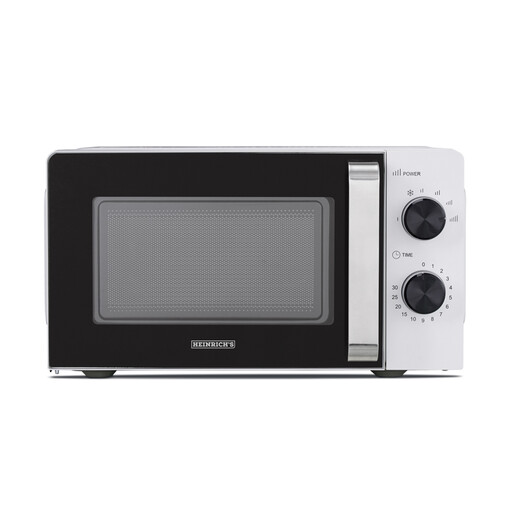 Image unavailable
Heinrich's solo microwave, 20 L
A solo microwave for anyone who wants to defrost frozen slices without a grill function.
Capacity: 20 L. Power: 700 W. Six power settings and a defrost function. Turntable: 9.6 inches. Dimensions: 44,6 × 36,3 × 24,3 cm. Also listed: 30-minute timer and interior light.
View at Joybuy
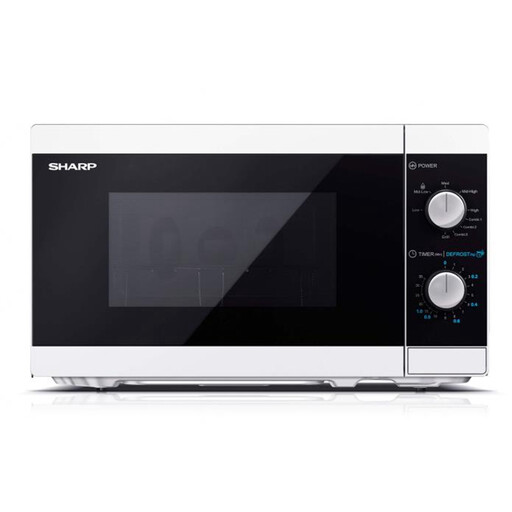 Image unavailable
SHARP YC-MG01E-W microwave with grill
An option for combining defrosting with a grill function if you also want to brown your bread.
Capacity: 20 L. Power: 800 W. Five microwave power settings and a defrost function. Turntable: 25,5 cm.
View at Joybuy
 Image unavailable
Sharp YC-PC254AE-S combination microwave, 25 L
A combination microwave to consider if you want grill and fan oven functions as well as defrosting.
Capacity: 25 L. Ten power settings. Turntable: 270 mm. Grill and fan oven functions listed.
View at Joybuy
 Image unavailable
Siemens FF023LMB2 combination microwave
The product description mentions defrosting frozen bread; the extra functions are useful if you also want to brown or bake.
Capacity: 20 L. Seven automatic programmes. Grill and fan oven functions listed, plus a 270 mm turntable.
View at Joybuy
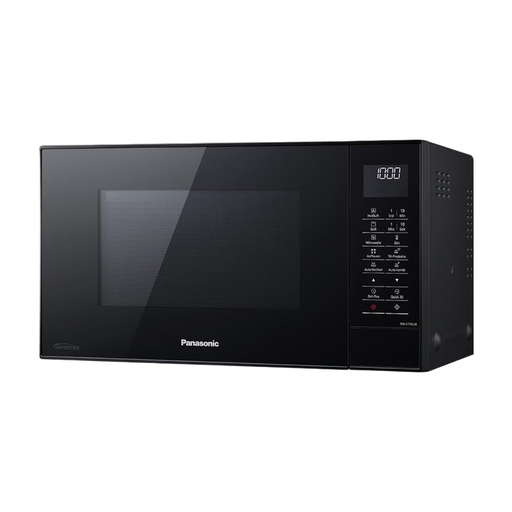 Image unavailable
Panasonic NN-CT 56 combination microwave, 27 L
A model to compare if you want to use grill and fan oven functions as well as defrosting.
Capacity: 27 L. Microwave power: 1000 W. Six microwave power settings. Turntable: 34 cm. Grill and fan oven functions and inverter technology listed.
View at Joybuy
Frequently asked questions
Do I need a special bread programme for frozen slices?
No, a special bread programme isn’t essential for defrosting slices. A low power setting or a standard defrost function is also an option; a bread programme is a model-specific feature, not an independent comparison of results.
Can I simply put a freestanding model in a kitchen cupboard?
No, follow the installation instructions for the exact model and check the required ventilation clearance. For a built-in model, measure the housing space before choosing one.
What should I do if the microwave door is damaged or doesn’t close properly?
Have the appliance repaired or replaced instead of carrying on as if nothing is wrong. The Netherlands Nutrition Centre advises this if there’s a crack in the glass door or if the door doesn’t close properly.
Does a microwave always come with exactly two years’ statutory warranty in the Netherlands?
No, according to the Dutch government, there’s no fixed statutory warranty period in the Netherlands. If a product is faulty, the seller is responsible for providing an appropriate solution; any additional commercial warranty is separate.
Is CE marking required for a microwave sold in the Netherlands?
Yes, when electrical equipment falls within the scope of Directive 2014/35/EU and is placed on the EU market. The directive covers equipment rated at 50–1.000 V AC or 75–1.500 V DC; this general rule doesn’t confirm whether an individual product has been checked.


