
Cook with limited worktop space
You want to heat custard and first make sure the appliance, door opening and required ventilation clearance will fit in the space available. For example, ETNA’s manual specifies the clearance required for each model.


If you mainly want to heat custard, start by looking at a solo microwave whose external dimensions, ventilation clearance and turntable suit your kitchen and dish. A combination microwave is worth considering if you also want to bake or grill. Stir the custard while heating it, as a turntable doesn’t remove the need to do so.
You want to heat custard and first make sure the appliance, door opening and required ventilation clearance will fit in the space available. For example, ETNA’s manual specifies the clearance required for each model.
You want to be able to adjust the heat and stir and check the custard as it warms. The Netherlands Nutrition Centre also recommends stirring food during heating, even in a microwave with a turntable.
You want to do more than just heat food, such as baking or grilling, and need to decide whether those functions are worth the extra space a combination microwave takes up.
Choose this option: if heating and defrosting are your main uses and the appliance fits with the required ventilation clearance.
Bear in mind: a solo microwave doesn’t have an oven function, and you’ll still need to stir custard during heating.
Choose this option: if you’ll also use the same appliance for baking or grilling.
Bear in mind: those extra functions aren’t needed to heat custard. Check the full installation dimensions too.
Choose this option: if you have a suitable built-in space and want to keep your worktop clear.
Bear in mind: the installation dimensions and ventilation requirements depend on the specific appliance and housing unit.
| What to consider | What to look for | Who it matters to |
|---|---|---|
| Will the microwave fit? | Measure the available space and check the external dimensions, door opening and installation instructions for the exact model. | If I have limited worktop space, I want to know whether the appliance will really fit with the required ventilation clearance. Around 38% of consumers prioritise finding an appliance that fits. |
| Heating custard evenly | Check whether you can adjust the power and time. Use a microwave-safe dish and stir the custard during heating. | When heating custard, I want to be able to pause the process to stir it and check its texture. Around 31% of consumers prioritise this level of control. |
| Additional cooking functions | Decide whether you also want to bake or grill, then compare the full installation dimensions. | If I want to bake or grill as well as heat custard, a combination model can offer several cooking options. Around 16% of consumers prioritise these extra functions. |
| Controls and cleaning | Compare the controls and check how easy it is to access the interior and follow the cleaning instructions. | For everyday use, I want controls that are easy to operate and a practical way to clean up any spilt custard. Around 15% of consumers prioritise ease of use and cleaning. |
The capacity doesn’t tell you whether the exterior, door opening and required ventilation clearance will fit in the space available, or whether your dish will turn freely.
Measure the space and your dish, then check the external dimensions and manual for the model you’re considering.
The Netherlands Nutrition Centre recommends stirring food during heating, even when using a turntable.
Pause heating to stir the custard and check how it’s warming.
You don’t need oven or grill functions to heat custard.
Choose between a solo and combination model based on what else you want to cook in it and how much space you have.
The SMV720 is a freestanding solo microwave with rotary controls.
The MW 7886 is a solo option with manually selected settings for heating and defrosting.
The FFL020MW0 is a freestanding solo microwave with manually selected microwave power.
The TMC2302B is worth considering if you want to bake or grill as well as heat food.
This selection includes freestanding solo and combination microwaves for heating food, with extra oven or grill functions on some models.
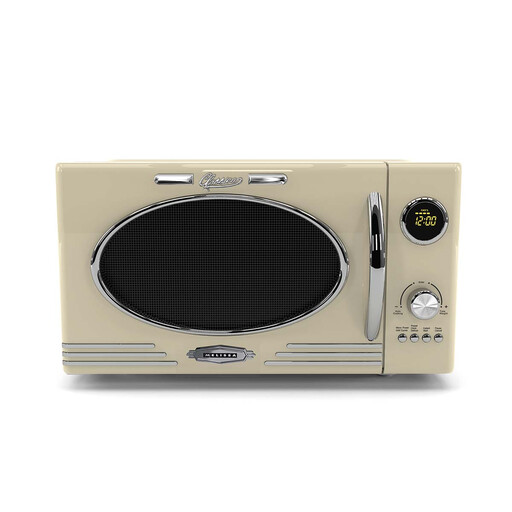 Image unavailable
A combination model to consider if you want to use the grill as well as heat food.
The product information lists five microwave settings, a 270 mm turntable and dimensions of 550 × 350 × 440 mm. The instructions specify at least 10 cm of clearance on all sides and above the appliance.
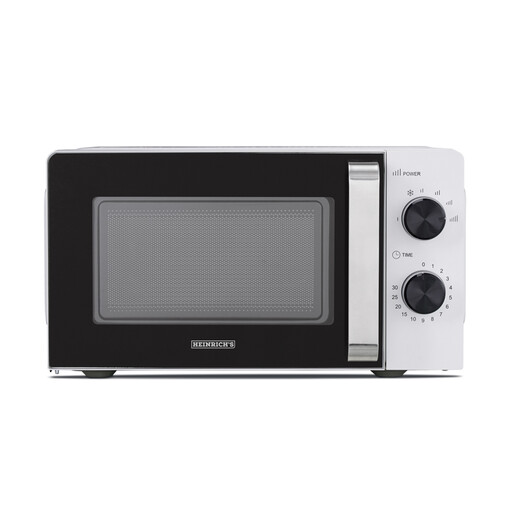 Image unavailable
A solo microwave to consider if you mainly want to heat and defrost food.
This model has six power settings and two rotary controls. Its external dimensions are 44.6 × 36.3 × 24.3 cm; check that it will fit with the required clearance.
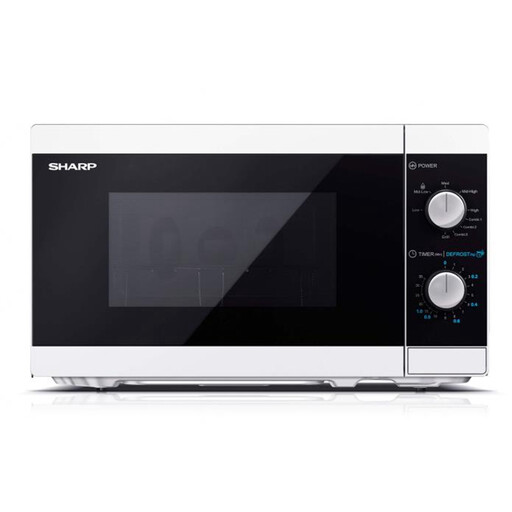 Image unavailable
A microwave with a grill function to consider if you want both cooking options.
The product information lists five microwave settings, manual controls and a 25.5 cm turntable. The external dimensions are 440 × 258 × 344 mm.
 Image unavailable
This combination model is an option if you want to use the grill or fan oven as well as the microwave.
The product information lists 900 W microwave power, ten power settings and a turntable with a diameter of 270 mm. The external dimensions are 490 × 289 × 493 mm, so bear them in mind if space is limited.
 Image unavailable
A combination microwave to consider if you want to use the grill and fan oven functions as well as heat food.
The product information lists 800 W and external dimensions of 34.5 × 44.2 × 26 cm. If you install it in a cupboard, make sure there is enough ventilation.
No, the microwave function is enough to heat it. Choose an oven or grill function only if you’ll also use it for other dishes.
Use a microwave-safe dish, check the custard as it heats and stir it regularly, even if your microwave has a turntable. Follow any instructions on the packaging. If the custard contains egg, it’s important to keep an eye on its texture.
Only if the setup follows the instructions for that specific model. For example, the ETNA SMV720 manual specifies at least 20 cm of clearance above and 10 cm behind the appliance. Don’t assume these measurements apply to another model without checking.
You’re entitled to a product that meets the terms of your purchase. According to the Dutch government, there is no fixed statutory warranty period in the Netherlands; if a product is faulty, the retailer is your point of contact. Any additional manufacturer’s warranty is separate.
Electrical products covered by the applicable rules must carry a CE mark. The Netherlands Food and Consumer Product Safety Authority explains that the mark doesn’t mean every individual model has been independently tested.